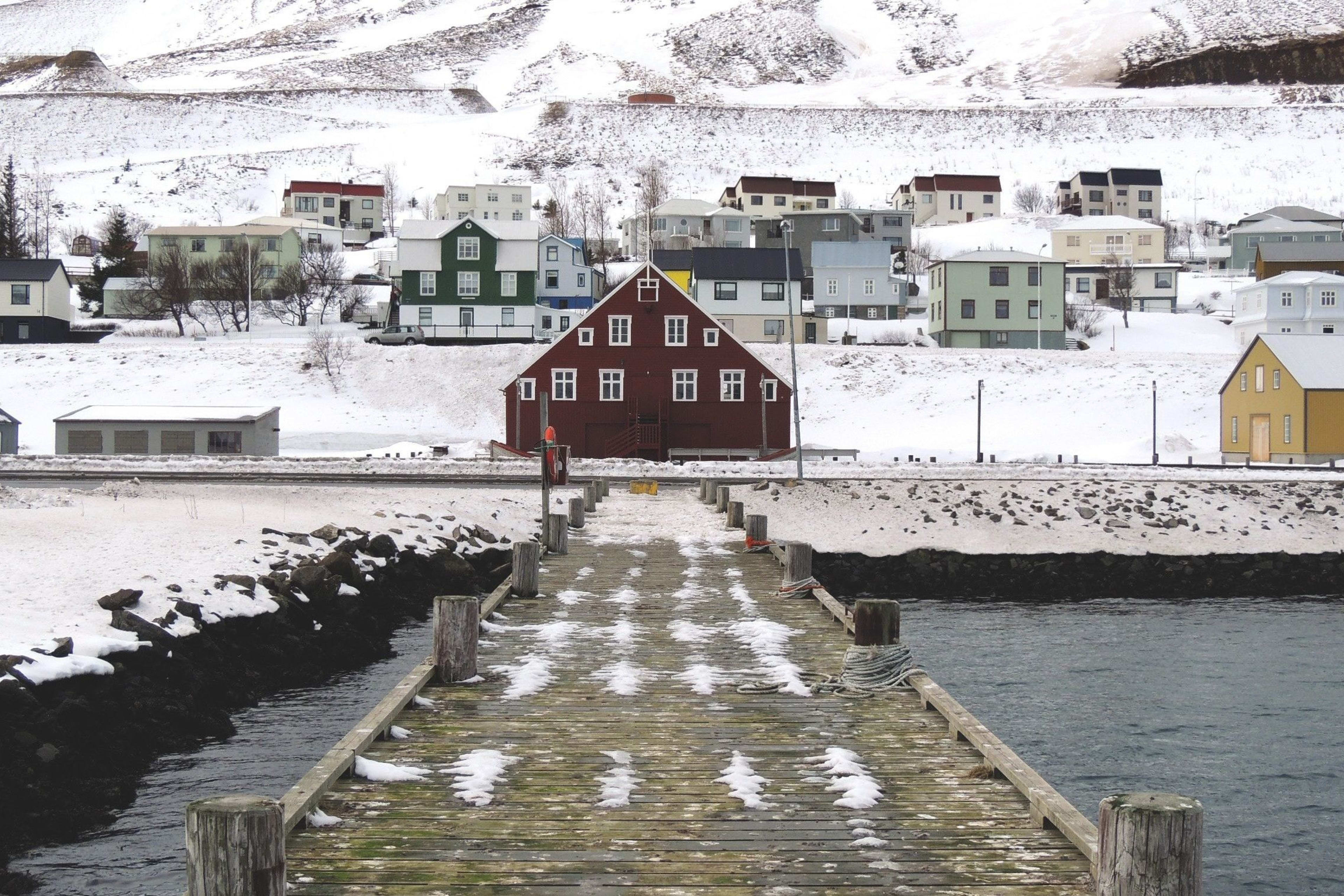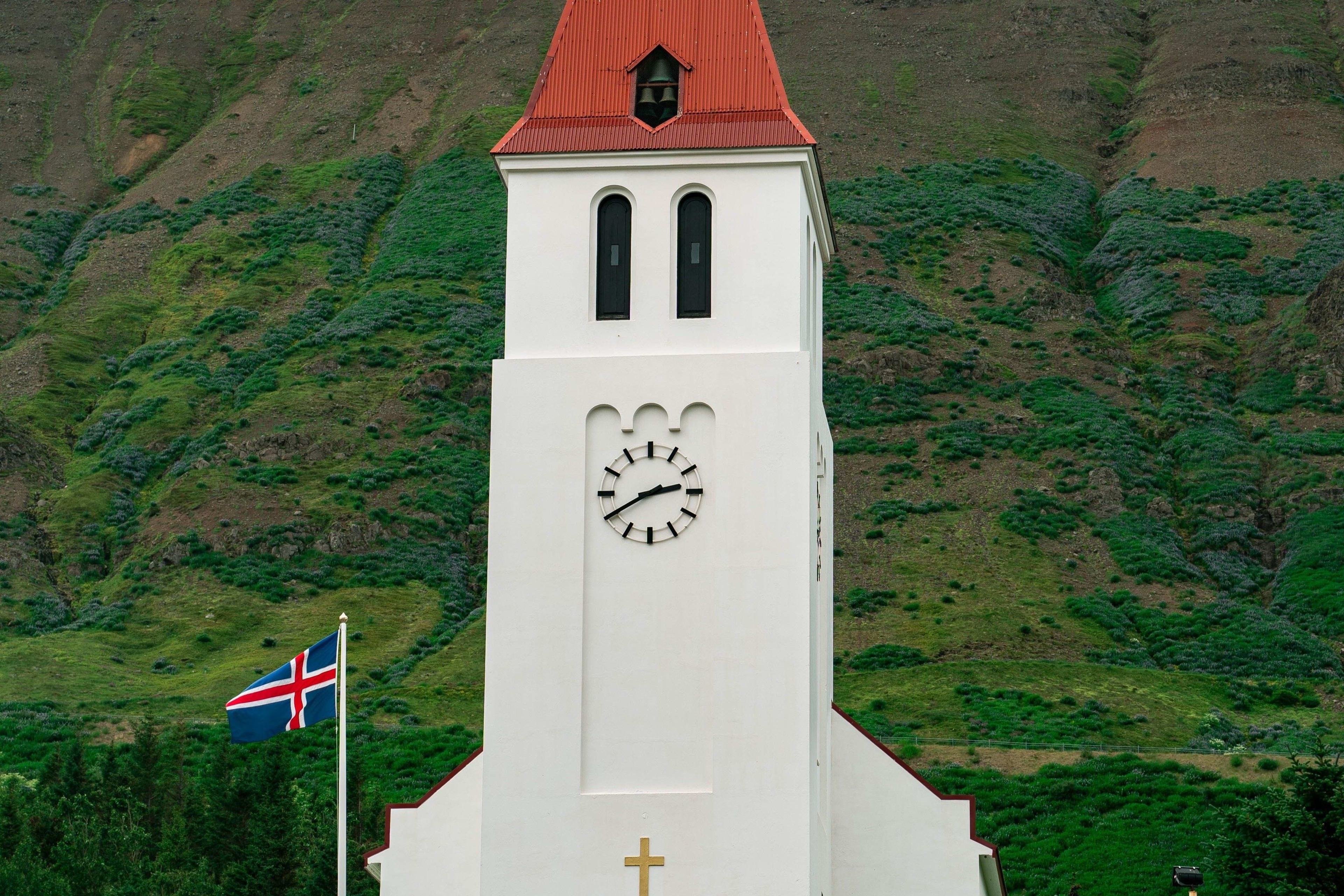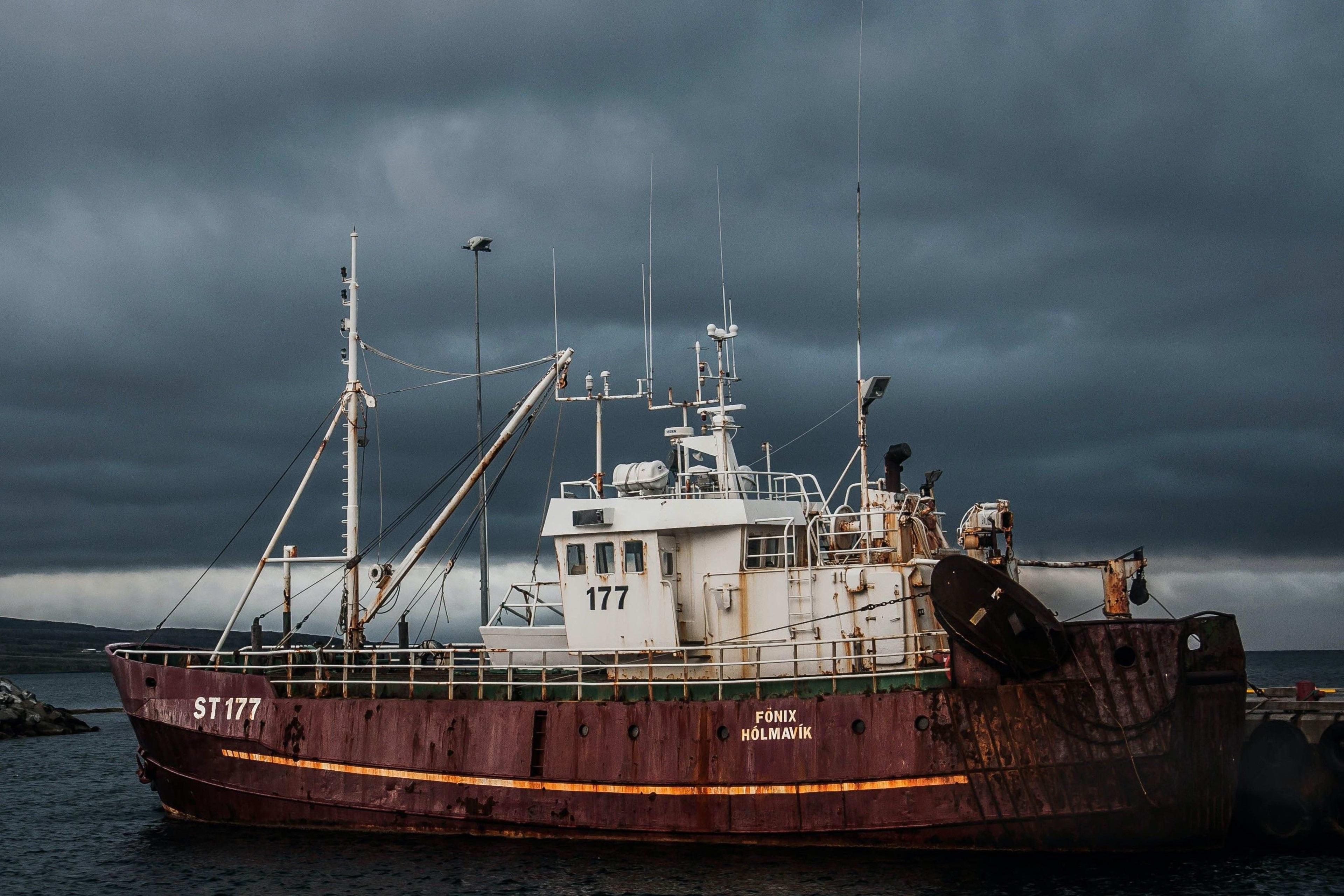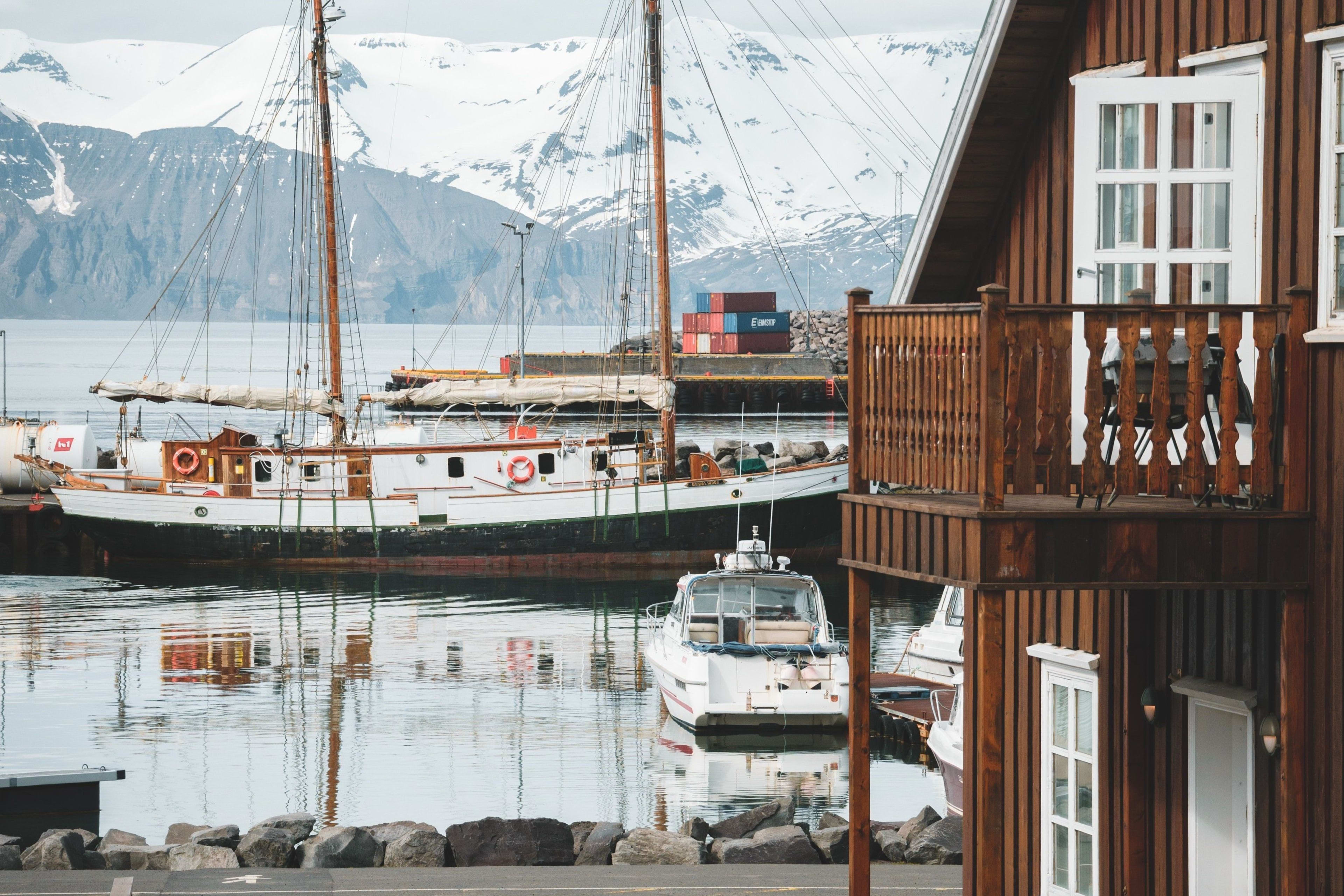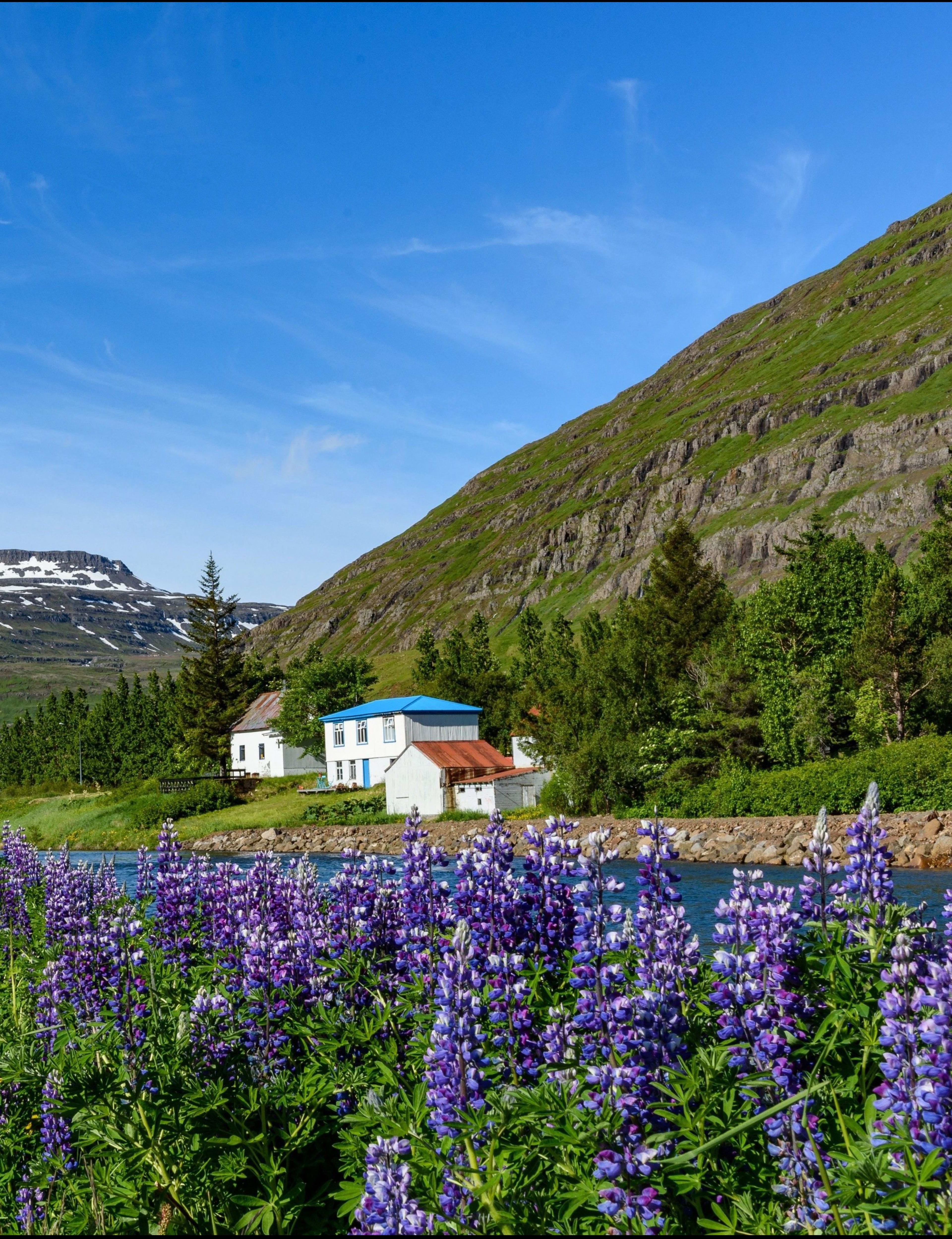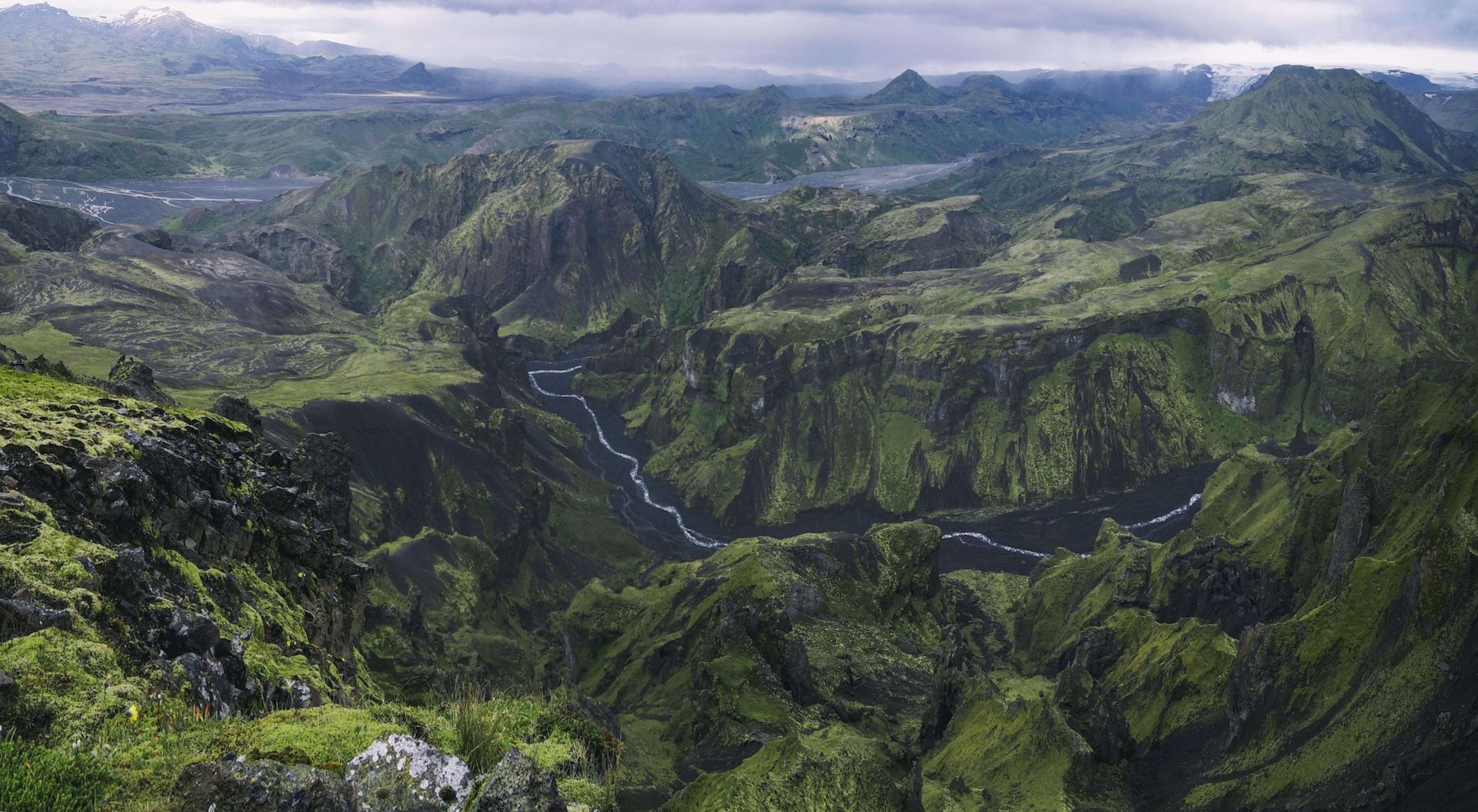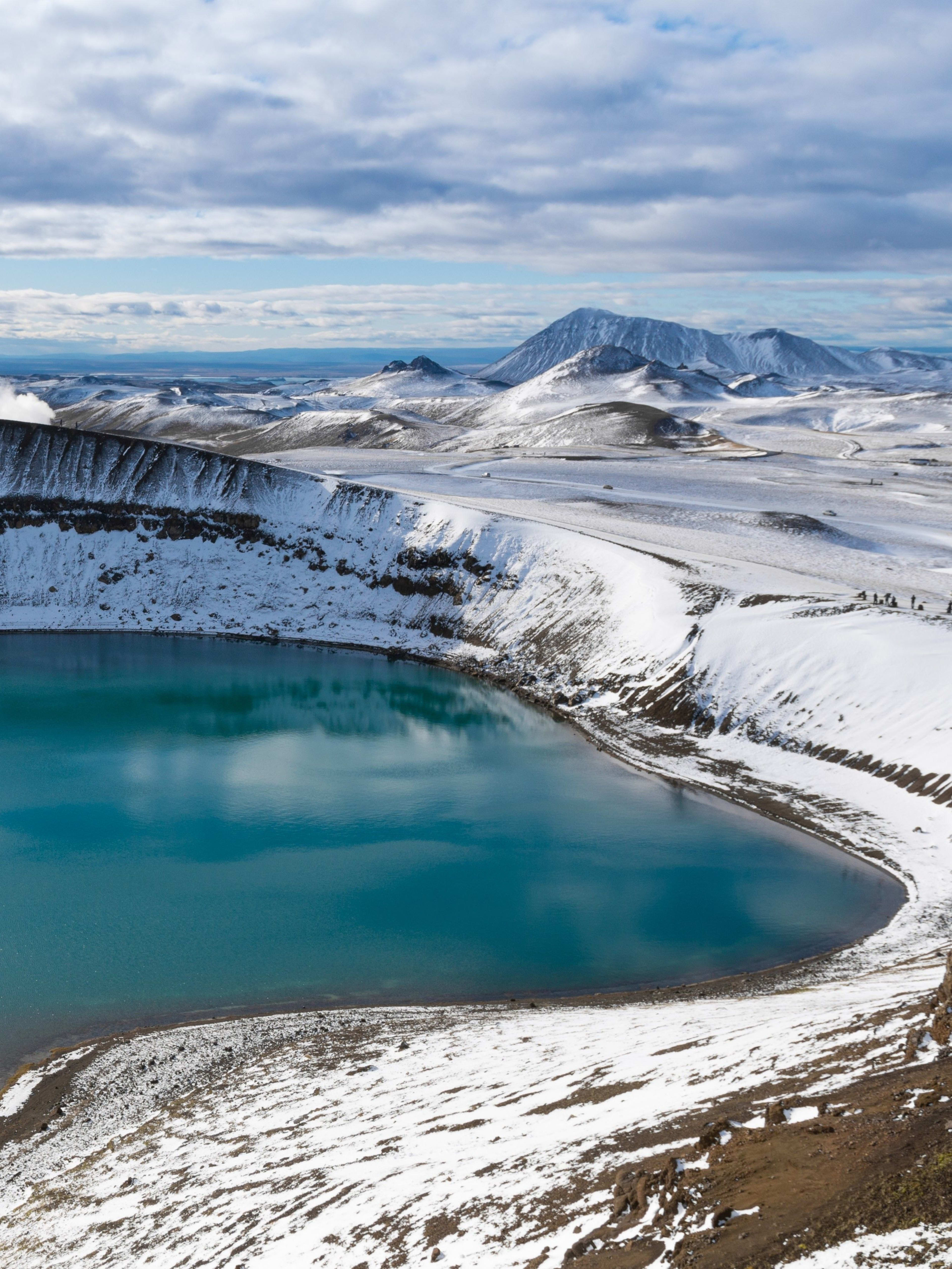
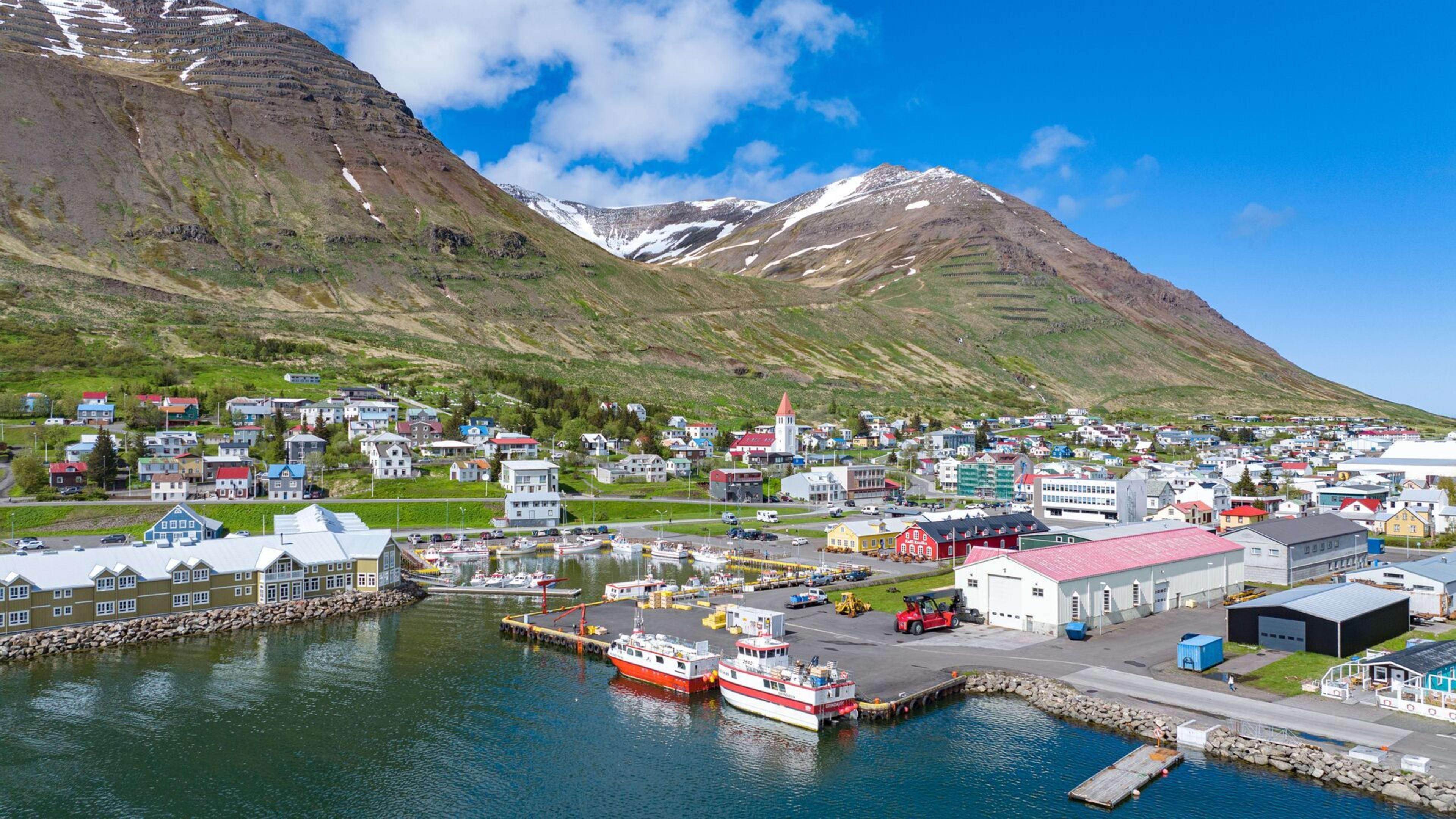
Iceland—with its pristine glaciers, fiery volcanoes, and dazzling aurora borealis—possesses a unique and breathtaking natural beauty, attracting travelers from all over the world every year. Beyond the well-known waterfalls, geysers, black sand beaches, and glacial lagoons, Iceland boasts numerous secluded fishing villages that will take you away from the hustle and bustle, immersing you in the country's most pristine and untouched treasures. A trip to Iceland offers the chance to experience the atmosphere of the old Viking life in its secluded fishing villages and towns, a tranquil escape that fosters a deep connection with nature.
This article takes you to secluded fishing villages and towns in Iceland, allowing you to experience the unique Icelandic scenery! Why not consider our island-wide self-drive packages: 13-day in-depth Iceland summer self-drive tour and 14-day in-depth Iceland summer self-drive tour ?
1. The icy landscape of "The Secret Life of Walter Mitty": the town of Stykkishólmur
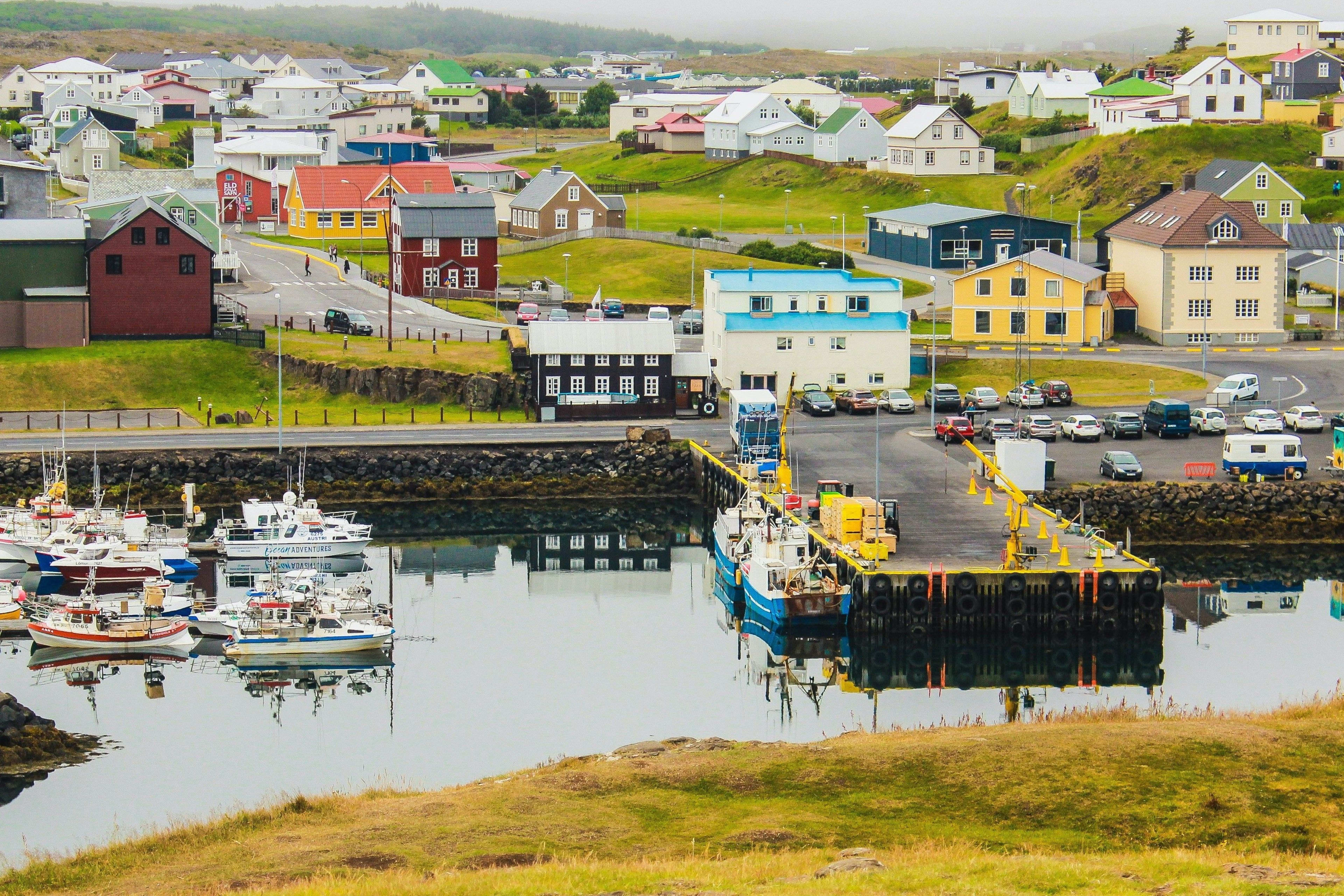
Stykkishólmur, located on the north coast of the Snæfellsnes Peninsula in western Iceland , near Kirkjufell ( also known as the Hat Mountain), is the region's service and commercial center. The town has a long history, with its first trading post dating back to the 16th century; trade has since played a vital role in the town's economy.
Stikisholmi has cold winters and cool, pleasant summers with temperatures reaching around 18 degrees Celsius. Summer and autumn are the best seasons to visit the town.
As a key filming location for the movie "The Secret Life of Walter Mitty" (the "Greenland" in the film), Stikkisholm has gradually become another important tourist destination and must-visit spot in Iceland in recent years. In Stikkisholm, visitors can not only visit places like the "Boot Bar," where the movie was filmed, and experience the protagonist's journey of returning to his true self, but also enjoy the unique local scenery and participate in unique tourism activities.

For travelers who love Iceland's unique landscape and want to learn about Iceland's volcanic culture and scenery, the Volcano Museum in the town of Stikkisholm is a must-see. Proposed by volcanologist Haraldur Sigurðsson, the museum's exterior is a fiery red, resembling molten lava. Inside, visitors can learn about various volcanoes and volcanic rocks, and admire artworks related to volcanoes.
If the Volcano Museum is a man-made project that incorporates wondrous natural elements, then the Stykkishólmur Church in the town is a man-made work of art built within the embrace of nature. Unlike our imagination of traditional churches, the Stykkishólmur Church has a distinctly postmodern artistic style. Built in 1990 and designed by architect Jón Haraldsson, the church's bell tower is inspired by the spine of a whale. Its pure white exterior, with its flowing lines, sits serenely between the coastline and the blue sky, pure and beautiful.
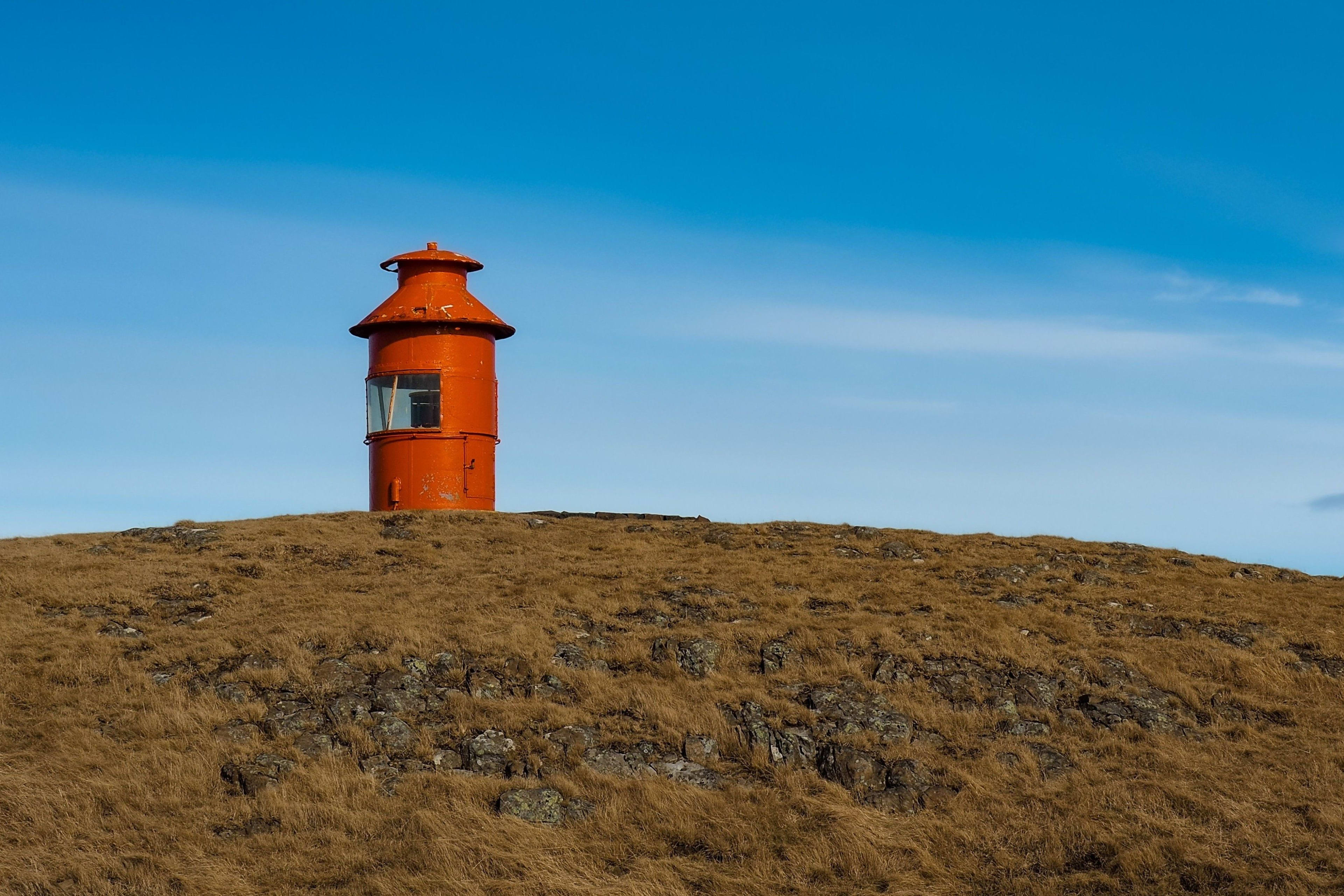
Another iconic landmark of the town of Stikisholmi is its red lighthouse. A stroll up the rocky hill of Súgandisey next to Stikisholmi along the mountain path offers panoramic views of the town. The town's colorful houses, the roads winding through the bay, and the ships, some nestled in the harbor, others venturing out to sea, are all visible. On a stone-built platform at the summit, the red lighthouse stands alone against the backdrop of the sea and sky, with rocky hills and meadows below and the sea breeze whistling around it. Though not tall, the lighthouse resembles a red spark against the azure sky, warm, welcoming, and dazzling.

Visitors to the town can also enjoy authentic local flavors at the upscale restaurant Narfeyrarstofa, which combines local specialties such as lobster, cod, flat shark, and sea gull with local cooking methods to create genuine Stikisholmi cuisine.
In addition to local activities in the town, visitors can also book a Viking Sushi Adventure Voyage to enjoy the fjord scenery near the Snæfellsnes Peninsula. During the journey, passengers have the opportunity to observe birds such as Icelandic eider ducks, gulls, and white-tailed eagles at close range, as well as rocky cliffs and mountains standing by the sea. During the trip, the crew will also directly harvest various seafood such as scallops, sea urchins, caviar, sea cucumbers, and starfish from the sea. The freshly caught seafood, paired with wasabi and soy sauce on board, adds a touch of wildness to the beautiful fjord scenery.
2. The fishing village of Ólafsvík, a beacon of fishing on the Snæfellsnes Peninsula
Ólafsvík is a small town located on the Snæfellsnes Peninsula in western Iceland, with a population of nearly 1,000. Commerce and fishing are the mainstays of the local economy. The town experiences cold winters and relatively warm summers and autumns, which are peak tourist seasons. However, Ólafsvík is a town where "the scenery changes with the seasons, and the enjoyment is endless."
The town of Olafsvík boasts a natural harbor and was one of Iceland's largest trading ports in the 17th century. During the Danish occupation of Iceland, thanks to its advantageous geographical location, it became the first town in Iceland to be granted a business license by the Danish king.
Pakkhús Museum is one of the town's attractions, open to visitors every summer from 11:00 AM to 6:00 PM. The site was originally a shop, later converted into a museum. The first floor houses shops selling wooden goods and local handicrafts, while the second and third floors are exhibition halls showcasing Snæfellsnes town. Visitors interested in Icelandic culture, especially the culture, history, and lives of fishermen, can enjoy a visit. The museum also features a small café offering coffee and food, providing a relaxing space for travelers.
Like Seyzisfièze, the town of Olafsvik also boasts a landmark church—Ólafsvíkurkirkja. Designed by Hákon Hertervig, the church is entirely composed of straight lines. Its sky-blue roof, viewed from above, resembles a large fish swimming in the ocean. The church consists of a main body and a conical spire, the white spire growing towards the sky with a dynamic beauty, like a sail billowing in the wind, about to propel the church out of the bay and onto the vast ocean.
Besides its cultural attractions, Olafsvik also boasts stunning natural scenery, making it a great destination for hiking and other outdoor activities. About 700 meters from the town center lies the Bæjarfoss waterfall. Visitors can reach the foot of the hill where the waterfall is located in just a few minutes' walk. The waterfall cascades down the mountain, forming a stream that flows over a rocky channel. In summer, clusters of wild lavender bloom quietly beside the stream, and the hillsides are carpeted with lush green grass. In winter, the mountains are dotted with snow. A winding path runs alongside the waterfall, leading uphill along the stream. Visitors can admire the waterfall cascading down, crashing against the rocks, the interconnected mountains and fjords, and overlook the town of Olafsvik, nestled peacefully between the sea and mountains, seemingly untouched by the world. This short, scenic hiking route is suitable for all ages and offers a multi-faceted travel experience.

There are many options for visiting the Snæfellsnes Peninsula. You can include a day trip to the Snæfellsnes Peninsula in your original itinerary , or join our group tours or self-drive packages:
1. Iceland Summer 6-Day Enjoyment Package: Golden Circle & South Coast Scenery & Snæfellsnes Peninsula
(Note: If you want to explore the town, we recommend choosing a self-driving package.)
3. The far north, the herring capital: Siglufjörður
Siglufjörður is located on the Greenland coast in northern Iceland, in the town of Fjällrður in the northeastern district of Iceland. It is one of the northernmost towns in Iceland, with low average temperatures and summer and autumn being the peak tourist seasons.

Sigrúfěrður, with its abundant fishery resources and excellent harbor conditions, is known as Iceland's "Herring Capital." Fisheries are the town's mainstay industry. Sigrúfěrður's long history of fishing has not only driven economic development and urban expansion but also fostered a unique fishing culture. The town boasts a unique Herring Museum with a distinctive collection. Established in 1957, it is Iceland's largest marine museum and has received numerous awards, including the Icelandic Museum Award and the European Museum Award. The museum documents the development of Iceland's herring industry, its impact on the Icelandic economy, and its profound influence on Icelandic culture, showcasing exhibits such as herring industry machinery, photography, literature, and music. The museum features two exhibition halls converted from herring processing stations and factories, and a dedicated fishing boat exhibition hall. Here, visitors can watch deck-top dance performances and witness actors reenacting the herring curing process, experiencing firsthand the creation of traditional Icelandic cuisine and the history of Icelandic fishing culture and fisheries. During the town's peak tourist season—June to August—the museum is open daily from 10:00 AM to 6:00 PM.
Unique Experience
The picturesque Sigrúfěrður also offers ample space and a wide range of sports for outdoor enthusiasts. In Iceland, this town is a popular ski resort, with the ski area about a ten-minute drive from the town center. The resort has four ski lifts and 5.5 kilometers of slopes, mostly suitable for beginners and those new to skiing, but some slopes are also available for experienced skiers. Opening hours are from 10:00 AM to 4:00 PM.

Sigrüfieze is nestled in a narrow fjord, facing the sea on one side and backed by mountains on the other. The surrounding environment is tranquil, with the mountains and sea acting as a natural barrier, making it seem like a secluded paradise. This unique geographical advantage makes hiking, golf, swimming, and fishing popular activities in the town.
Besides fishing culture experiences and outdoor sports, the folk music events in Sigrufjörður are not to be missed. Every July, the town hosts a five-day folk music festival, featuring performances of Icelandic and Scandinavian folk songs and dances, as well as folk arts from other regions, attracting folk music enthusiasts from all over the world. At the concerts, in addition to watching performances, visitors can also visit various music and handicraft workshops, immersing themselves in the vibrant Icelandic folk music and dance during Sigrufjörður's pleasant summer.
Music lovers can also visit the Sigrúfěrður Folk Music Center. Unlike typical museums, this center not only houses static texts, manuscripts, and artifacts, but also introduces the history and development of Icelandic folk music in a fun and easy-to-understand way. At the center, visitors can enjoy videos, CDs, and records of Icelandic music performed by people of all ages. The Sigrúfěrður Folk Music Center plays a vital role in Icelandic folk music research and provides specialized music courses for Icelandic primary, secondary, and tertiary schools. The center is open to tourists in the summer and to schools in the winter; summer opening hours are from 12:00 PM to 6:00 PM.

4. The Mysterious Town of the Northwest: Hólmavík
In the town of Strandbyggð in the Westfjords region of northwestern Iceland lies a once-mysterious town with an "elegant" charm—Hormavik. The town experiences lower temperatures in winter, with temperatures ranging from 6 to 14 degrees Celsius from June to August, making the relatively pleasant summer and autumn seasons more suitable for visiting.
Hórmavík has a sparse population of about 300. In the past, located in a remote area of northern Iceland, Hórmavík was rife with witchcraft, and witch doctors were ubiquitous, leaving behind a mysterious witchcraft culture. Even today, the Museum of Icelandic Sorcery and Witchcraft in the town still preserves the spells, ritual implements, and traces of these witch doctors. Among them are not only the secret rune spells of Icelandic witch doctors, but also objects used in witchcraft, such as the chilling trousers made from the skin of the deceased from the waist down (skin completely peeled off to make trousers, said to bring wealth), and rib dolls that are also believed to bring good fortune and wealth. In addition, the museum documents the persecution of witch doctors during Iceland's history of witch hunts. For more Icelandic folklore, please see our other article: Five of Iceland's Most Well-Known Mysterious Folklore .
Near Hórmavík, there are several venues with a distinctly different style from the Wizardry Museum, one of which is the Sheep Farming Museum. This small museum focuses on Icelandic sheep and sheep-raising culture, offering activities suitable for visitors of all ages. The museum features toys and children's books specifically for kids, various exhibits, microscopes for visitors to try out, and even the opportunity to feed lambs and interact directly with the animals. There's also a small café where visitors can enjoy a coffee and Icelandic cakes, pies, and other desserts after their visit, washing away the fatigue of their journey.

Besides its rich history, culture, and heritage, Hoormavik is also a great place to get close to nature. Located in the Westfjords, Hoormavik offers unparalleled conditions for whale watching. Many whale watching tours depart from here, leading tourists to explore the magnificent coastline of the Westfjords and observe various wildlife. Due to the town's relatively remote location, the seascape is even more pristine and natural, far removed from human habitation and noise. Every summer, many humpback whales appear in the fjords near Hoormavik. When traveling by boat, you can often see them leaping out of the deep ocean, drawing a breathtaking arc on the surface of the water. The water shimmers in the sunlight, giving the soaring whales a shimmering coat of light. Suddenly, the whales plunge back into the sea, disappearing into the deep embrace of this lonely planet. In addition, whale watching tours also have the opportunity to see sperm whales, pilot whales, blue whales, and other marine life.
After a day of sightseeing, visitors can dine at the renowned Café Riis , a restaurant serving lunch and dinner. Its pizzas and seafood are particularly popular, with some diners even considering its pizzas to be the best in Iceland. The restaurant also offers vegetarian options, including vegan pizzas, catering to diverse tastes. Café Riis is housed in a 100-year-old building, reportedly the oldest house in Hórmavík. The restaurant's decor reflects the style of northern Iceland—rustic, simple, and full of local charm. Therefore, for first-time visitors to Hórmavík, Café Riis is not only a culinary haven but also a local attraction.
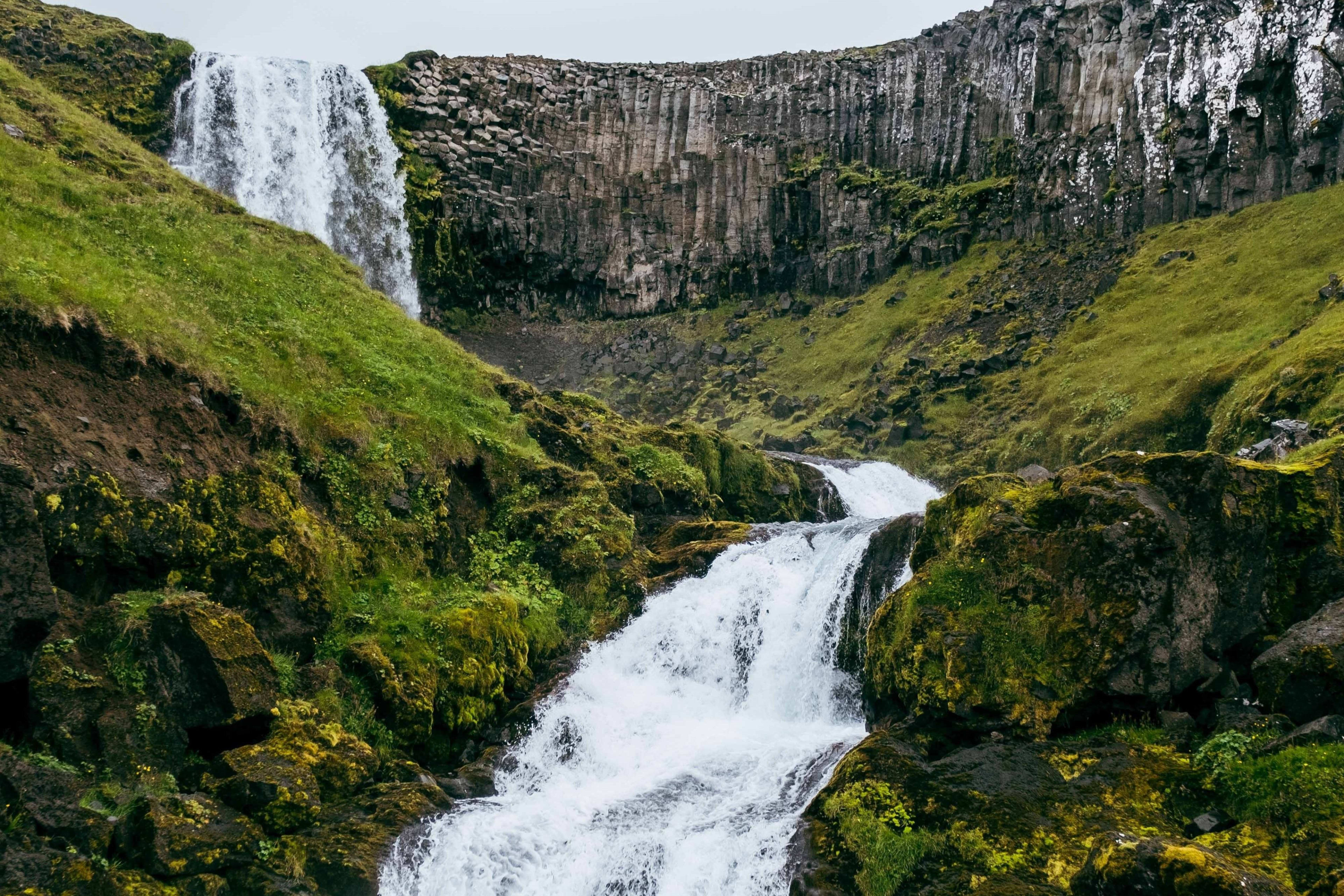
If you're planning a trip to Hórmavik, Forest Cat Travel's 14-day in-depth Iceland summer road trip, featuring the Ring Road 1 and the Westfjords , is an excellent choice. You'll have two days to explore the secluded Westfjords, a place rarely visited by tourists, and visit Dynjandi waterfall, experiencing a different kind of tranquility and purity.
5. Húsavík: Europe's whale watching capital
Húsavík, located in the northeastern city of Nórze, is the largest town in the municipality, with a population of approximately 2,000. Situated along the Skjálfandi Bay, Húsavík's main industries are fishing and tourism. The town experiences cool winters and summer temperatures ranging from 5 to 15 degrees Celsius, making summer and autumn the most suitable seasons for travel.
Húsavík is one of the oldest settlements in Iceland and the first Norwegian settlement in the country. The name "Húsavík" means "house bay" in Icelandic. According to legend, in 870, a Swedish sailor named Garðar, whose course was altered by the winds, landed in Húsavík by chance and built a house there to spend the winter.

Here, in Scharvandi Bay, also known as the "Sea of Leaping Whales," lies the heart of the Husavik whale-watching tour. Rich in nutrients due to the convergence of warm and cold currents, it attracts at least 24 species of whales and dolphins, including humpback whales, minke whales, and white-beaked dolphins, to feed each summer. The success rate of whale-watching trips in summer is as high as 99%, and this azure sea has become the soul of the town.
Landmark attractions
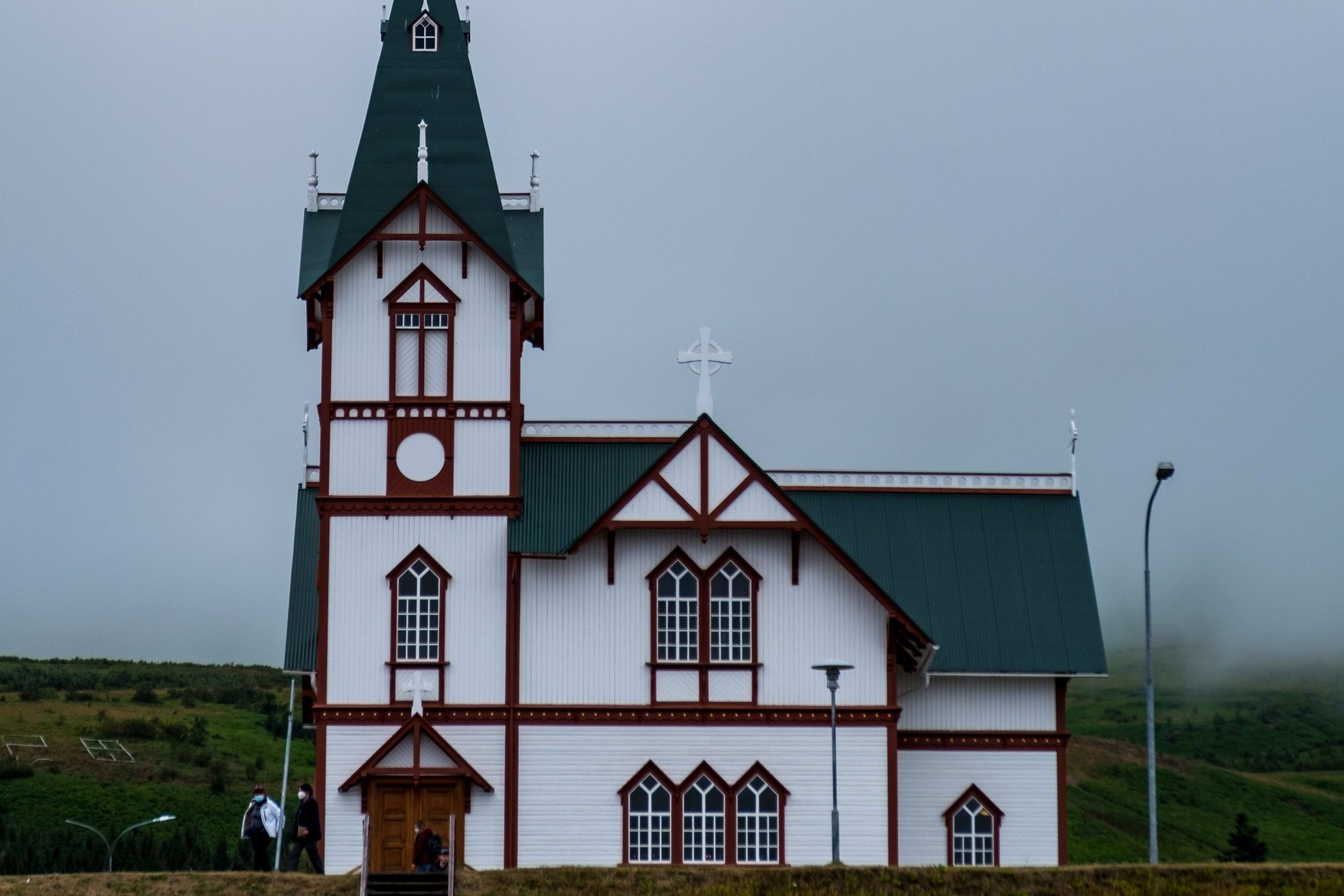
Husavik Church: Built in 1907, its red and white exterior and elegant 26-meter-high bell tower are masterpieces of neoclassical style. Standing quietly beside the harbor, it is the town's most elegant landmark and a favorite spot for photographers.
When traveling to this town, the iconic Húsavíkurkirkja Church is a must-see. Built in 1907 and designed by Icelandic architect Rögnvaldur Ólafsson (Iceland's first architect and a skilled carpenter, leaving behind many acclaimed architectural works), this wooden church follows the Swiss log cabin style often used by Rögnvaldur Ólafsson, with the timber sourced from Norway. The church stands on a pale green base, consisting of a 26-meter-high spire connected by lower buildings on three sides. The roof is dark green, and the white walls are adorned with dark red wooden frames. The low-saturation red, green, and white colors are fresh, natural, and soft, blending harmoniously with the surrounding town landscape and the distant green mountains. Each year, this small church hosts numerous weddings, baptisms, funerals, and an annual conference.

Husavik, known as the "Whale Watching Capital of Europe," is one of the world's top three whale watching spots. Whales are frequently spotted in the bays near the town, and every summer, tourists from all over the world flock to Husavik's wharf to embark on whale watching tours by boat. Scharvandi Bay is home to a diverse array of whales, including the miniature minke whale, the humpback whale with its giant webbed feet, the world's largest animal—the blue whale, the black and white killer whale, and the "big-headed" sperm whale. Whale watchers also have the chance to see adorable dolphins. For nature lovers, cruising through the vast fjords, admiring the azure sea and sky, watching whales appear and disappear on the surface, and dolphins swimming among the waters, is sure to be an unforgettable journey.
Related itineraries: Classic whale watching in Húsavík , Viking sailing whale watching in Húsavík
Húsavík Whale Museum: This specialized museum (Deep Dive into Iceland: Iceland's Amazing Museums) is dedicated to showcasing the marine ecology of the North Atlantic. It houses real, large whale skeletons and provides in-depth information about whale ecology and habits through interactive exhibits. Topics include whale species, habitats, and the history of whale fishing in Iceland. The museum boasts 11 whale skeletons, including a rare blue whale skeleton. This 25-meter-long giant animal was stranded on a beach in northern Iceland in 2010 and subsequently housed in the museum. Blue whales are the largest known mammals in the world, and there are only a handful of such blue whale skeleton exhibits worldwide. The museum also explores the evolutionary history and survival strategies of whales. Visitors can watch the documentary "Whale Wisdom" (50 minutes) by biologist and filmmaker Rick Rosenthal, which takes them on a journey from the Bahamas to Alaska, from Norway to the Azores, tracing the mysterious "songs" and unique "culture" of the whale world. The museum is open from 9 a.m. to 6 p.m. from April to October, and from 10 a.m. to 4 p.m. at other times.

Unique Experience
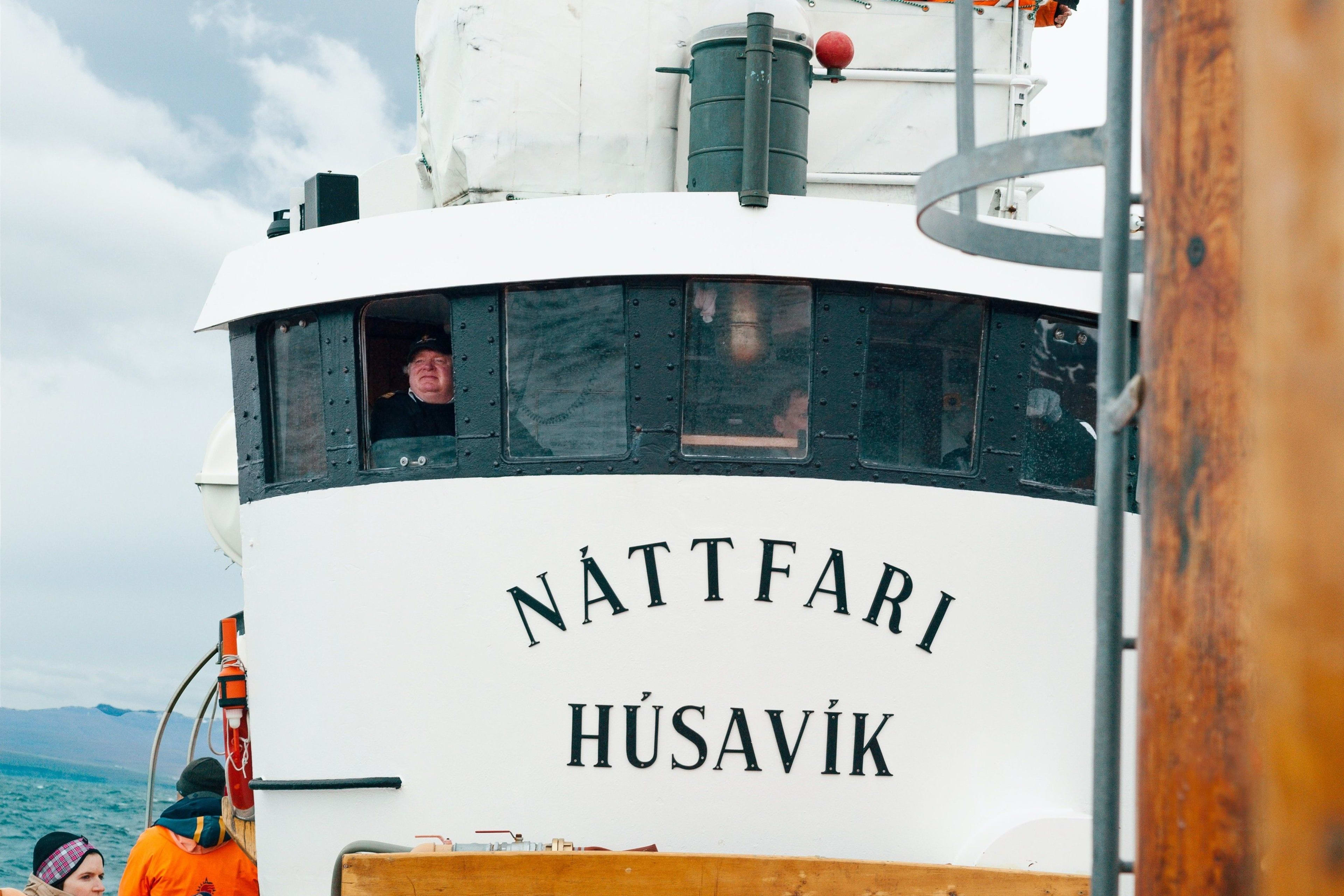
Whale Watching Experience: Whale watching ( the ultimate guide to whale watching in Iceland ) is a signature experience in Husavík. Many whale watching companies offer a variety of options, from traditional oak boats to fast inflatable boats. With a professional guide, you can learn about whales while waiting for the humpback whale's massive tail fin to rise before your eyes—a breathtaking moment. During summer cruises, you might also encounter puffins that inhabit the islands.
GeoSea Geothermal Seawater Bath: After whale watching, consider visiting GeoSea Geothermal Seawater Bath. Built into the cliffside, the hot springs draw in mineral-rich geothermal seawater, allowing you to enjoy the expansive Sjörvándi Bay while soaking in the warm waters. Whether it's the sunset or the aurora borealis ( the most comprehensive guide to aurora viewing in Iceland ), the changing colors of the sky and sea provide the most breathtaking backdrop for your soak.
Explore the Diamond Circle in the North: Húsavík is the ideal starting point for exploring Iceland's northern "Diamond Circle." From here, you can easily reach Dettifoss, one of Europe's most powerful waterfalls; Lake Mývatn, sculpted by volcanic geothermal activity; and the legendary Waterfall of the Gods, said to have been created by the gods—each a magnificent masterpiece of nature.
Tracing the Footsteps of Cinema: The town is widely known as a major filming location for the movie "Eurovision Song Contest: The Story of Fire Saga." Strolling through the traditional fishing village streets and searching for familiar scenes from the film offers a unique experience of how this tranquil town has come to be through the encounter with popular culture.
6. "Western" Territory: Vestmannaeyjar
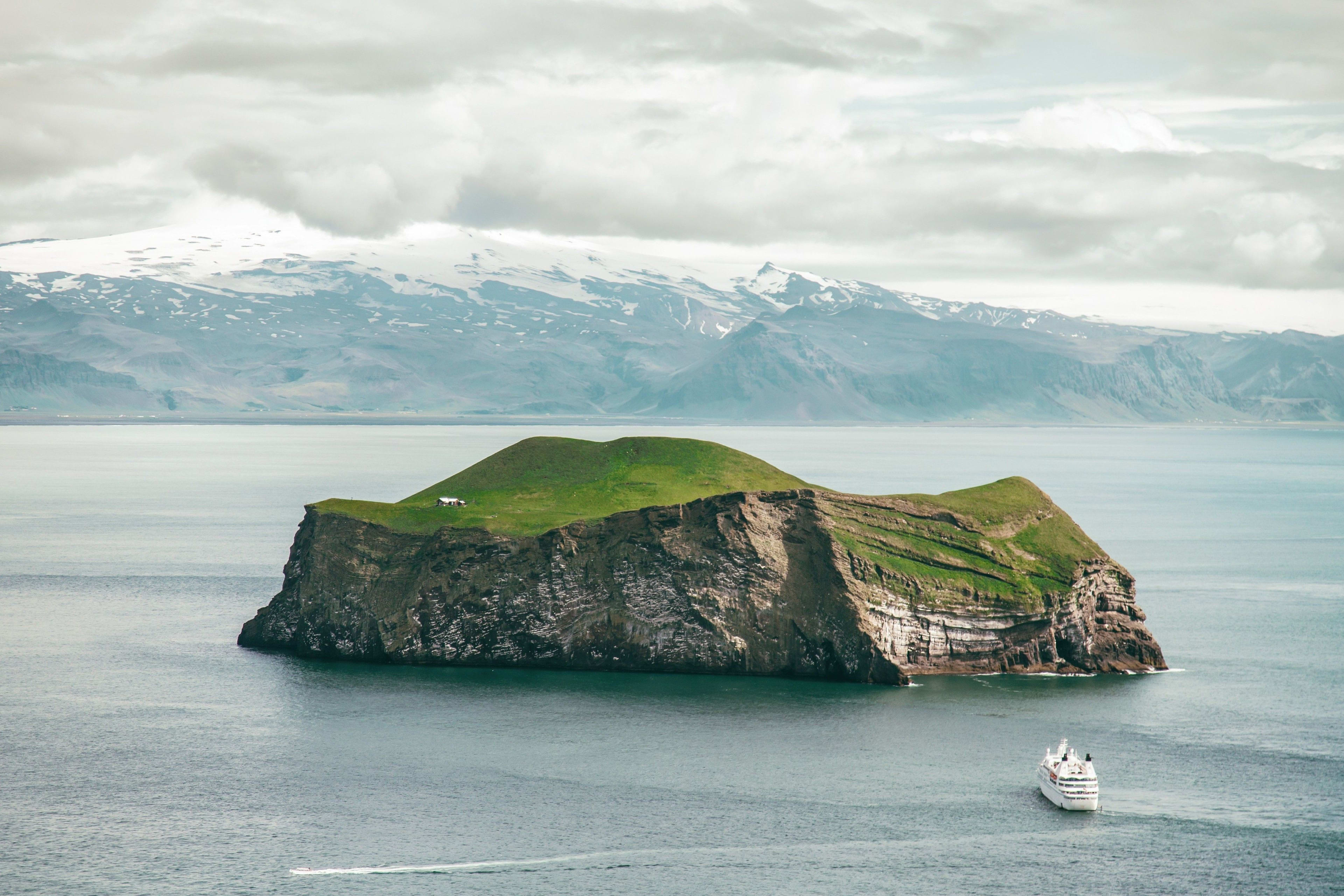
The Vestmannaeyjar is a town located off the southern coast of Iceland, consisting of 15 islands and 30 rocky islets. Heimaey, the largest island, is the only inhabited island in the town, with a population of over 4,000. Over the past tens of thousands of years, a volcanic system composed of underwater volcanoes has continuously erupted, with ejecta accumulating and forming the Vestmannaeyjar archipelago as we know it today. Among the Vestmannaeyjar islands, Surtsey is the most recently formed, shaped by a volcanic eruption that lasted three and a half years starting in 1963. It is located at the southernmost tip of Iceland. The Vestmannaeyjar experiences cold winters and summer temperatures ranging from 10 to 13 degrees Celsius. Summer and autumn are the peak tourist seasons.
The Vestmanna Islands, nestled in the southern corner of Iceland, possess a unique history and culture. Hjörleifur Hródmarrson was one of the earliest Nordic settlers on the southern coastal plain of Iceland. Around 870 AD, Hjörleifur was murdered by his slaves, who then fled to the islands not far from the coast. Subsequently, Ingólfur Arnarson, the first settler of Reykjavik (also a close relative of Hjörleifur), exacted brutal revenge on the slaves, forcing them to flee to what is now the Vestmanna Islands. Because these slaves came from Ireland, which was then considered the westernmost point of the mainland, the Vestmannaeyjar (meaning "Westman" in English) is named after them.

As the largest and only inhabited island in the Westman Islands, Hema is steeped in history and boasts many famous attractions. On January 23, 1973, the Eldfell volcano on Hema erupted, tearing a massive fissure in the ground with molten lava. Lava eruptions reached heights of over 100 meters, prompting a rapid evacuation of residents by boat. The lava subsequently engulfed almost all the houses on Hema. Residents pumped large amounts of seawater to cool the lava, eventually halting its advance. Later, when the volcanic ash covering the former settlements was removed, the original houses and interiors were found to be remarkably well-preserved, resembling a modern-day Pompeii. The Eldheimar Volcano Museum was built to document this devastating natural disaster. The museum preserves images and photographs of the eruption and even several houses that were submerged by lava. A stroll through the museum is like stepping back in time to Hema in 1973, feeling the intense heat and lava-filled landscape. In addition, visitors can spend an hour or two hiking on the newly formed Eldfell volcano, which was created by the volcanic eruption in 1973, and experience the "first scene" firsthand.
The Westman Islands also boast a unique volcanic landscape—Elephant Rock. Shaped by volcanoes and sculpted by waves, a giant rock formation resembling an elephant's head has formed on the coastal cliffs. Visitors to the archipelago can take a boat tour to see this extraordinary landscape and experience the power of nature's creation.
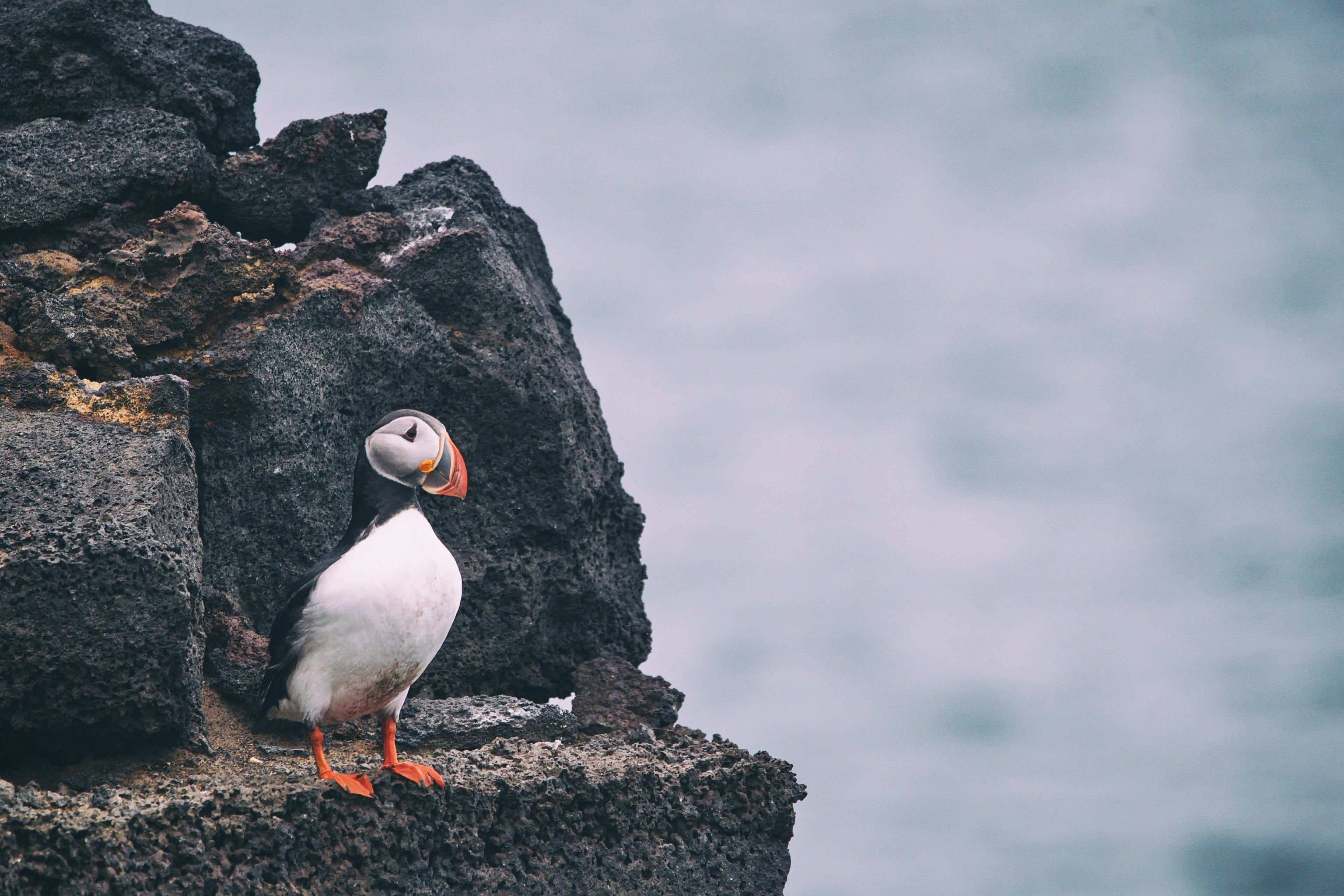
For animal lovers, the puffins of the Westman Islands are a must-see. Icelandic puffins have plump bellies, black and white, tuxedo-like plumage, and red beaks. Their waddling gait is endearingly clumsy. From April to September each year, the Westman Islands welcome a large flock of Icelandic puffins to lay eggs and breed. During this time, the Stórhöfði peninsula at the southern tip of the archipelago attracts many tourists eager to observe the puffins.
Related Itinerary: Vestmannaeyjar Day Trip: Volcano Hike, Coastline Viewing, Puffin Watching

7. The Pearl of the Eastern Fjords: Seyðisfjörður
The town of Seyðisfjörður is located in the East Iceland region, adjacent to the Seyðisfjord and surrounded by mountains. It is an important seaport and maritime transportation hub connecting Iceland and the Nordic region. The town's temperature ranges from about 4 to 14 degrees Celsius from June to September, with lower temperatures in other seasons. Summer and autumn are the peak tourist seasons.
Seydísfjörður is a town steeped in history, with traces of settlement dating back to the early stages of Icelandic settlement. In 1848, Norwegian fishermen began building a port in Seydísfjörður, and with the development of the herring industry, it became one of the most prosperous towns in eastern Iceland. Subsequently, with the decline of the fish processing industry, tourism gradually became the town's mainstay. During World War II, Seydísfjörður was used as a British and American military base, and the entire Seydísfjörður fjord retains remnants of that military activity, such as abandoned aircraft landing strips and the El Grillo, a ship damaged and sunk during the war, which still attracts divers today who come to the town to search for its wreckage.

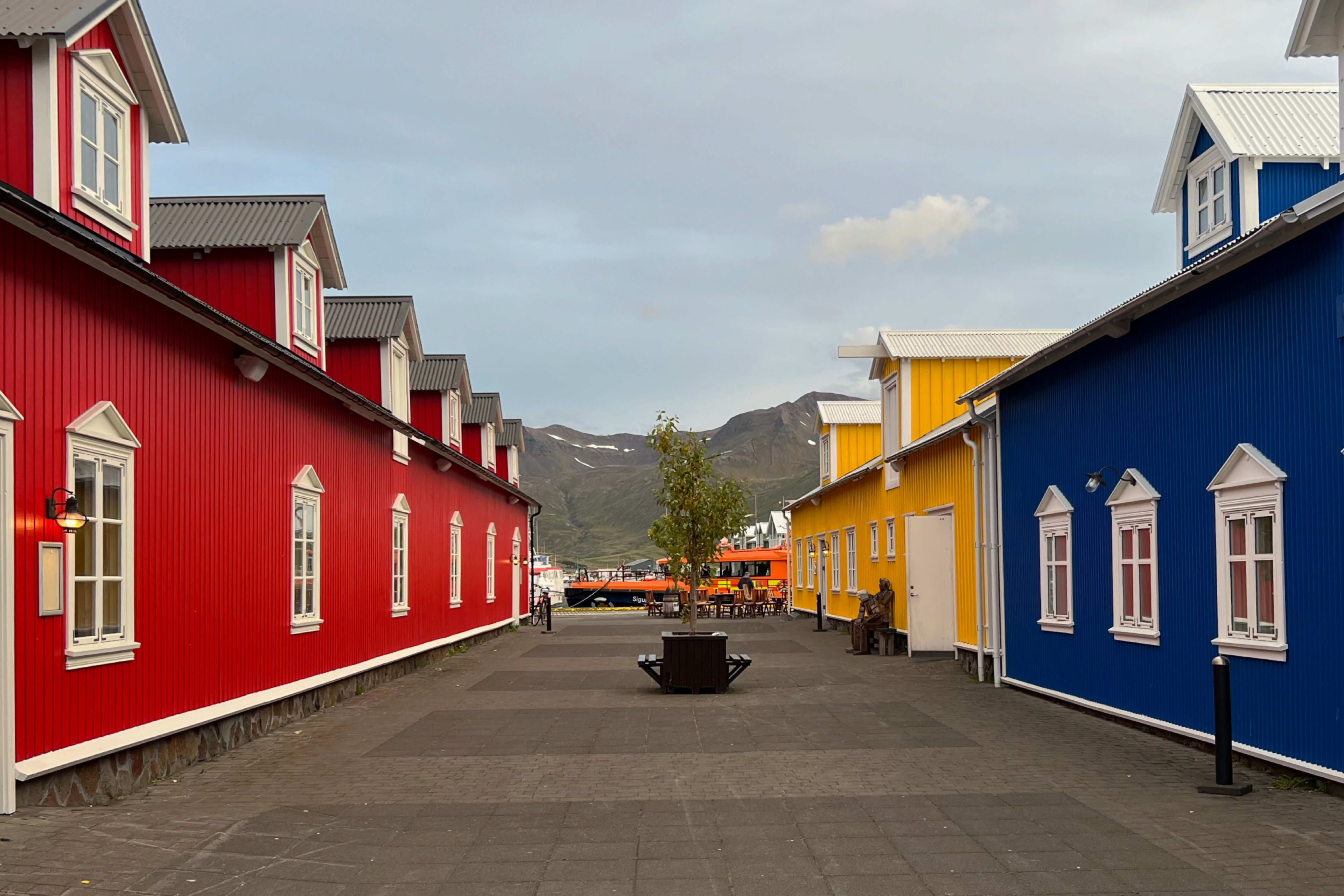
Early Norwegian settlers left a unique mark on the town. Today, we can still see many brightly colored houses in the town: bright blue, light blue, pink, gray, dark red, black, green, pale yellow... The houses, walls and roofs, door and window frames, and the houses and the surrounding mountains and water complement and contrast with each other, creating a concerto of pastel colors. In Seydísfjörður, you can see authentic Norwegian wooden houses without leaving Iceland.
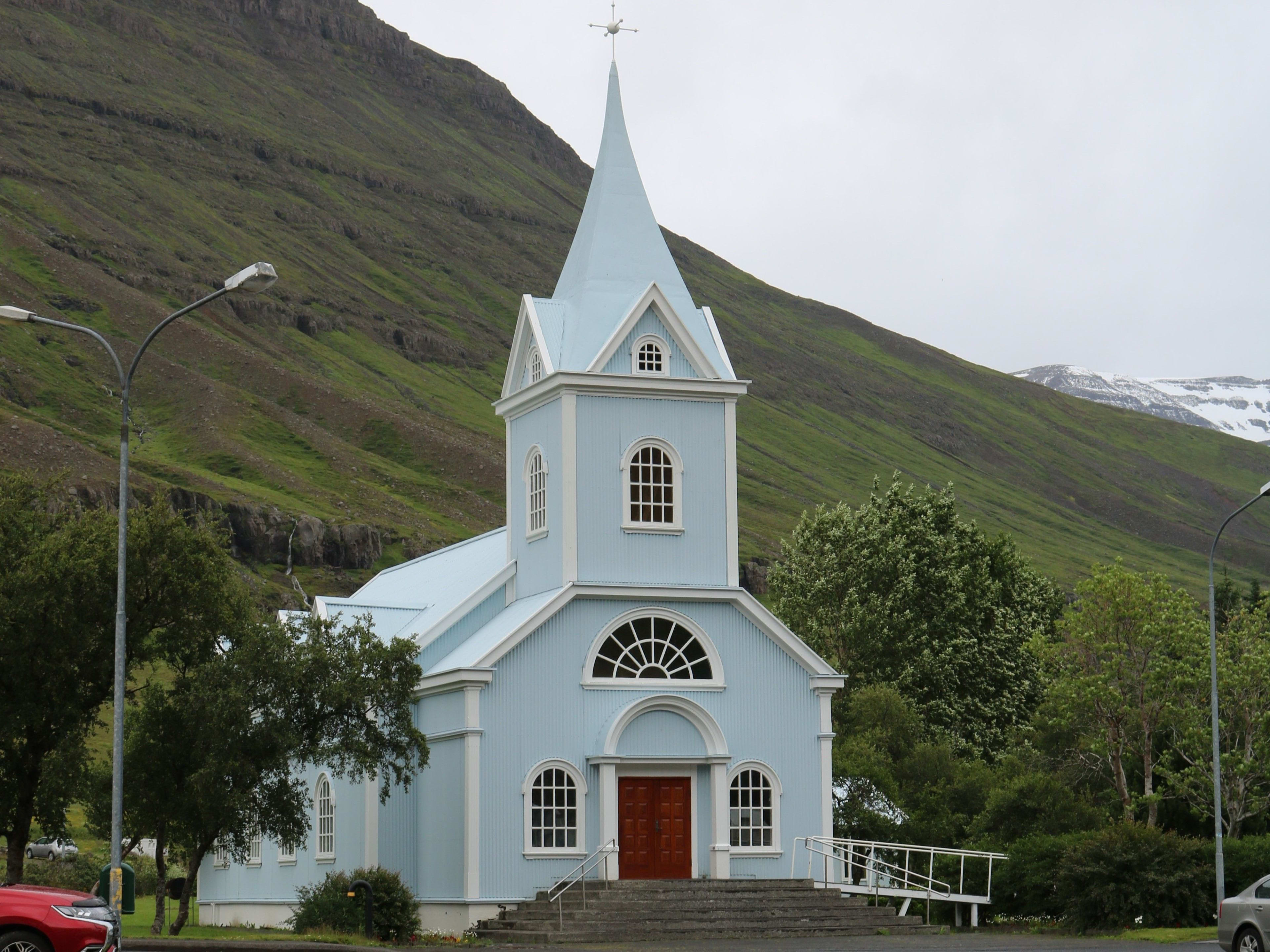
Speaking of architecture, one cannot overlook the unique little chapel of Seyzisfie. In the town, there's a colorful path, like a rainbow, lined with houses that are either simply and freshly colored, black and white, or adorned with print-like patterns. Along this rainbow path stands a charming little chapel. Its exterior is predominantly light blue with white door and window frames. Except for the reddish-brown main door, the entire chapel is blue and white, featuring fan-shaped or arched elements in the door frames and window frames. The overall lines are smooth, the colors soft, and the walls are covered with vertical lines resembling corrugated cardboard. The entire chapel looks like a child's paper-cutting artwork. Unlike the solemn and majestic walls of Gothic cathedrals, this miniature chapel has a gentle and whimsical style.

Surrounded by mountains, Seyzisfie's terrain features dramatic elevation changes, causing the river flowing through the town to cascade down, forming 25 waterfalls of varying sizes. Gufufoss Falls is one of the most popular. Nestled between two mountains, Gufufoss's winding stream is fed by numerous rocks beneath the falls. The road near Gufufoss Falls is the very path the protagonist of "The Secret Life of Walter Mitty" glides down the hillside. Visitors to Seyzisfie's can reach the falls by hiking or driving, parking near the falls and enjoying the view.
Every year in mid-July, Seyzisfie also hosts the LungA Arts Festival , which brings together a variety of art forms including music, art workshops, and lectures. Visitors can immerse themselves in diverse art forms or admire and purchase artworks from the workshops.
The eastern fjords of Iceland are relatively remote and less visited compared to the famous Golden Circle and South Coast scenery, but their fjord landscapes and forests are equally breathtaking. If you'd like to explore the eastern fjords and the charming towns along the way, consider our 8-day, 7-night Iceland summer self-drive tour or our popular 9-day, 8-night Iceland summer self-drive tour and longer packages.
8. Arnarstapi, a secluded town in the Snæfellsnes Mountains
Arnastapi, a small town nestled on the southern coast of the Snæfellsnes Peninsula in western Iceland, faces the vast North Atlantic Ocean. Nestled within Snæfellsnes Glacier National Park ( Iceland's National Parks: Experience the Beauty of Nature and Culture ), the town is an ideal hub for exploring this region known as "Iceland in a Miniature" ( Iceland Trip Must-See: Iceland in a Miniature – Unveiling the Secrets of the Snæfellsnes Peninsula ). From here, it's easy to travel to the peninsula's iconic Kirkjufell (also known as the Church Mountain, the Spine of Iceland: Exploring the Magnificent Scenery of Iceland's Famous Mountain ) or delve deeper into the national park.
Arnastapi's history is closely intertwined with an ancient Icelandic saga, the *Bárðar saga Snæfellsáss*. The legendary half-man, half-troll hero Bárður is considered the protector of this land. Today, a colossal stone statue erected in his honor stands silently by the sea, a unique spiritual symbol of the town. In the 18th and 19th centuries, it was one of Iceland's important fishing and trading ports, and still retains a rustic charm rooted in the sea.
The town's charm lies in the striking contrast and harmonious coexistence of nature and culture. On one side lies a magnificent coastline with surging waves and rugged rocks; on the other, tranquil villages with lush greenery and peaceful houses. Here, there is no hustle and bustle, only the interplay of sea breeze, birdsong, and the sound of waves. Since 1979, the entire coastline and sea area between Alnastapi and the neighboring Hellnar have been designated as a nature reserve, thus ensuring the long-term protection of the town's unique geological and ecological value.
Landmark attractions
Gatklettur Sea Cave: This basalt arch, sculpted by the waves over millions of years, is the most iconic natural landscape in Alnatapi. Two massive rocks are connected by a natural stone bridge, resembling a kiss, hence the name "Kissing Rocks." It's not only a favorite spot for photographers but also a vivid window into the geological power of the Snæfellsnes Peninsula. Standing atop the arch, you can listen to the echoes of the waves crashing through the cave, and in summer, you can see various seabirds that inhabit the area.
The Bárðar Saga Snæfellsáss statue: This colossal basalt sculpture stands quietly by the sea, bringing ancient legends to life. The sculpture depicts Bárður, a half-human, half-troll guardian affectionately known locally as the "Stone Giant" or "Grandpa Octopus." Its rugged and unpretentious form seems to evoke the Saga epic in the wind and the sound of the sea, adding a profound cultural dimension to the town.
Furthermore, Arnastapi is an ideal base for exploring the Snæfellsnes Peninsula: from here, a short drive will take you to the ribbon-like Bjarnarfoss waterfall, the deep, traversable Rauðfeldsgjá valley ( one of Iceland's nine must-see valleys ), and the glacier-covered Snæfellsjökull volcano (" Encountering a Volcanic Romance: What You Need to Know to See Iceland's Volcanoes "). Even the iconic Kirkjufell (Church Mountain), a frequent feature on peninsula postcards, is not far away and easily accessible.
Unique Experience
Coastal Hike: Hiking along the trail between Arnastapi and Heidner is a classic way to experience the Snæfellsnes coastline. This approximately 2.5-kilometer trail winds its way across the ancient black Hellnahraun lava plain, passing unique rock formations, arches, and sea caves sculpted by the waves. The entire hike takes about an hour and ultimately leads to the iconic "Kissing Rock."
Birdwatching experience: From spring to autumn, the cliffs and reefs along the town's coastline provide a habitat for numerous seabirds. Here, you can observe Arctic terns, black-backed gulls, and Iceland's star bird—the puffin ( Iceland Birdwatching Guide: Search for the "National Bird of Iceland," the puffin ). It is recommended to bring binoculars and observe these active "island dwellers" from a safe distance.
Explore lava caves: A unique way to understand the underground world of volcanoes is to follow a professional guide, don a headlamp, and venture into lava caves like Vatnshellir ( Cave Discovery: Exploring the Lava Caves of Iceland's Major Volcanoes ). You can also visit the "Singing Cave" (Sönghellir), named for its unique acoustics, and listen to the natural wonder of echoes.
9. The Pearl of the Westfjords: Ísafjörður
Issafjörður, nestled in the deep, dark Skutulsfjörður fjord in northwestern Iceland, is the largest town in the vast and remote Westfjord region. The town, with approximately 2,700 inhabitants, is nestled between mountains and the sea, experiencing the bright light of the midnight sun in summer and the long, dark nights of winter.
The town's history dates back to the 9th century with its initial settlements. From the 16th century onwards, it gradually developed into an important fishing and trading center thanks to its natural harbor, and became a city with its own municipality in 1786. Until the early 20th century, the town remained one of Iceland's largest settlements and a hub for services, commerce, and tourism in the Westfjords region.
The town's old town is well-preserved, with rows of brightly colored 18th-century wooden houses. These houses, built by foreign merchants, once served as trading posts, warehouses, and residences, and have survived intact thanks to never having been destroyed by fire. Strolling through the town, one can still feel the bustling atmosphere of the old port.
Today, tradition and modernity converge here. Tourism has injected new vitality into the port, generating about 70% of the town's port revenue and making it Iceland's third busiest cruise port, continuing its vitality against the backdrop of an ancient harbor.
Landmark attractions
Dynjandi Waterfall : Known as the "Pearl of the Westfjords," this waterfall ( one of Iceland's ten most breathtaking waterfalls ) is about 60 kilometers from the town. Composed of seven tiers of water, it reaches a total height of about 100 meters. The water flows like layers of flowing gauze, creating a powerful and majestic spectacle, making it one of Iceland's most spectacular waterfalls.
The Old Town and the Westfjords Heritage Museum: The town itself is a living museum. The Westfjords Heritage Museum is housed in a wooden house built in 1734, the oldest surviving wooden structure in Iceland. Its exhibits range from ship repair and the Cod Wars to the traditional making of dried fish, offering a window into the local maritime culture.
The Whalebone Arch in Jónsgarður Park: In the town's central park, an archway made of a whale's jawbone stands silently. It is not only a unique backdrop for photos, but also a symbol of the town's deep historical connection with the sea, quietly telling the story of the whaling era.
Unique Experience
Hiking Experience: The town is an ideal starting point for hiking enthusiasts, with a variety of officially planned trails to choose from. The Old Town Trail (1.8 km) winds through historic districts; the Upper Town Trail (2.3 km) connects the port and cultural attractions; and the Ring Trail (4.3 km) offers panoramic views of the fjord and town. For an even more breathtaking vista, you can challenge yourself with the more difficult Trolls Ridge route.
Kayaking: Boating is the main way to explore Skutulsfjörður. You can take a birdwatching tour to Vigur Island (one of Iceland's largest puffin habitats), or choose to kayak up close to seals and seabirds on calm waters and look up at the surrounding mountains from a unique perspective.
Hiking and Camping: Hornstrandir Nature Reserve is Iceland's most remote and pristine nature reserve, with no roads or permanent residents. It is also a habitat for Arctic foxes and a haven for hikers. Ósafjörður is a key route into the reserve, and hiking and camping are popular activities during the summer.
Special Festivals: The town boasts its own ski resort, offering downhill and cross-country skiing experiences in winter. During special periods, visitors can enjoy the free "Aldrei for ég suður" music festival during Easter, or soak up the unique atmosphere of the European Swamp Football Championship in August.
10. Egilsstaðir, the largest town in eastern Iceland.
Ejlstad is located in the Vjjður valley in eastern Iceland, on the northern shore of Lagarfljót, Iceland's longest lake. As the largest town in the east, it has a permanent population of about 2,500.
The town's development is closely linked to the modern transportation network. Located along the Ring Road (Route 1), it serves as a vital hub connecting the north and south, and the east and west of Iceland. The town's core role is to provide comprehensive services, including well-equipped gas stations, supermarkets, medical facilities, and an airport, making it a reliable supply depot and transit point for long journeys.
Here, travelers can enjoy the convenience and comfort of a modern town while easily accessing the surrounding natural wonders. Ekistiel lacks a dense concentration of tourist attractions, but its unique tranquility and functionality allow journeys to transform from mere "passing through" into "deepening" explorations of the vast eastern landscape.
Landmark attractions
Lake Lagarfljót: Located near the town, Lake Lagarfljót is Iceland's longest lake and is shrouded in mystery. Legend has it that a lake monster (Lagarfljót worm) inhabits the lake, adding to the mystique of its tranquil waters. The lakeside is perfect for hiking, cycling, or picnicking, allowing you to enjoy the stunning scenery while contemplating the legendary creature.
Hengifoss : Located very close to the town, Hengifoss is one of Iceland's tallest single-unit waterfalls, with a drop of 128 meters. The water gushes out from a clay cliff cave with red stripes, creating a unique spectacle. The hiking trail to the falls is of moderate difficulty, and the scenery along the way is a rewarding experience for hikers.
Hallormsstaður Forest : In Iceland, where "trees outnumber people," the area near Ekistil boasts the country's largest forest—Hallormsstaður Forest. Ideal for hiking and cycling, numerous trails meander through the forest, making you feel as if you've stepped from the open wilderness into a dense Nordic jungle. The forest is also a birdwatching hotspot and has campsites ( Iceland Camping Guide: Immersing Yourself in Iceland's Nature Under the Midnight Sun ), perfect for travelers seeking to immerse themselves in nature.
Unique Experience
Vök Thermal Baths: This is a unique geothermal experience in eastern Iceland. Multiple infinity pools and bathtubs float directly on the clear waters of Lake Urriðavatn, with the thermal spring water sourced from geothermal activity at the bottom of the lake (Iceland's Geothermal Wonders: Exploring the Geothermal Wonders of Iceland ). Soaking in the thermal baths here allows your body and mind to merge with the vast lake and mountains, creating an exceptionally tranquil and relaxing experience.
Hiking and wildlife hunting: East Iceland is the only habitat for wild caribou, and you often have the chance to spot them while driving. The coastal cliffs are also a paradise for seabirds like puffins in the summer. Furthermore, there are hiking trails suitable for different fitness levels, from lakeside paths to forest trails ( exploring Iceland's beginner hiking trails is unlike anything you've seen on Earth ).
Explore the surrounding fishing villages by bicycle: Rent a bicycle and leisurely ride through the Hallormsstaður forest – a slow-paced way to get close to nature. You can also head east along the scenic Route 95 to visit quaint fishing villages like Djupivogur ( Iceland's most beautiful secluded fishing villages ), experiencing the fusion of art and nature.
11. Reaching the southernmost tip of Iceland: Vík
Vik is nestled at the foot of the Mýrdalsjökull glacier on Iceland's south coast, facing the vast North Atlantic Ocean. Located approximately 180 kilometers from the capital Reykjavik, it's an important stop on the Ring Road (Route 1). With a permanent population of only about 600, Vik, as Iceland's southernmost settlement, boasts expansive and wild scenery, making it an unforgettable stop for countless travelers on their south coast journeys.
"Vík" means "bay" in Icelandic. Although it has been a vital passageway since ancient times, it wasn't officially established as a settlement until 1890. Today, this tranquil town is the largest community within a radius of several kilometers, boasting well-equipped gas stations, supermarkets, accommodations, and restaurants. It serves as an ideal base for exploring the natural wonders of the south coast, such as the black sand beaches and columnar basalt formations, and provides a warm and convenient haven for travelers.
Landmark attractions
Reynisfjara : This jet-black sand beach is Vik's most famous natural landscape. The black sand originated from volcanic lava, sculpted by the waves over thousands of years. On one side of the beach stand basalt columns resembling organ pipes, formed by the slow cooling of lava. Looking out to sea, three giant rocks called Reynisfjara rise from the waves; legend says they are trolls who failed to return home in time and turned to stone. It's important to note that the waves here are fierce and unpredictable; when visiting, be sure to stay away from the shore and never turn your back to the sea.
Vik Red Roof Church: A wooden church built in 1934, with pure white walls and a bright red roof, it stands quietly on the hillside and is a cultural landmark of the town. The hillside where the church is located offers a superb vantage point for overlooking the entire panorama of Vik, where the town's colorful rooftops contrast beautifully with the dark beaches in the distance.
Other sights: Dyrhólaey, a natural rock archway topped with a lighthouse, lies to the west of the town and is an excellent spot for observing the coastline and seabirds, especially puffins in summer. To the east, the wreckage of a DC-3 aircraft on the Sólheimajökull glacier lies silently in the black sand, creating a surreal and desolate scene.
Unique Experience
Ice Cave Exploration and Lava Experience: A guided tour deep into the Katla Ice Cave beneath the Myrdalskjöld ice sheet offers a unique way to experience the interior of the glacier. For a fiery experience, watch the Vik Lava Show – the world's only safe and intimate performance that allows you to witness the power of this land amidst heat and light.
Glacier Hiking: Nearby Sólheimá Glacier offers glacier hiking experiences ( Exploring the Wonders of Ice: A Complete Guide to Glacier Hiking in Iceland ). With a guide, don crampons and walk on the ancient glacier, exploring the wondrous world of crevasses and ice sculptures.
Summer birdwatching: From May to August each year, flocks of puffins ( native Icelandic animals ) come to nest on the cliffs around Vik. A trip to places like Cape Dijolari offers the opportunity to observe these lively and adorable "ocean clowns" at work.
12. Savor authentic lobster flavors in Höfn.
Town Introduction
Höfn, meaning "port" in Icelandic, is a small peninsula located on the southeastern coast of Hönæfjord. Surrounded by the sea on three sides and backed by mountains, the town serves as an important transit point between Kirkjubæjarklaustur and Egilsstaðir. With a permanent population of only about 2,100, it holds a unique place on the Icelandic travel route due to its dual identity: a crucial gateway to Vatnajökull glacier and Iceland's renowned "lobster capital."
The town's history dates back to the early settlements in Iceland, but its true prosperity began in the 19th century. Relying on the abundant fishing grounds in the surrounding area, fishing has always been the economic lifeline and cultural core of the town, earning it the reputation of "Lobster Capital".
But Hofen's charm extends far beyond its seafood. Nestled on the southern edge of Vatnajökull National Park, its massive silhouette stretches across the horizon. Here, glaciers meet the ocean, and wilderness and harbor reflect each other, creating Hofen's unique landscape—both vast and welcoming.
Landmark attractions
Jökulsárlón Glacier Lagoon: About an hour's drive from Höfn, you'll reach this tranquil and magical glacial lake. Huge icebergs break off from the Breidamerkurjokull glacier and float on the azure waters. They drift into the sea with the tides and are then washed back onto the black sand beaches, scattering as glistening ice blocks that shimmer like diamonds in the light. This is also a great spot for seal watching and landscape photography.
Vatnajökull National Park: As the largest glacier in Europe, Vatnajökull covers approximately 8% of Iceland's land area. From Höfn town, you can easily reach the Skaftafell area within the park, which is the main starting point for experiencing glacier hiking and exploring the landscape where ice caps and volcanoes ( counting Iceland's seven extraordinary volcanoes ) intertwine.
Vestrahorn : This mountain, located only about 10 kilometers from Hofn town, is also known as "Bat Mountain" because its shape resembles a bat's wing. Its angular black body rises abruptly from the black sand beach, and the lagoon in front of it often reflects a clear image, especially at sunrise and sunset, where the light and shadow create a tranquil and expansive scene.
Hofnarkirkja Harbor and Church: The town's harbor is filled with brightly colored fishing boats, exuding the everyday atmosphere of a fishing village. The small Hofnarkirkja Church, with its red roof and white walls, stands quietly amidst the scenery, appearing simple yet beautiful against the backdrop of snow-capped mountains and the sea.
Unique Experience
Ice Cave Adventure: This is a limited-time winter experience in the town of Hofn (approximately November to March). Led by a professional guide, you will travel in a modified vehicle to the edge of the glacier, and then hike into a natural ice cave sculpted by glacial meltwater ( Ice Cave Exploration Guide to Experience Glacial Wonders ). Inside the cave, the ice walls shimmer with a crystalline blue, and under the refraction of light, it resembles a dreamlike crystal palace.
Glacier Hiking: Stepping onto the tongue of Vatnajökull glacier under the guidance of a professional guide is a classic way to experience the power of Iceland's ice. You will wear crampons and walk on the ancient glacier, exploring crevasses, ridges, and the azure ice, while learning a wealth of glacial knowledge.
Glacier Lagoon Kayaking: Kayaking on Jökulsárlón Glacier Lagoon in the summer is a unique way to get up close to icebergs. Kayaking between giant icebergs of various shapes on the calm water allows you to experience the tranquility and grandeur of glaciers from a different perspective.
Photography and Lobster Festival: For photography enthusiasts, the sunrises and sunsets over Westhorn Hill and Diamond Beach offer excellent subjects. If you visit in July, you can participate in the lively lobster festival in Hofn, enjoy delicious food, listen to music, and immerse yourself in the local festive atmosphere.
13. Selfoss, Iceland's Golden Circle hotspot
Selfoss is located in southern Iceland, nestled along the Ölfusá River. As the southern residential and commercial center, it has approximately 7,000 to 8,000 residents and offers a level of convenience and vibrancy unlike that of remote towns.
The town is located directly along Ring Road 1, only about 57 kilometers from Reykjavik, less than an hour's drive away. It is an important town for heading east from the capital to the south coast and an ideal starting point for visiting the Golden Circle ( Iceland's Golden Circle ) scenic area, making its geographical location extremely advantageous.
Selfos's modern development began in 1891 with the construction of a bridge spanning the Olfussa River. This bridge connected north and south, gradually transforming the town into a regional center for agriculture, services, and trade. In recent years, the town center has been renovated, blending historic buildings with modern spaces, resulting in numerous excellent restaurants and leisure venues.
Selfos's charm lies in its combination of urban convenience and opportunities to connect with nature. Here, you can easily obtain all kinds of supplies, sample a variety of cuisines, stroll along the riverbanks, or visit nearby waterfalls, hot springs, and black sand beaches. It's a comfortable and practical resting place for travelers on long journeys.
Landmark attractions
Skyrland Icelandic Yogurt Exhibition: An experience center for Skyr, Iceland's national dairy treasure. This interactive exhibition, located in a newly renovated old dairy factory in the town center, showcases the history and production process of this ancient Viking delicacy. It also features a tasting bar where you can sample various flavors of authentic Skyr. This is the starting point for a deeper understanding of Icelandic food culture.
The Olfussa River and the Suspension Bridge: The Olfussa River is the lifeline of Selfoss. The iconic suspension bridge spanning the river was built in 1945 and has been a vital link between the two banks since the first bridge was completed in 1891. A stroll along the riverbank is a popular recreational activity, offering expansive river views, birdwatching, or capturing serene scenes of the bridge against the distant mountains.
The Bobby Fischer Centre: This unique museum is dedicated to chess legend Bobby Fischer, who won the World Championship in Iceland in 1972 and lived here until his death. The centre displays items related to his career and is a must-see cultural site for chess enthusiasts and history buffs alike.
Selfos Church: Built in 1956, this church is the town's landmark. Its architecture is simple yet solemn, featuring exquisite stained-glass windows. Admission is free, and climbing the tower offers stunning panoramic views of the river and the town.
Unique Experience
Geothermal Hot Spring River: About a 20-minute drive from Selfoss, you'll reach the Reykjadalur Hot Spring. This is an experience that combines light hiking with ultimate relaxation: hike about 3 kilometers along the valley to reach a natural geothermal hot spring river where you can completely relax in the warm, steaming water.
Experience local pool culture: No need to travel to the expensive Blue Lagoon. At the Sundhöllin public pool in town ( Iceland Pool Guide: Swimming with Family and Friends in Iceland ), you can experience authentic Icelandic pool culture at an affordable price. It features geothermal hot tubs at 38-42°C, a 28°C heated pool, a sauna, and even a children's slide, making it a perfect place to experience local life.