跳至主要內容

冰岛冰洞探秘攻略 带你感受冰川奇观

阅读时长7分钟

作者:董昕怡

2024年3月21日

Iceland, one of the five Nordic countries, is a popular travel destination in the Nordic region due to its unique geological landscape. In this land of "fire and ice," if the fiery eruptions of Icelandic volcanoes create the most passionate legends, then the pure, azure Icelandic glaciers record the deepest stories. The magnificent and unchanging glaciers, witnessing the changing times at the northernmost point of the world, are the dream destination for countless tourists. But beneath the thick glaciers lies another even more unique and pristine landscape—Ice caves. How are these ice caves formed? What do they look like? What ice caves are there in Iceland? How do you choose which ice caves to visit during your Iceland trip? What should you be aware of when visiting them? How do you register? This ice cave exploration guide has all the answers!

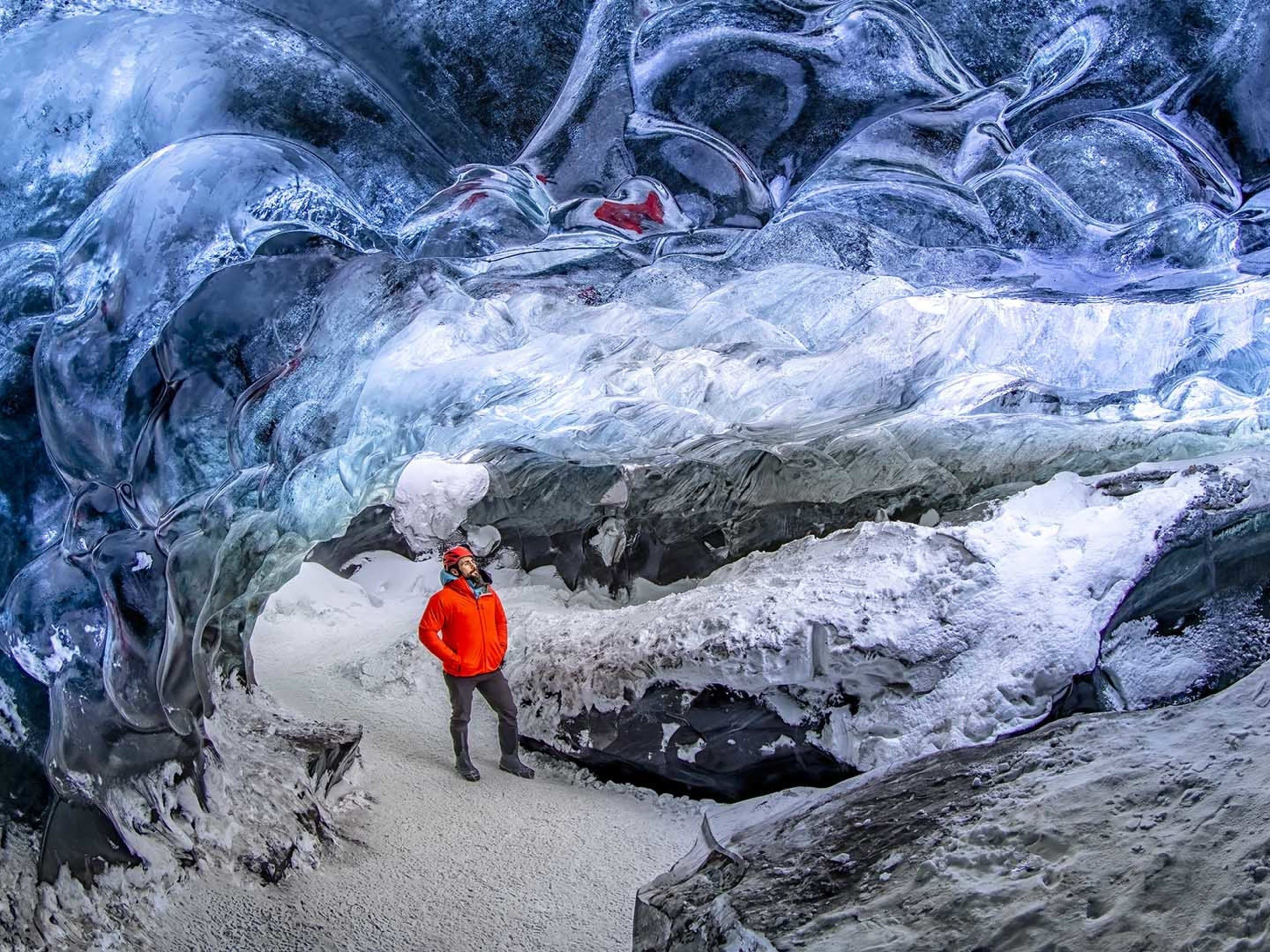
Hidden beneath glaciers, ice caves resemble the secret eyes of Iceland, quietly awaiting explorers from around the world to experience their breathtaking wonder. Stepping into this frigid wonderland, one feels enveloped by the atmosphere of ice; the air is crisp and crisp, and the surrounding ice walls are solid and pristine. The varying shades of blue veins on the walls intertwine, like the stunning colors painted by an artist on nature's canvas. Light filters through the crystalline ice, creating countless playful shadows, a divine spectacle that will stay with explorers for a lifetime. Forest Cat Travel offers packages that include ice cave exploration, such as the 4-day Iceland Winter Essential Tour: Blue Ice Cave Exploration & South Coast Scenery , and the 7-day Iceland Winter Selection Tour: Blue Ice Cave Exploration & Snæfellsnes Peninsula . Alternatively, you can choose a self-drive tour, joining the 6-day, 5-night classic Iceland winter self-drive tour , and even arrange your own time to visit the volcanic black ice caves that are open year-round!

How are ice caves formed?

Ice caves are a very rare natural wonder, and their formation principles are quite unique, falling into two categories. One is the freezing of water within a rock cave, and the other is the melting of ice within a glacier. Iceland's glacial ice caves belong to the second type; they are "ice caves" completely hidden inside the glacier, formed by the repeated process of glacial meltwater freezing again. To learn more about Iceland's four major glaciers, you can click for a more detailed introduction to Iceland's four major glaciers .

glacier of iceland
<font dir="auto" style="vertical-align: inherit;"><font dir="auto" style="vertical-align: inherit;">Icelandic glaciers</font></font>

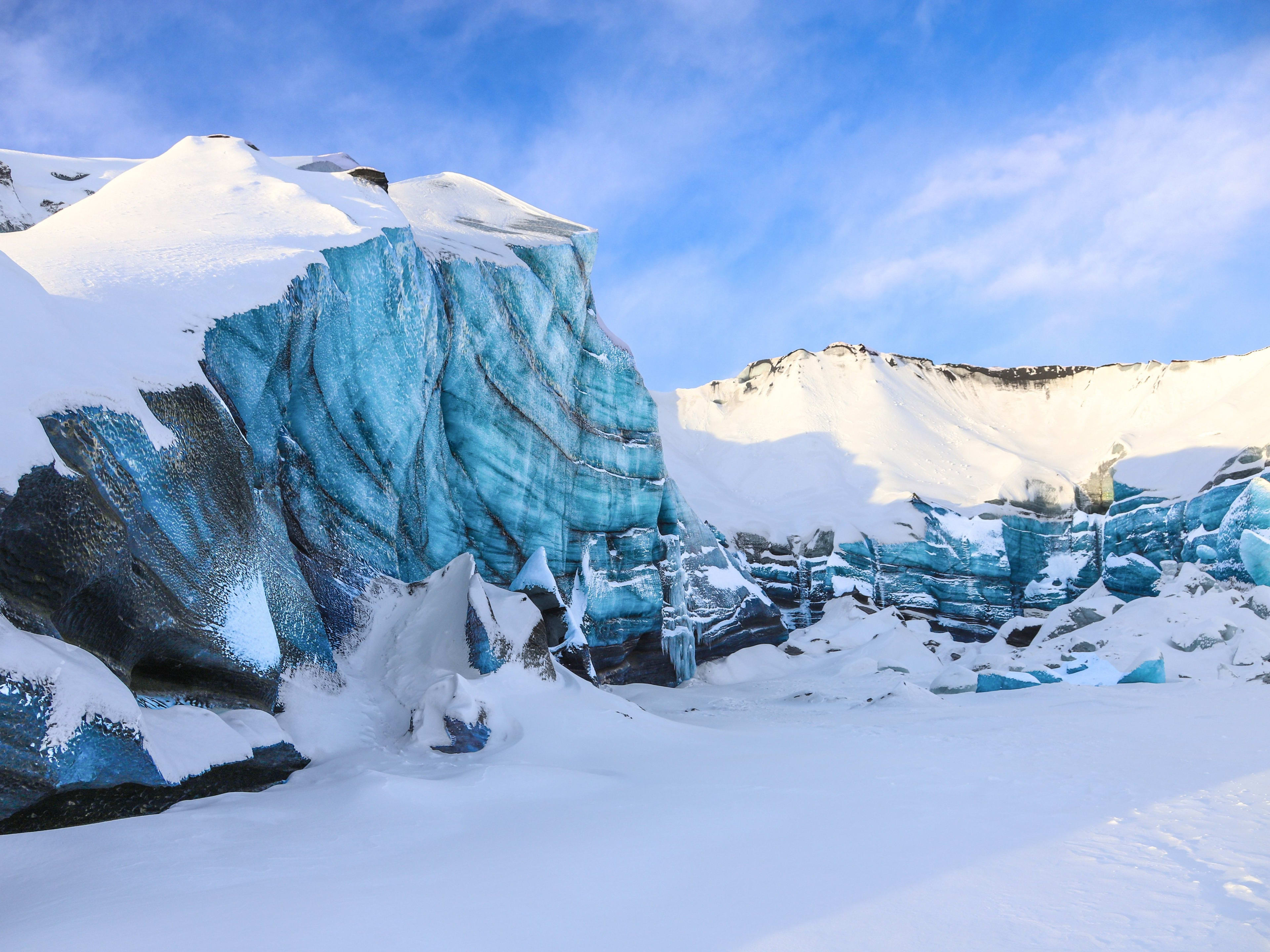
Located near the Arctic Circle, Iceland boasts large glaciers. Each summer, as temperatures rise or geothermal activity occurs, the glacier surface melts. The meltwater flows along the glacier's slope and through its fissures, converging to form rivers. The erosive action of these rivers creates crevasses and caves of varying sizes – ice caves. These ice caves are diverse in shape and unique in appearance, but they are difficult to spot during the summer when meltwater covers them. In winter, the meltwater recedes and freezes back into solid ice, revealing the ice caves to the public, allowing experts to explore and discover these ice palaces. Besides ice caves, other features within the glacier include ice funnels, ice wells, and ice tunnels.

What are the colors and shapes of ice caves?

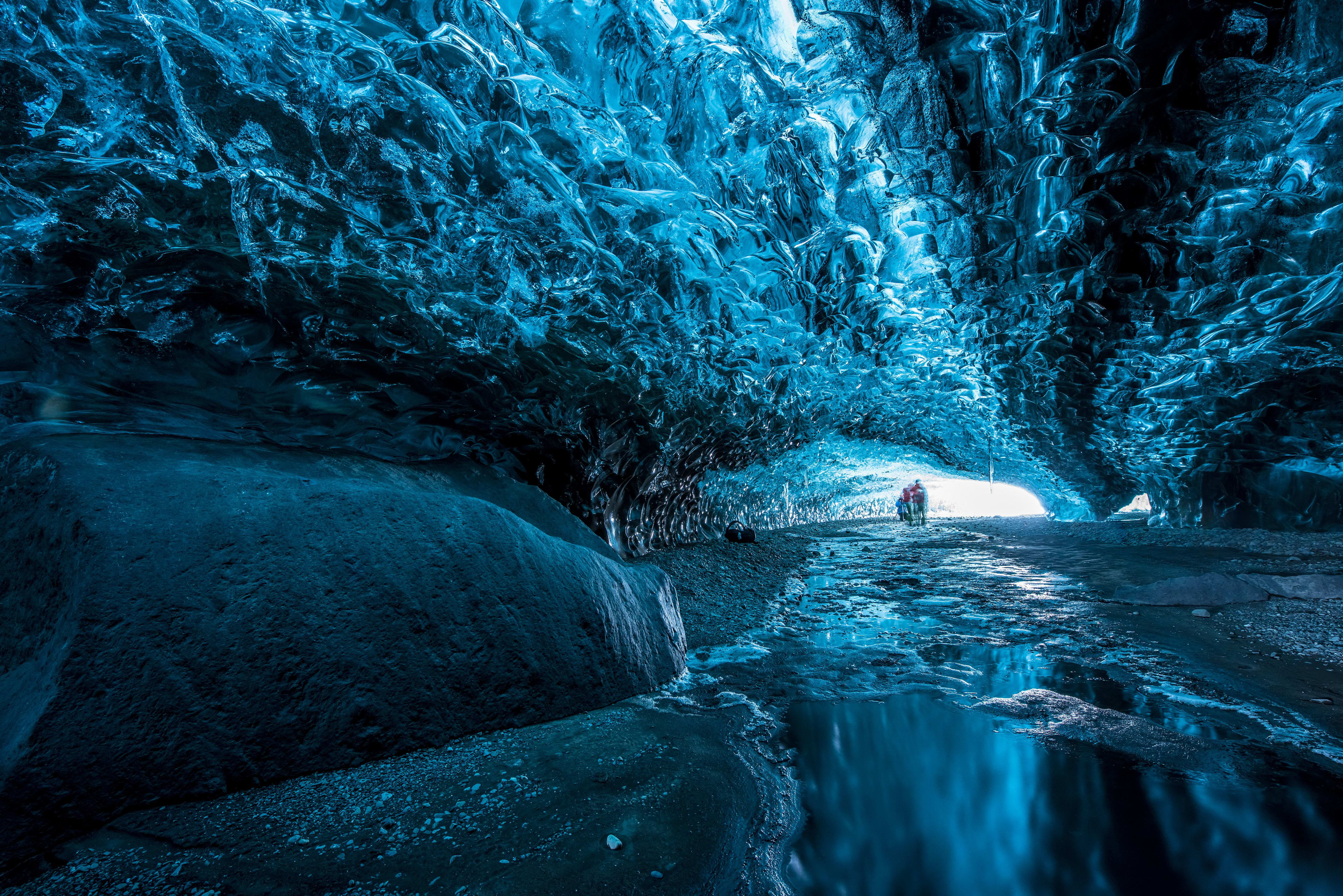
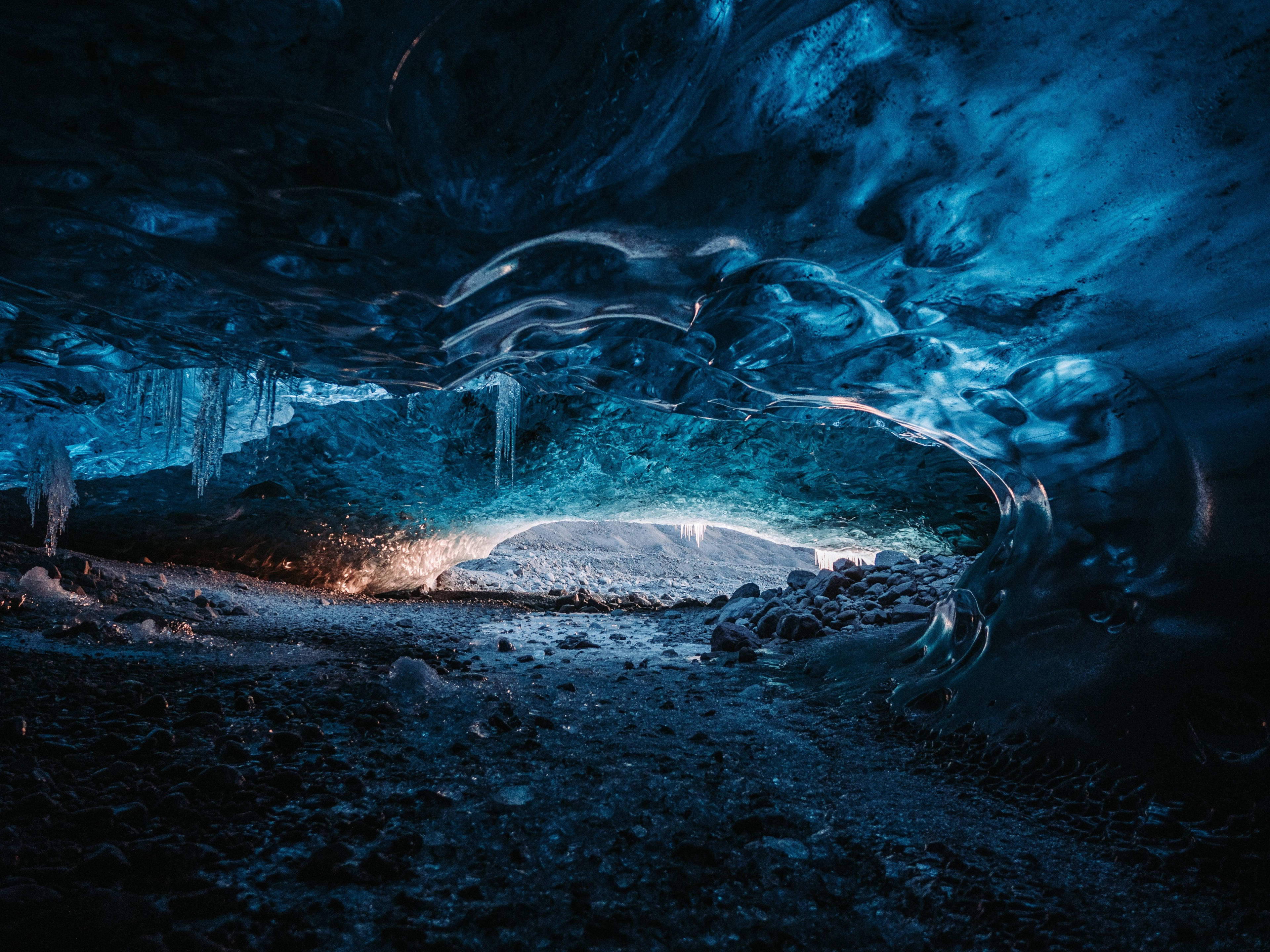
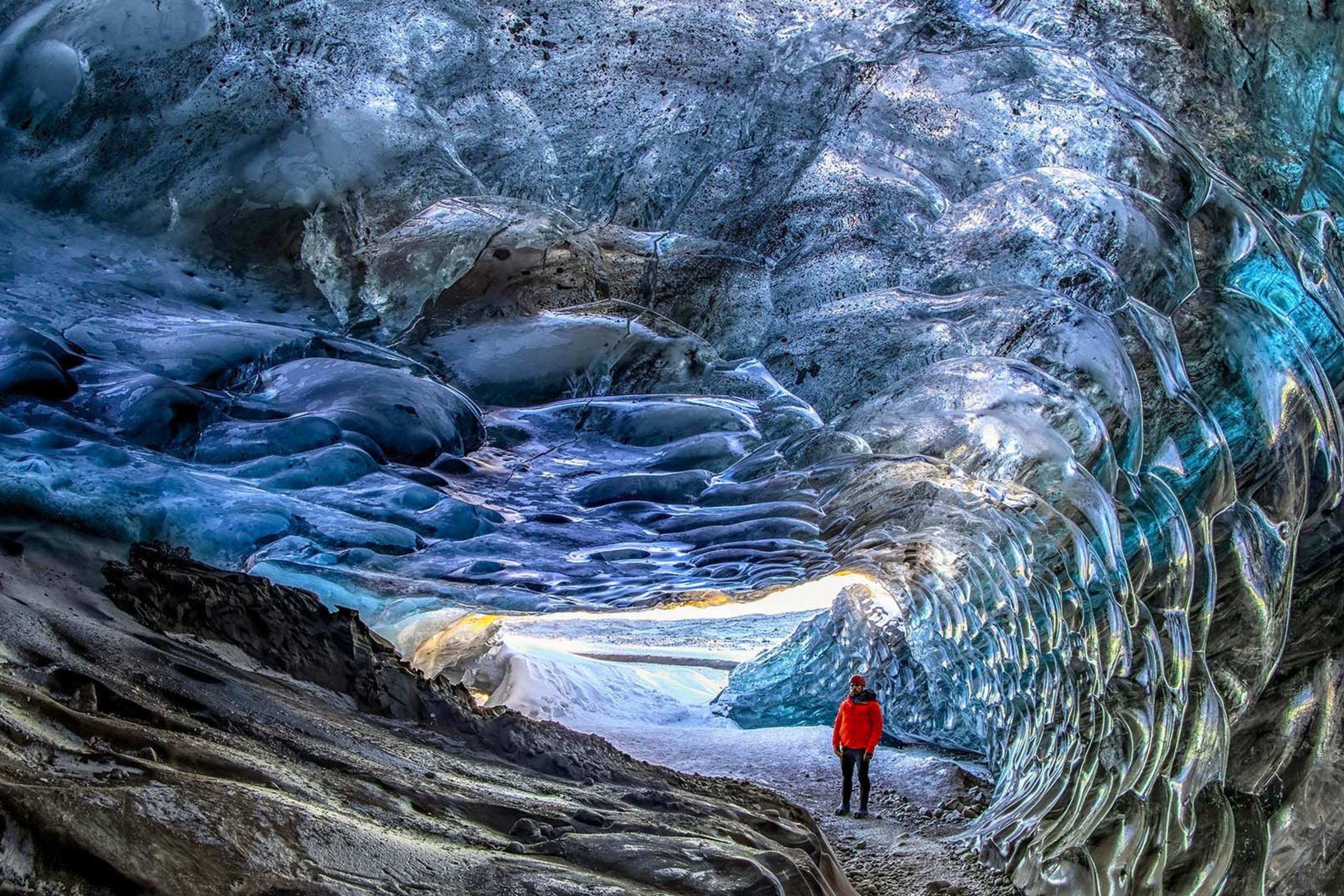
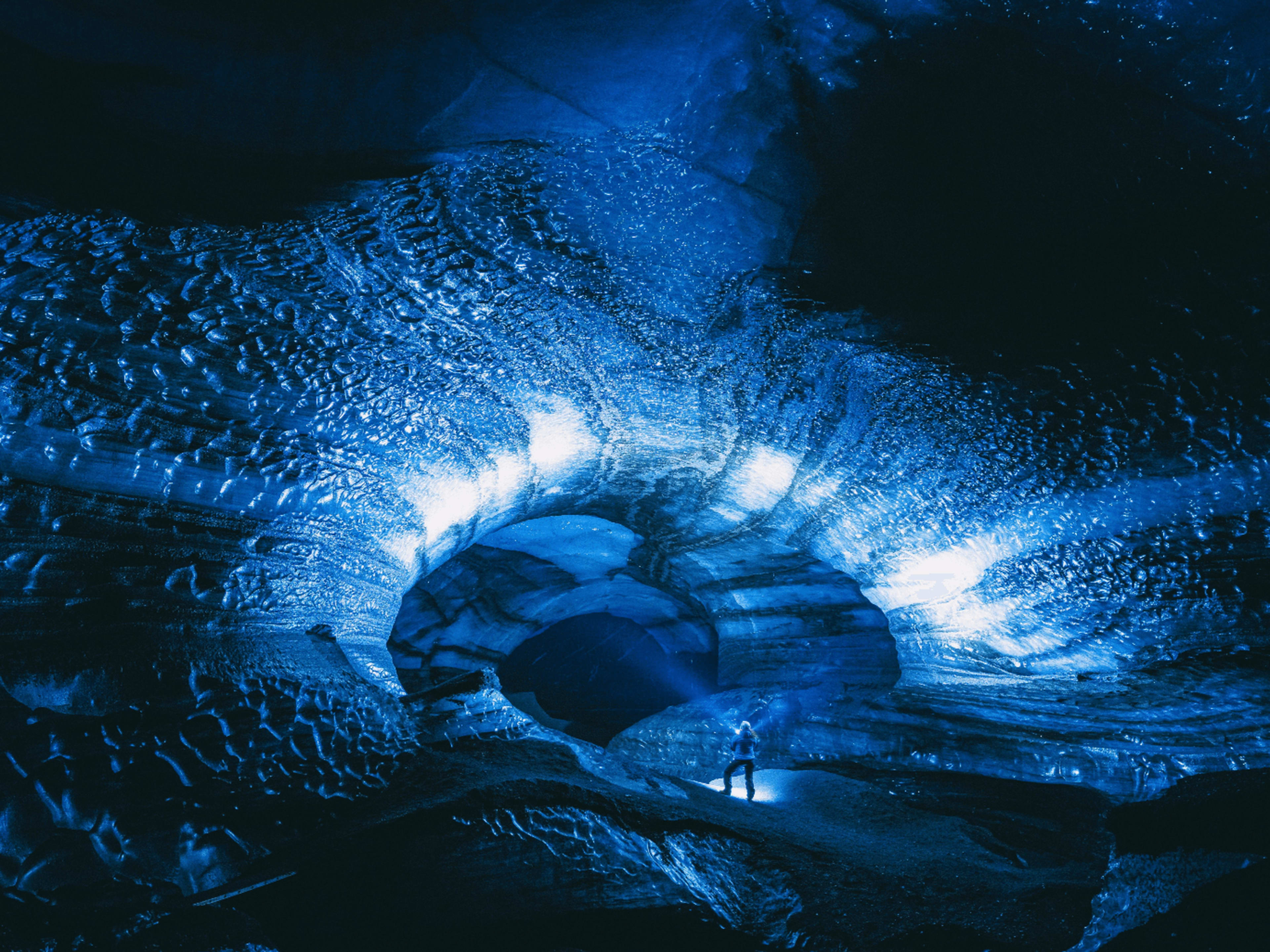
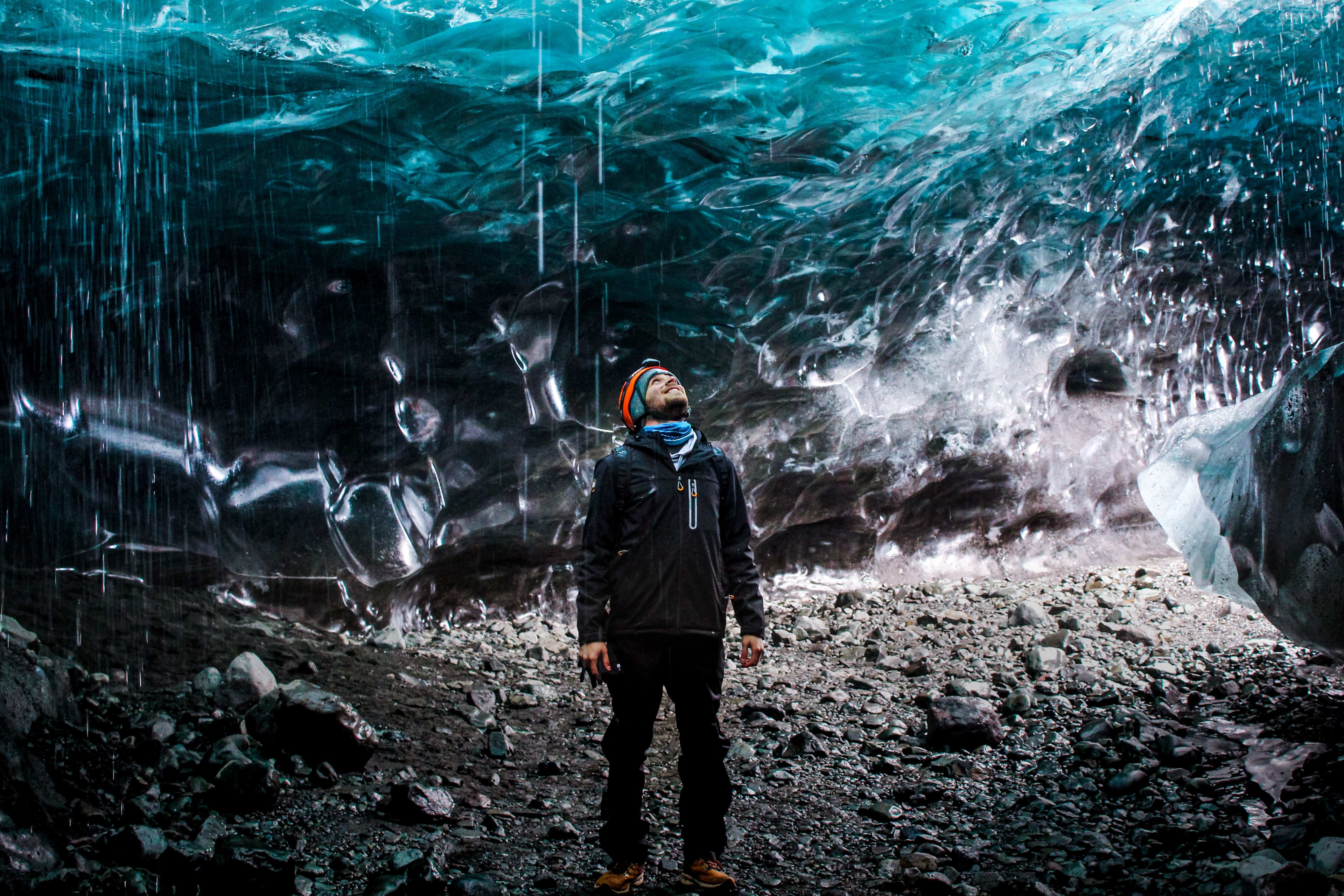
In Iceland, most ice caves are a deep, crystalline blue, hence the name "blue ice caves." These caves are pristine and immaculate, both warm and cool. Stepping into one of these caves is breathtaking; you'll be awestruck by the incredibly rich layers of blue, as if standing in a crystal palace or dreaming of the ocean depths, appreciating a captivating beauty that is not shared with the world.

blue ice cave original
<font dir="auto" style="vertical-align: inherit;"><font dir="auto" style="vertical-align: inherit;">Blue Ice Cave</font></font>

The ice cave is covered by a glacier that is over 1,000 years old. This glacial ice has undergone compression, fusion, and crystallization processes. Compared to ordinary ice, its unique texture allows it to absorb all colors in the spectrum except blue, resulting in the ice cave displaying the purest blue, a truly breathtaking sight. In particular, the air-free ice blocks prevent light from refracting and scattering, further enhancing the cave's crystal-clear blue hue.

In Iceland, besides the blue ice caves, there are also white, gray, and black ice caves. As we just mentioned, the blue ice caves are blue because when light shines on them, the ice absorbs all colors of the spectrum except blue. Therefore, if there is a thick layer of ice, snow, or debris covering the ice cave, preventing light from penetrating, the ice cave will appear a darker color. For example, when covered by snow, the ice cave will appear white; when covered by volcanic ash, the ice will appear dark gray; and when covered by rocks and gravel, the ice cave may appear black! Isn't that incredibly fascinating?

Ice caves are actually ice caves or tunnels inside glaciers, some nearly vertical, and varying in length. Every winter, after the meltwater recedes and freezes back into ice, the structure of ice caves changes dramatically, randomly shaping into new forms. This means that every winter, ice caves appear in different forms! Year after year, seasons change, and the transformations of ice caves tell the story of time. Besides the annual changes in their form, the brightness and angle of light vary monthly, daily, and hourly. The ice caves we see at different times are only present at that specific moment; therefore, each fleeting moment of seeing an ice cave becomes unique and irreplaceable.

crystal ice cave
<font dir="auto" style="vertical-align: inherit;"><font dir="auto" style="vertical-align: inherit;">Iceland Blue Ice Cave</font></font>

What ice caves are there in Iceland?

Iceland boasts seven glaciers and numerous ice caves, making it a paradise for ice cave exploration enthusiasts. The Vatnajökull glacier and Jökulsárlón glacial lagoon in southeastern Iceland are home to some of the most famous concentrations of blue ice caves. However, ice caves are randomly formed natural landscapes; they are not permanent but constantly changing. Old ice caves may transform or even disappear completely, while new ones may quietly emerge, waiting to be discovered. Therefore, besides Vatnajökull, other glaciers can certainly form new ice caves. Below, we'll introduce some of the most suitable ice caves in Iceland for tourists to visit and explore—don't miss them!

1. The Vatnajökull Blue Ice Cave: A Miracle of the Vatnajökull Glacier

The Crystal Palace and Blue Ice Caves of Vatnajökull Glacier are located within Vatnajökull National Park. Vatnajökull Glacier is the largest glacier in Europe, with ice sheets hundreds of meters thick. Meltwater flows beneath the ice, creating numerous spectacular ice caves that attract tourists from all over the world. Among them, the Crystal Palace and Blue Ice Caves have become increasingly popular in recent years.

The formation of ice caves is random and difficult to predict, but the Crystal Palace Ice Cave is a boon for ice cave enthusiasts. Since its initial discovery near Jökulsárlón Glacier Lagoon in 2011, the Crystal Palace Ice Cave has formed almost every year in the same location, remaining remarkably stable and becoming one of the most frequently visited ice caves by tourists.

blue ice cave constuction
<font dir="auto" style="vertical-align: inherit;"><font dir="auto" style="vertical-align: inherit;">Visiting the Blue Ice Cave</font></font>

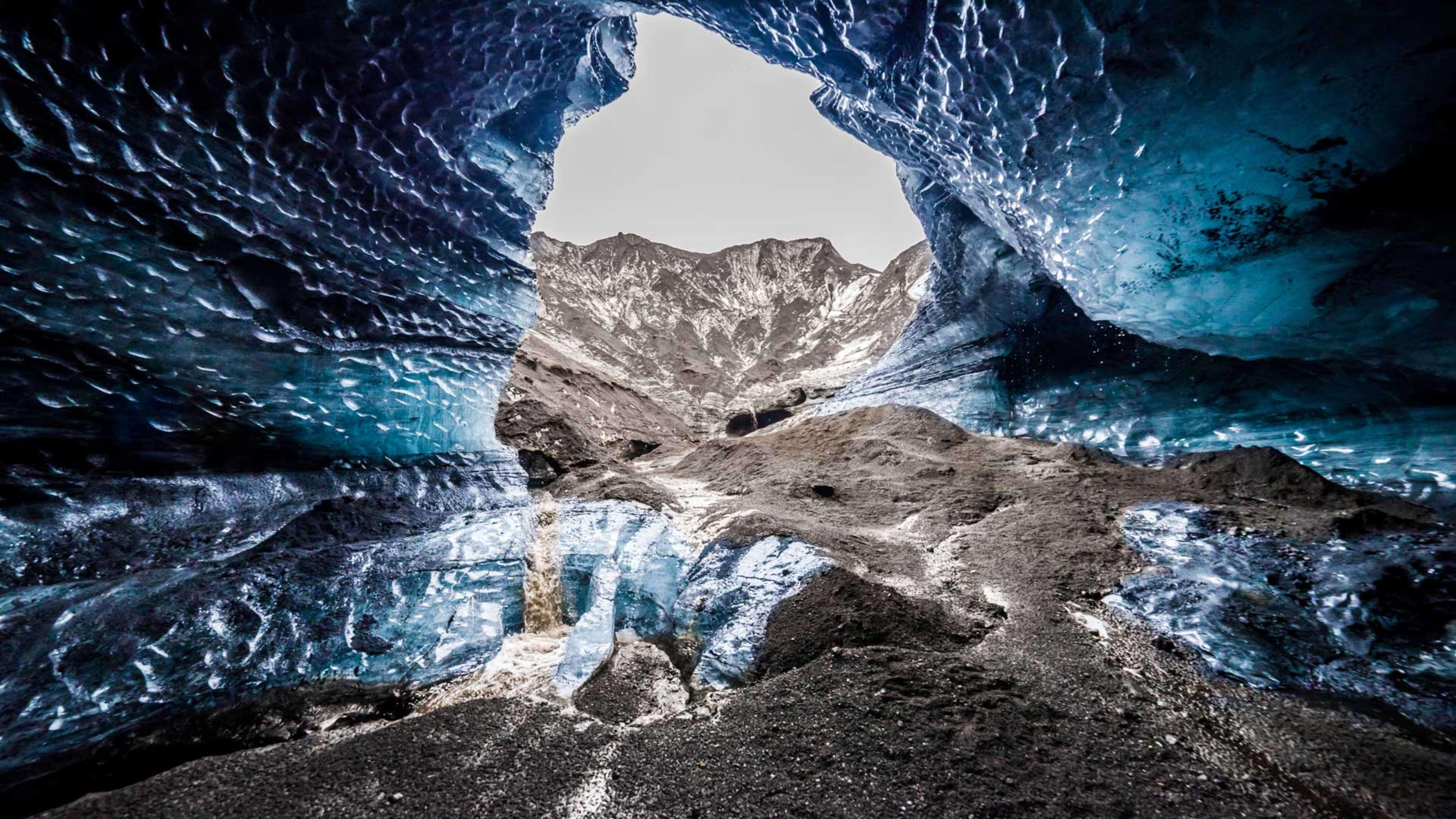
This ice cave is world-renowned for its translucent blue ice walls. Its unique structure features a small opening in the ceiling that allows light to seep in. The ice crystals within the ice cause the light to reflect off the ice, creating a deep and mesmerizing blue hue. Combined with its water-like texture, it is especially spectacular under sunlight, making visitors feel as if they are inside a giant sapphire. Standing inside the cave and looking up, one can see the crystal-like dome, hence the name "Crystal Palace."

The Crystal Palace Blue Ice Cave is a relatively large ice cave with a spacious interior that can accommodate approximately 70 to 100 people. This means there won't be any cramped or crowded conditions, making for a pleasant visit. A tour can take about an hour, and it's also convenient for taking photos, making it a recommended destination for photography enthusiasts.

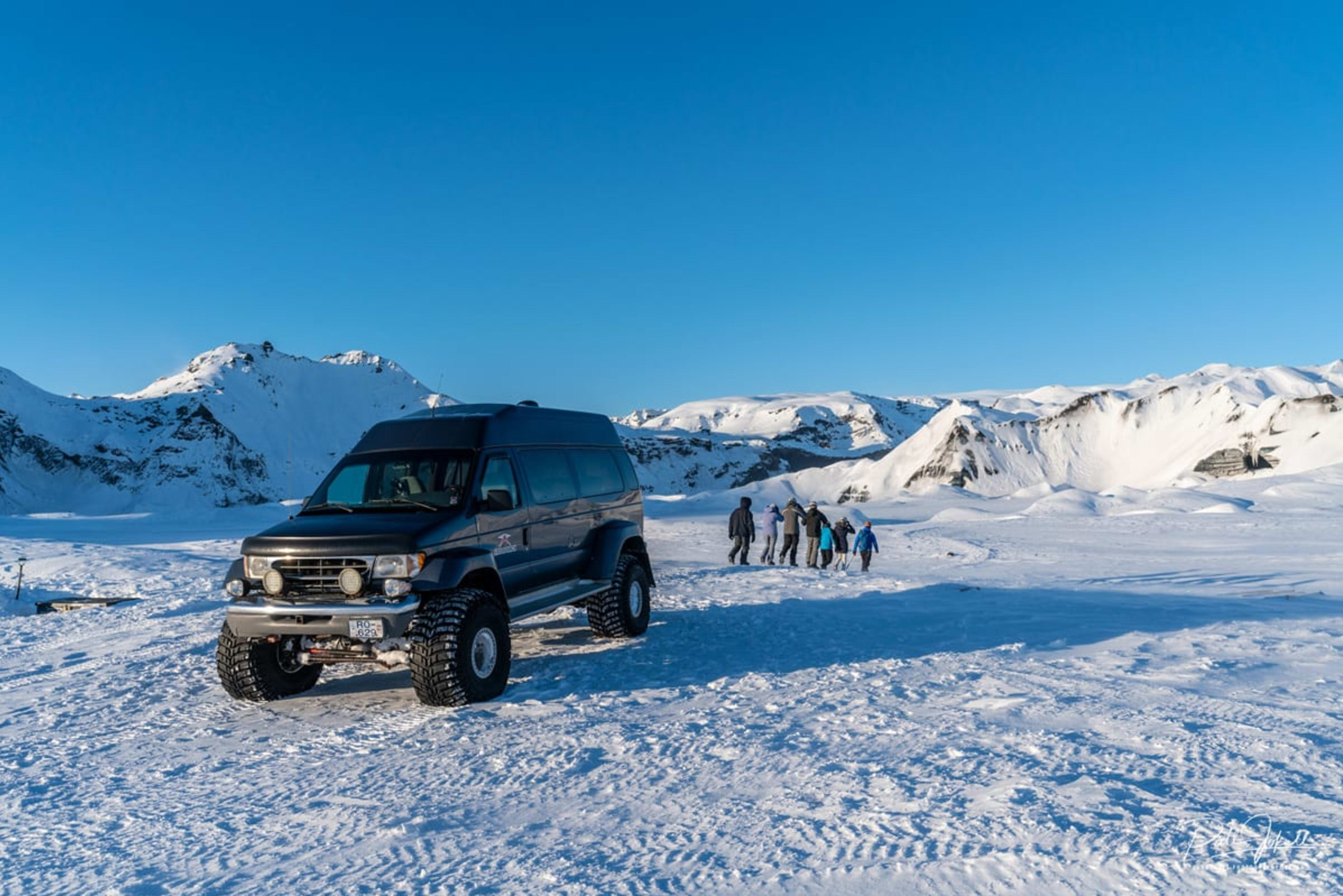
Currently, the Crystal Palace Ice Cave can only be visited in winter. Reaching the cave requires a Super Jeep tour, which is relatively time-saving and less strenuous. The entire tour takes approximately 3 hours, including about 1 hour inside the cave (weather permitting). It's important to note that while the Crystal Palace Ice Cave has been quite stable in recent years, this doesn't guarantee its formation next year. How many more years it will remain is unknown, and global warming may accelerate its demise. This means that every visit to the Crystal Palace Ice Cave is a unique and irreplaceable experience, truly a matter of "cherish it while you can." We can only pray that this beautiful Crystal Palace will remain for many more years to come!

If you have 2-3 days on the south coast of Iceland, you might want to check out these two-day tours: explore blue ice caves, see the most beautiful glacial lagoons and unique black sand beaches , or a three-day tour: visit Iceland's Golden Circle, stop at the black sand beach, see blue ice caves , and experience the scenery of Iceland's south coast while entering the blue ice caves to feel the mystery of millennia-old glaciers!

*Advantages: 1. Natural ice cave, stable condition. 2. Accessible by car, low physical exertion required. 3. Spacious interior, excellent experience. 4. Crystal-clear blue ice cave, stunning scenery, perfect for photos.

*Disadvantages: 1. Only open in winter.

*How to get there: Most tours depart from Jökulsárlón Glacier Lagoon. It takes about 5 hours to drive east from Reykjavik along Iceland's Ring Road (Route 1). We also welcome self-drive packages, such as our 6-day, 5-night classic Icelandic winter self-drive tour, which includes a visit to the Blue Ice Caves. Customized self-drive itineraries are also available.

*Tourism period: Generally starts in October or November and lasts until mid-March or April. Specific dates depend on the weather, temperature, and ice cave conditions.

*Vehicle selection: In winter, when temperatures are low and roads are covered with ice and snow, choose a four-wheel drive vehicle with a high safety rating.

2. The dark ice cave beneath the Middars Glacier: Katla Ice Cave

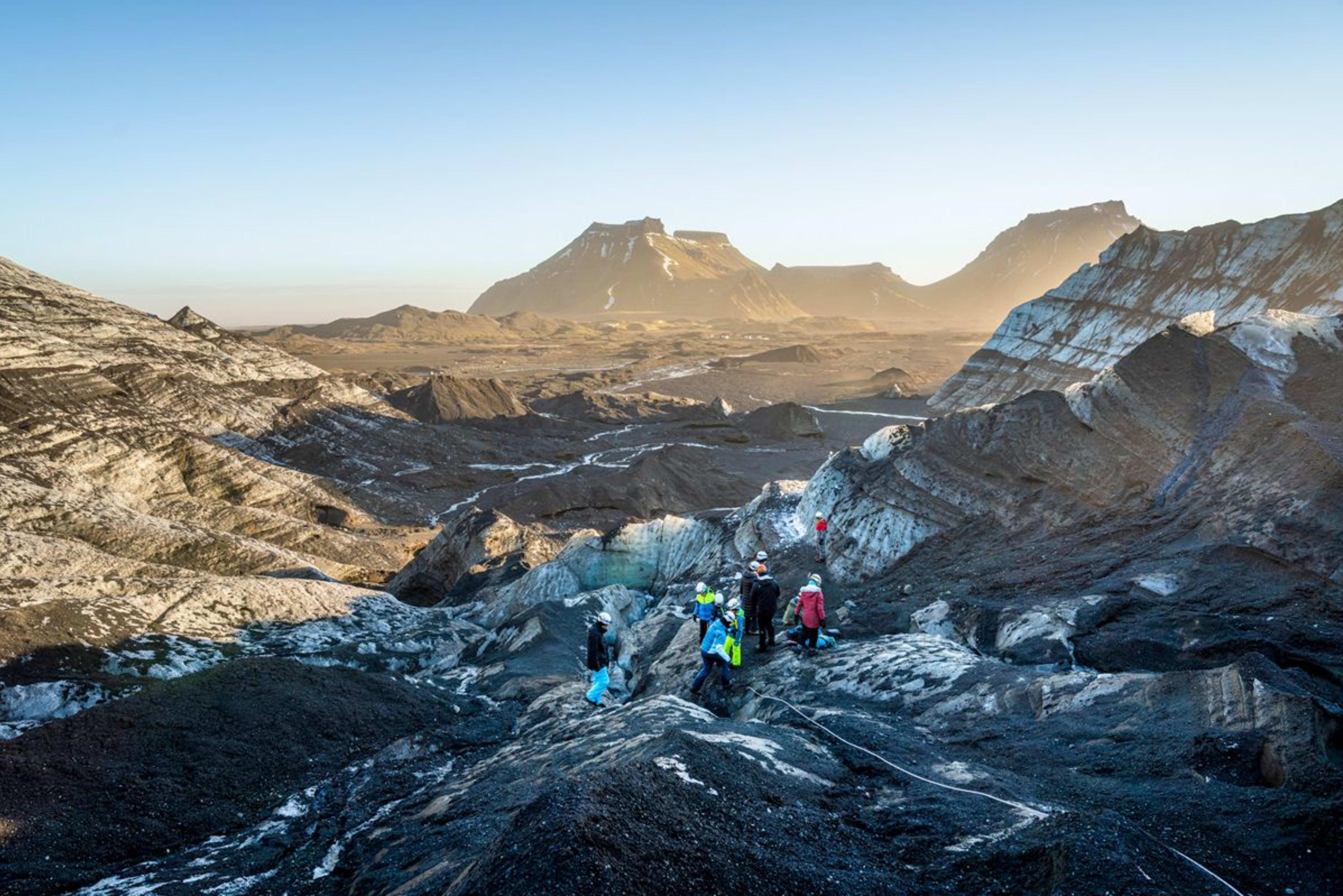
Katla Black Ice Cave is a truly amazing ice cave located beneath the Mýrdalsjökull glacier near the southern Icelandic town of Vík ! Its location is quite unique, situated at the foot of Katla Volcano, one of Iceland's most active and "dangerous" volcanoes. Therefore, it possesses not only the mysterious grandeur of an ice cave but also the mystique associated with a volcano. As its name suggests, unlike blue ice caves, it is a rare black ice cave! And Katla Black Ice Cave can be visited year-round, including in summer!

katla volcanic ice cave with glimmer
<font dir="auto" style="vertical-align: inherit;"><font dir="auto" style="vertical-align: inherit;">Katla Ice Cave</font></font>

As mentioned earlier, if an ice cave is covered with sand, volcanic ash, or similar materials, light cannot penetrate it, causing the ice cave to appear gray or black. This is precisely the case with the Katla Black Ice Cave, where black lava and volcanic ash from the glacier mix together, creating a striking contrast of small patches of white and blue with large expanses of black within the cave. Air bubbles on the ice walls further enhance the unique texture of this black ice cave. Scientists can also learn about the history of climate change and geological activity by studying the ice layers inside the Katla Black Ice Cave, providing valuable data for geological and climatological research.

entrance to katla ice cave
<font dir="auto" style="vertical-align: inherit;"><font dir="auto" style="vertical-align: inherit;">Entrance to the Katla Ice Cave</font></font>

The stunning natural scenery makes the Katla Ice Cave a popular filming location. Many movies and TV series have chosen Iceland as a filming location, and the Katla Ice Cave, as one of Iceland's unique natural wonders, has attracted the attention of many filmmakers. Its mysterious and breathtaking ice cave scenery often adds to the appeal of film and television productions; for example, fans of *Game of Thrones* affectionately call it the "Dragon Crystal Ice Cave." Besides this, Iceland has other filming locations as well. Let's see if there are any spots you'd like to visit: traverse glacial wonders and check out classic Icelandic filming locations .

Compared to the Crystal Palace beneath Vatnajökull glacier, the Katla Black Ice Cave boasts more varied and deeper colors, giving it a darker, more mysterious feel. Geographically, the Black Ice Cave is also closer to the capital, Reykjavik, making it more accessible. If you happen to visit Iceland in the summer and miss out on the Blue Ice Cave, the scenery of the Katla Ice Cave and Katla volcano will certainly not disappoint.

katla ice cave under volcanic glacier
<font dir="auto" style="vertical-align: inherit;"><font dir="auto" style="vertical-align: inherit;">Exterior of the Katla Ice Cave</font></font>

*advantage:

1. Open year-round, including summer.

2. Natural ice cave, in a stable state.

3. It can be reached by public transport, which is quite convenient. 4. It is close to the capital and easily accessible.

*Disadvantages: Not a translucent blue ice cave; the color is relatively dark.

*How to get there: You can choose to drive from Reykjavik, the capital, along the Icelandic Ring Road to Vik (approximately 2.5 hours), and then join a tour to visit Katla volcano and the black ice caves. Alternatively, you can choose our self-drive packages, such as the 4-day, 3-night winter self-drive tour of Iceland's south coast . Upon arrival in Vik, you can then join a professional Katla ice cave tour to explore the black ice caves.

*Travel time: All year round

*Vehicle Selection: Iceland's Ring Road (Route 1) is well-maintained and easy to drive; a two-wheel drive vehicle is sufficient in summer. In autumn and winter, the roads become slippery and difficult to drive on due to ice and snow, so a four-wheel drive vehicle is recommended. Before your trip, you can read our Iceland self-driving guide to add an extra layer of safety to your journey.

3. Iceland's second largest glacial gem: Langjökull Ice Tunnel

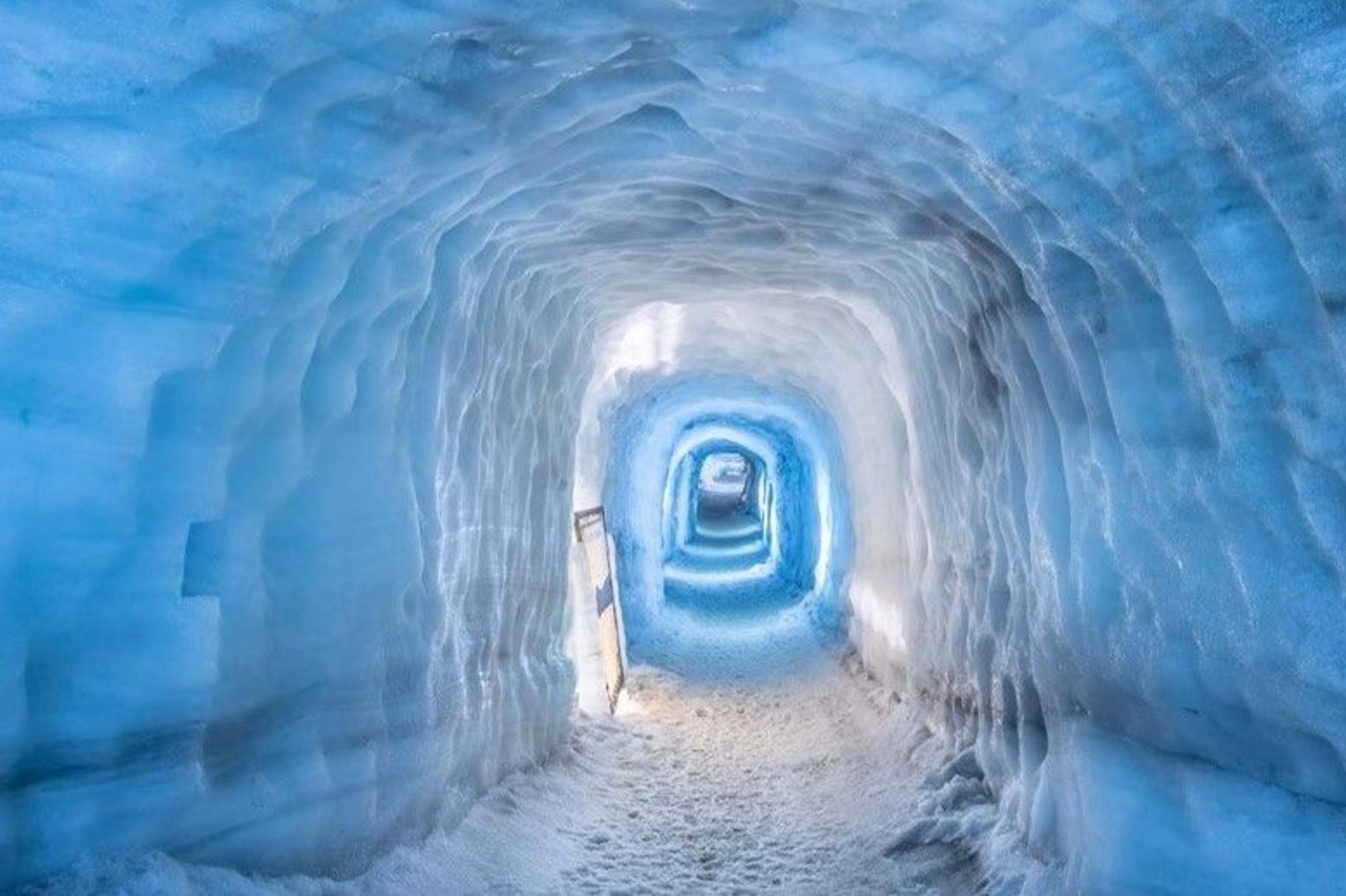
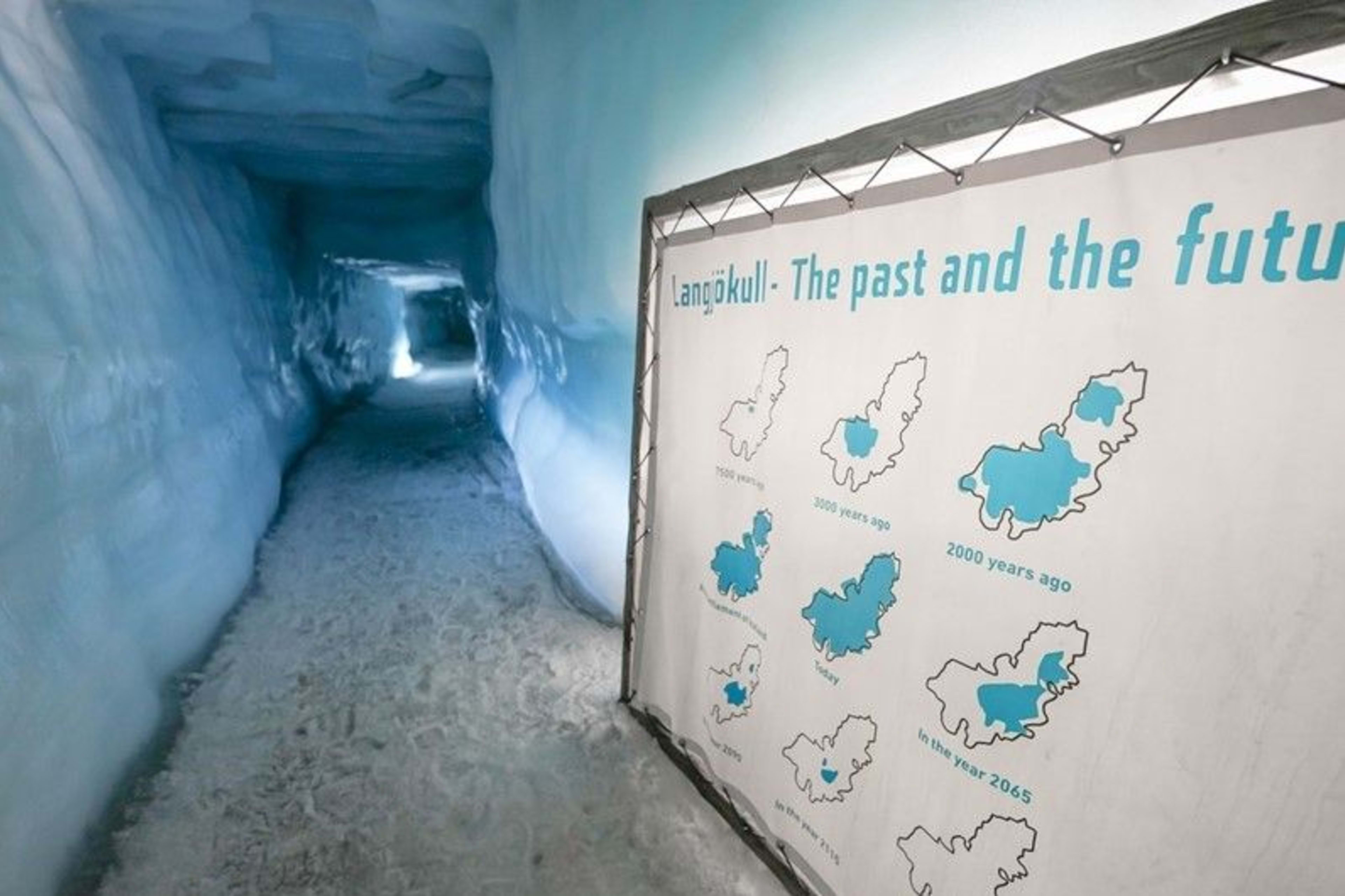
Located in western Iceland , near the village of Húsafell, Langjökull is Iceland's second-largest glacier. The world's only man-made glacier tunnel lies beneath this glacier. Built in 2015, the tunnel extends 550 meters into the western part of the glacier, mimicking the shape of an ice cave. It's quite fascinating, featuring five ice chambers with rest areas, wall displays, and exhibitions, including ice-carved churches and benches – definitely worth experiencing. Visitors can also learn a lot about geography, such as the impact of global warming on glaciers, making it ideal for families with children.

blue langjokull ice tunnel
<font dir="auto" style="vertical-align: inherit;"><font dir="auto" style="vertical-align: inherit;">Lange Glacier Tunnel</font></font>

Unlike other natural ice caves beneath glaciers, this man-made ice tunnel is unaffected by weather conditions, maintaining a stable state and opening year-round. It's a permanent attraction in Iceland, accessible at any time of year. The journey is convenient; a day trip from the capital is possible, making it ideal for travelers with limited time. Beyond the tunnel itself, the route to it is also noteworthy. Visitors can ride in icebreakers converted from armored vehicles to the tunnel entrance. This journey across the vast, white ice field offers a unique experience; the immensity and solitude of the landscape evoke a sense of grandeur and loneliness, yet also a profound sense of happiness, as one is rewarded with the chance to witness breathtaking scenery.

langjokull ice cave with instruction board
<font dir="auto" style="vertical-align: inherit;"><font dir="auto" style="vertical-align: inherit;">Signage inside the Langge Glacier Tunnel</font></font>

*advantage:

1. Open year-round, including summer.

2. Close to the capital, allowing for a day trip.

*Disadvantage: It is not a naturally formed ice cave; it is an artificial ice cave.

*How to get there: You can enter from the western entrance of Hathaway, where many tour groups depart for Langjökull Glacier. Hathaway is located 130 kilometers northeast of Reykjavik. From Reykjavik, take Iceland's Ring Road (Route 1) north, then turn onto Route 50, and finally take Route 518 to reach Hathaway directly. The journey takes less than 2 hours and the route is easy.

Of course, we also recommend joining our self-drive tour packages, such as the 12-day romantic self-drive tour around Iceland in summer . While touring Iceland, you can also choose to sign up for the Langjökull glacier tunnel tour in western Iceland.

*Travel time: All year round

*Vehicle Selection: Iceland's Ring Road 1 is well-maintained and easy to drive; 2WD vehicles are available for rent in the summer.A four-wheel drive vehicle is fine. In autumn and winter, the roads become slippery and difficult to drive due to ice and snow, so renting a four-wheel drive vehicle is recommended.

4. Reykjavik Ice Cave Exhibition: Perlan Ice Cave (Man-made Indoor Ice Cave)

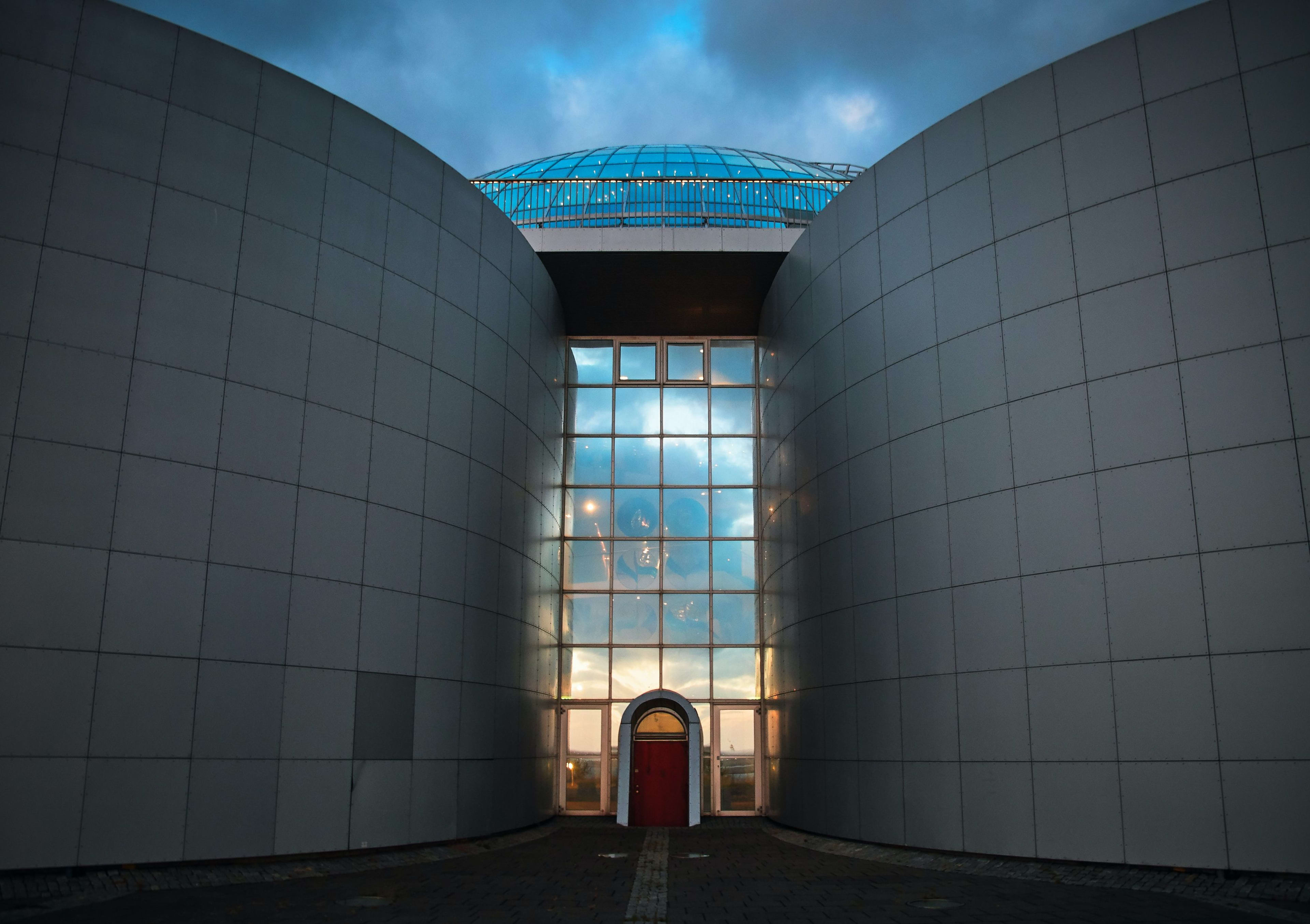
Besides the tunnels and caves beneath Langjökull glacier, Iceland also has a man-made ice cave open year-round, located in the Perlan Museum in the capital, Reykjavik. If your itinerary in Iceland is too tight to visit a natural ice cave, you can take a quick look at the man-made ice cave in the capital to prepare for your next glacier and ice cave adventure.

perlan museum front side
<font dir="auto" style="vertical-align: inherit;"><font dir="auto" style="vertical-align: inherit;">Pearl Tower</font></font>

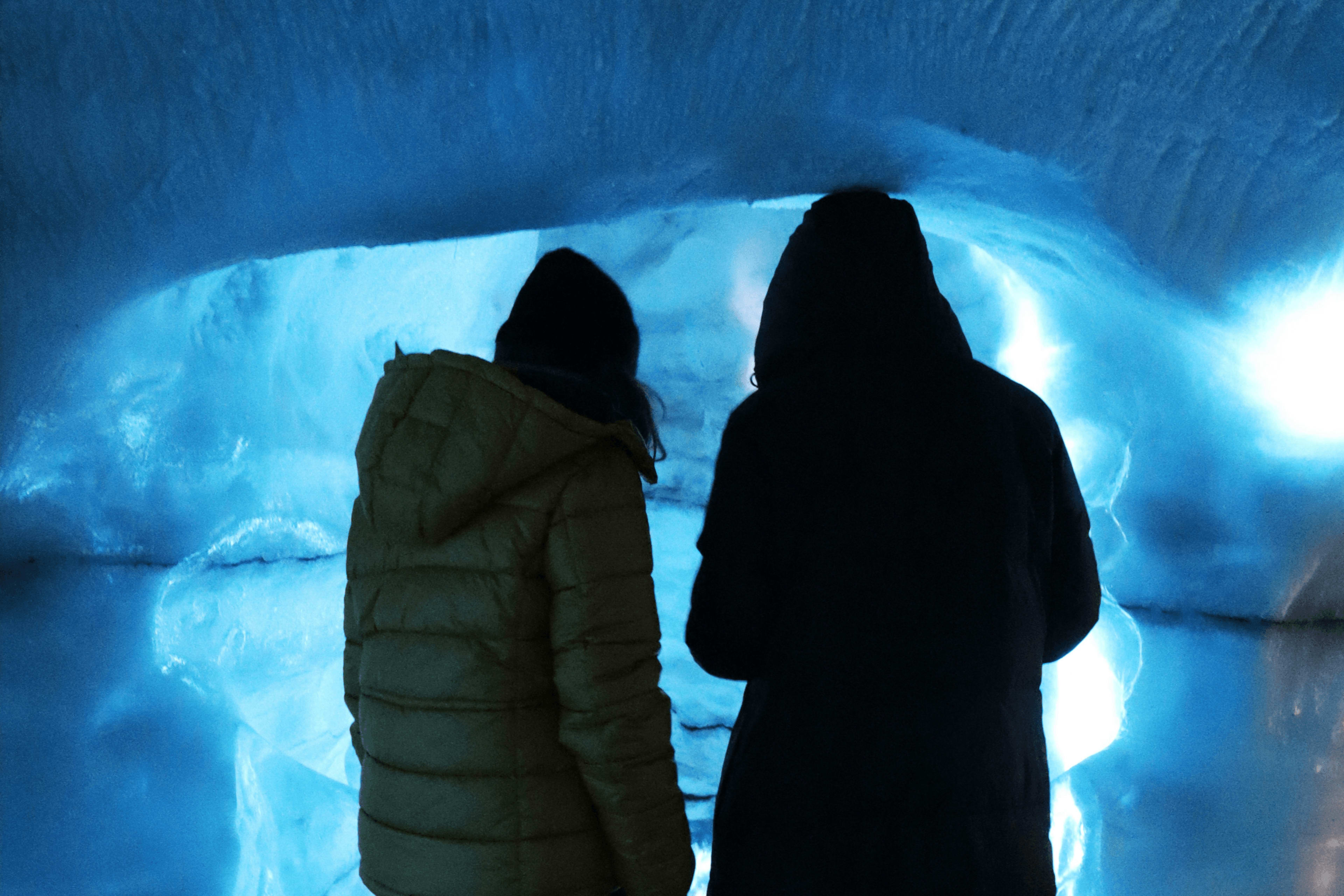
The artificial ice cave here attracted many local tourists, especially children, when it opened. Experiencing an ice cave in the capital city is quite a novelty. The interior, illuminated with soft blue light, evokes the atmosphere of a typical blue ice cave. The indoor ice cave is said to be 100 meters long, but its winding path prevents long stays. Warm vests and jackets are available for rent, so there's no need to worry about getting cold. Outside the ice cave, there's an interactive glacier exhibit and information about glaciers, making it suitable for families with children. Learning more about glaciers may help us better protect these natural landscapes, allowing future generations to witness these breathtaking sights firsthand.

perlan museum man made ice cave
<font dir="auto" style="vertical-align: inherit;"><font dir="auto" style="vertical-align: inherit;">Pearl Tower Museum Artificial Ice Cave</font></font>

The Perle d'Island was once a popular tourist attraction in Iceland, offering panoramic views of Reykjavik from its observation deck. In the famous Icelandic literary work "The Cosmic Angel," dining at the Perle d'Island symbolized status and elegance. However, today the Perle d'Island serves more as a window into Iceland's culture, functioning as an exhibition hall and museum. As a science and cultural venue, it showcases various natural elements of Iceland, with three floors including a planetarium (with an aurora show), a birdwatching cliff, a volcano exhibit, and a water exhibit. The man-made indoor ice cave is one of the recommended exhibits. After exploring the three floors, you can enjoy the 360-degree view from the observation deck. A visit of one or two hours is easily achievable. Besides the Perle d'Island, to make your visit to the capital Reykjavik even more interesting, we recommend reading the Reykjavik Citywalk Guide to help you explore the capital's charm and become a sophisticated "Icelandic."

Address: Varmahlíð 1, 105 Reykjavík Phone: +354 5669000

Precautions and suggestions for exploring ice caves

Is it only possible to explore ice caves in winter?

Generally, ice cave exploration is recommended during the winter months of November to March. During this time, Iceland's temperatures are low, glaciers are thick, and meltwater has refreezed into solid ice, making it possible to enter the ice caves. Therefore, visitors wishing to see the blue ice caves must come to Iceland in winter. If visiting at other times, you can choose to experience the year-round open Katla Black Ice Cave, the Langjökull Ice Tunnel, or the Perle indoor artificial ice cave, which are also good options. For more information on winter travel in Iceland, you can also refer to our article on essential winter travel knowledge in Iceland .

Is it possible to drive around and explore the ice caves?

If travelers wish to experience the mysterious and magical ice caves of Iceland, they can rent a car and drive to the tour group's meeting point, but then they must join a tour group! A group tour is necessary because you'll need a professional guide!

people heading to katla ice cave
<font dir="auto" style="vertical-align: inherit;"><font dir="auto" style="vertical-align: inherit;">Follow a professional guide to the ice cave</font></font>

The professional guides on tour groups are highly experienced and use GPS devices to locate ice cave entrances. Since the locations of ice caves form annually, accurately locating the glacier is crucial. If tourists venture out alone without professional guidance, they may struggle to find the entrance and risk encountering cave collapses. Furthermore, guides can assess the quality of the ice cave, ensuring it meets the criteria for entry before leading a group. They provide guided tours, explanations, and safety assurances, enhancing the overall experience. Many ice caves are located in the center of the glacier, inaccessible even to highly experienced drivers in ordinary cars, requiring specialized vehicles such as super jeeps, off-road motorcycles, or icebreakers. Therefore, for safety and a better exploration of ice caves, joining a tour group is essential.

What should you wear when exploring an ice cave?

The temperature inside the ice cave is very low, so you'll need to wear warm clothing such as a thick sweater, down jacket, scarf, gloves, and hat. It's best to choose waterproof outdoor fabrics, as there may be meltwater dripping inside the ice cave. (You might also want to prepare a small rain cover for your camera.) For footwear, wear non-slip, waterproof hiking boots to easily secure crampons. The boots should be long enough to extend past your ankles for better ankle protection and to provide warmth.

blue ice cave in south iceland
<font dir="auto" style="vertical-align: inherit;"><font dir="auto" style="vertical-align: inherit;">What to wear when visiting an ice cave</font></font>

A special reminder: when visiting ice caves, you will need to wear crampons over your shoes, and also be equipped with ice screws, a helmet, and a searchlight if necessary. These will be provided by the tour group; you don't need to prepare anything yourself. Just follow the guide's instructions and operate as required. Proper protection will ensure a less tiring exploration!

How can I book an ice cave exploration tour?

If you're interested in joining an ice cave tour, be sure to book in advance! We don't recommend booking after arriving in Iceland! Due to Iceland's excellent geological conditions, ice cave exploration is a popular winter experience and receives a high volume of inquiries and bookings. Furthermore, ice caves are relatively small, and the number of people they can accommodate each day is limited, so many dates are fully booked well in advance. Planning and booking ahead of time will ensure a more fulfilling trip!

Travelers can choose to drive themselves to the tour group's meeting point and then join a tour to explore the ice cave. Alternatively, they can choose one of our ice cave tour packages, which you can refer to below:

Special reminders for visiting Icelandic ice caves

Ice caves are a natural phenomenon, their formation entirely natural and uncontrollable. Therefore, their location and appearance change every year. Even ice caves that have remained stable for several years may undergo significant changes in form this year, or even melt away completely. Meanwhile, new ice caves or those that have already disappeared may appear in the future. Therefore, if you are interested in ice cave exploration, try to experience it as soon as possible. Additionally, natural ice caves can only be entered when temperatures drop below freezing in winter. For a better experience, tour groups will make forecasts based on weather conditions, and the itinerary may be adjusted if the weather does not meet the requirements for entering the cave. Of course, besides ice caves, Iceland has many other natural attractions worth visiting. You can learn more about the top ten most worthwhile natural attractions in Iceland , or check out the most popular classic Icelandic travel routes to see all the star attractions.

katla ice cave tour with super jeep transfer
<font dir="auto" style="vertical-align: inherit;"><font dir="auto" style="vertical-align: inherit;">Take a Super Jeep to the Ice Cave</font></font>

When you travel to Iceland, standing before snow-covered glaciers and deep within the illuminated or dark ice caves, you can find a mysterious and wondrous sense of tranquility. Perhaps this is the charm of nature; listening to the whispers of the ice caves amidst the vastness of the sky and earth, feeling the rhythm of this icy world, it's as if time stands still here, and everything becomes peaceful and serene.

In this land of ice and fire, ice caves are a mysterious gift from nature, worthy of exploration and appreciation by every adventurer. However, such beauty is fleeting; if you have a deep affection for ice caves, be sure to embark on this icy journey as soon as possible, lest you miss out and regret it!

关于作者

如果想在循规蹈矩的世界里多发一点光亮,就来冰岛吧! 世界尽头的国度里,冰火相依的奇绝地貌是我对原始最热切的向往,巨鲸跃出水面的硕大尾鳍是我对自由最辽阔的想象;峡湾险峰与瀑布温泉的交织是我对风景最无垠的的期待,鲜嫩饱满的优质食材是我对食物最纯净的热爱。期待与您在冰岛相遇,在充满未知的风光和震撼人心的景致里对话自我,发现美好,心之所向,身之所往。

查看昕怡更多的文章

相关文章

从森林猫旅行的冰岛攻略中了解更多信息
必读旅行攻略

冰岛四大冰川介绍

来到冰岛,若不体验一次冰川徒步,欣赏一番冰川美景,怎么算得上不虚此行?

查看更多
必读旅行攻略

穿越冰川奇迹,打卡经典电影冰岛取景地

无数冰岛自然风光造就了理想的电影剧集拍摄环境,跟随本篇攻略一起探索经典电影冰岛取景地吧!

查看更多
必读旅行攻略

最值得一游的冰岛十大自然风光

来冰岛旅行,不仅可以看到极地的冰川风貌,还能欣赏到丰富的“极地花园”……

查看更多
必读旅行攻略

探秘冰之奇境:冰岛冰川徒步全攻略

冰岛冰岛,来到冰岛,不如准备好踏上一场真正心潮澎湃的冰川徒步之旅!本篇指南将从装备选择到安全须知,从索尔黑马冰川到瓦特纳冰原的经典路线,引领您深入这片广袤无垠的冰原。

查看更多