Unfold a map of Northern Europe, and Iceland, nestled beneath the Arctic Circle, stands out as a unique and dazzling gem among the five Nordic countries. Its diverse and pristine natural landscapes and unspoiled, breathtaking scenery are like something out of another world, inspiring awe and wonder. From early confusion about "Where is Iceland?" and "What country is Iceland?", people have come to yearn for Icelandic tourism. If you're looking to explore less-traveled and unique aspects of Nordic scenery and experience the grandeur of Norse mythology, besides the popular Golden Circle and South Coast, don't miss the Diamond Circle! Icelandic volcanoes, waterfalls, hot springs, and churches await you along this route. This article will provide you with the most comprehensive guide to Iceland's Diamond Circle!
Iceland Diamond Circle Tour Introduction
Iceland, an island nation, may be small in size, but it boasts an incredibly diverse array of natural landscapes. The limited island area, coupled with relatively good infrastructure, allows tourists to explore Iceland's main attractions within a week. To facilitate more efficient sightseeing, the tourism board has launched several excellent Iceland travel routes. Among them, the Golden Circle route is undoubtedly the most popular. Besides the Golden Circle in the south, the Silver Circle in the west is also worth visiting, while this article will discuss the Diamond Circle, a travel route that takes you through northern Iceland.
In September 2020, the Diamond Circle tourist route was officially launched, with the Icelandic Prime Minister personally cutting the ribbon at the naming ceremony. Since then, the scenery of the Diamond Circle has been discovered and loved by more and more tourists. The Diamond Circle stretches 260 kilometers, extending from Route 1 into the inland highlands, and mainly includes five attractions: Goðafoss , Lake Mývatn , Dettifoss , Ásbyrgi, and the town of Húsavík. Lake Mývatn is the heart of the Diamond Circle, offering breathtaking scenery. This route encompasses popular destinations such as volcanoes, waterfalls, hot springs, and towns, with scenery comparable to the popular Golden Circle. In addition to the main attractions, the route also offers vast expanses of pristine natural landscapes, making it a high-quality travel option and ideal for self-driving. If you crave a deeper experience of Iceland's scenery and love off-the-beaten-path, independent travel, the Diamond Circle will not disappoint!
Recommended island tour packages to help you explore the Diamond Circle and deeply experience the northern scenery: 10-day, 9-night Iceland Summer Deep Island Tour by Car: Blue Lagoon & Snæfellsnes Peninsula ; 11-day Iceland Summer Surprise Island Tour by Car: Eastfjords & Whale Watching.
Main attractions in Iceland's Diamond Circle
Lake Mývatn
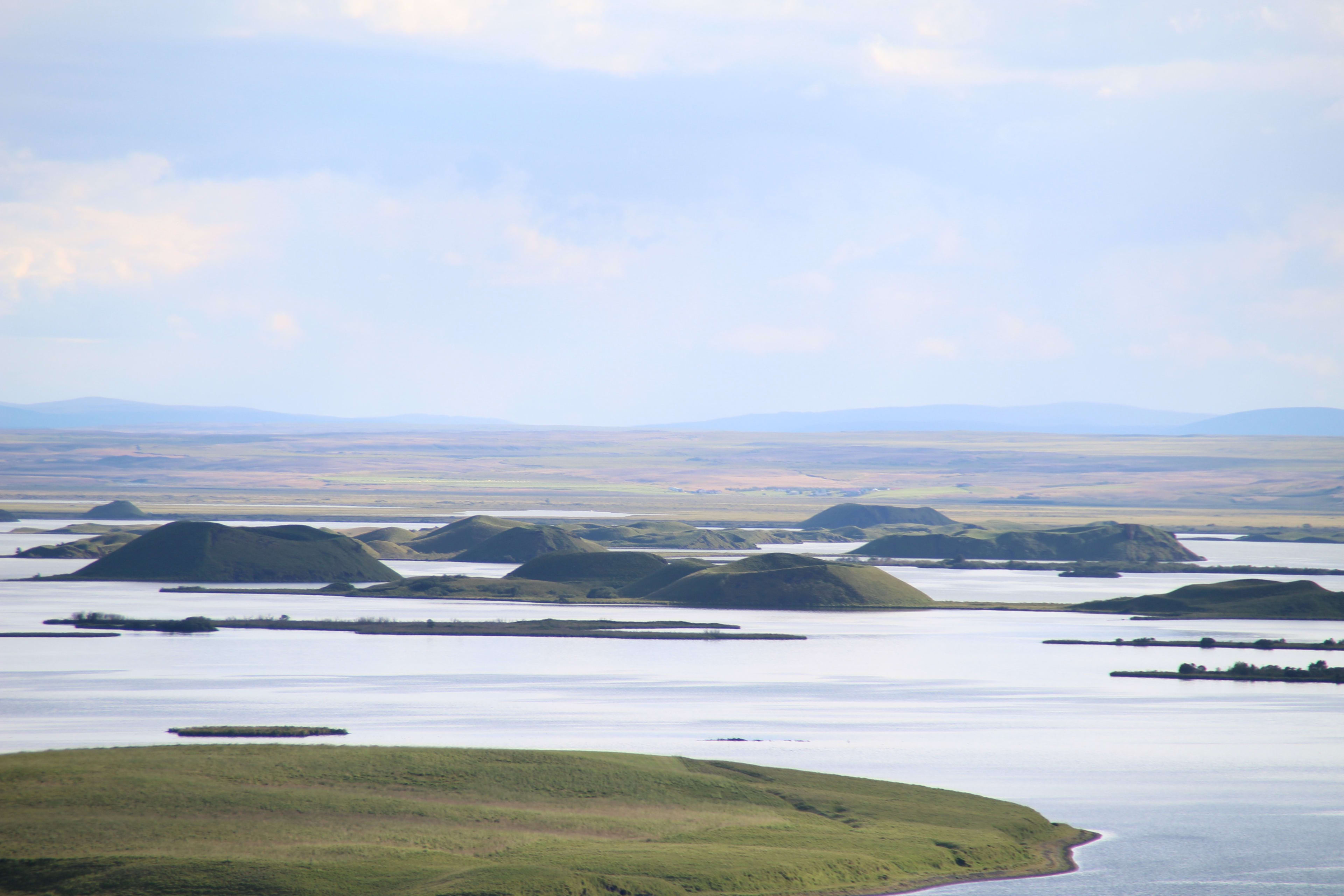
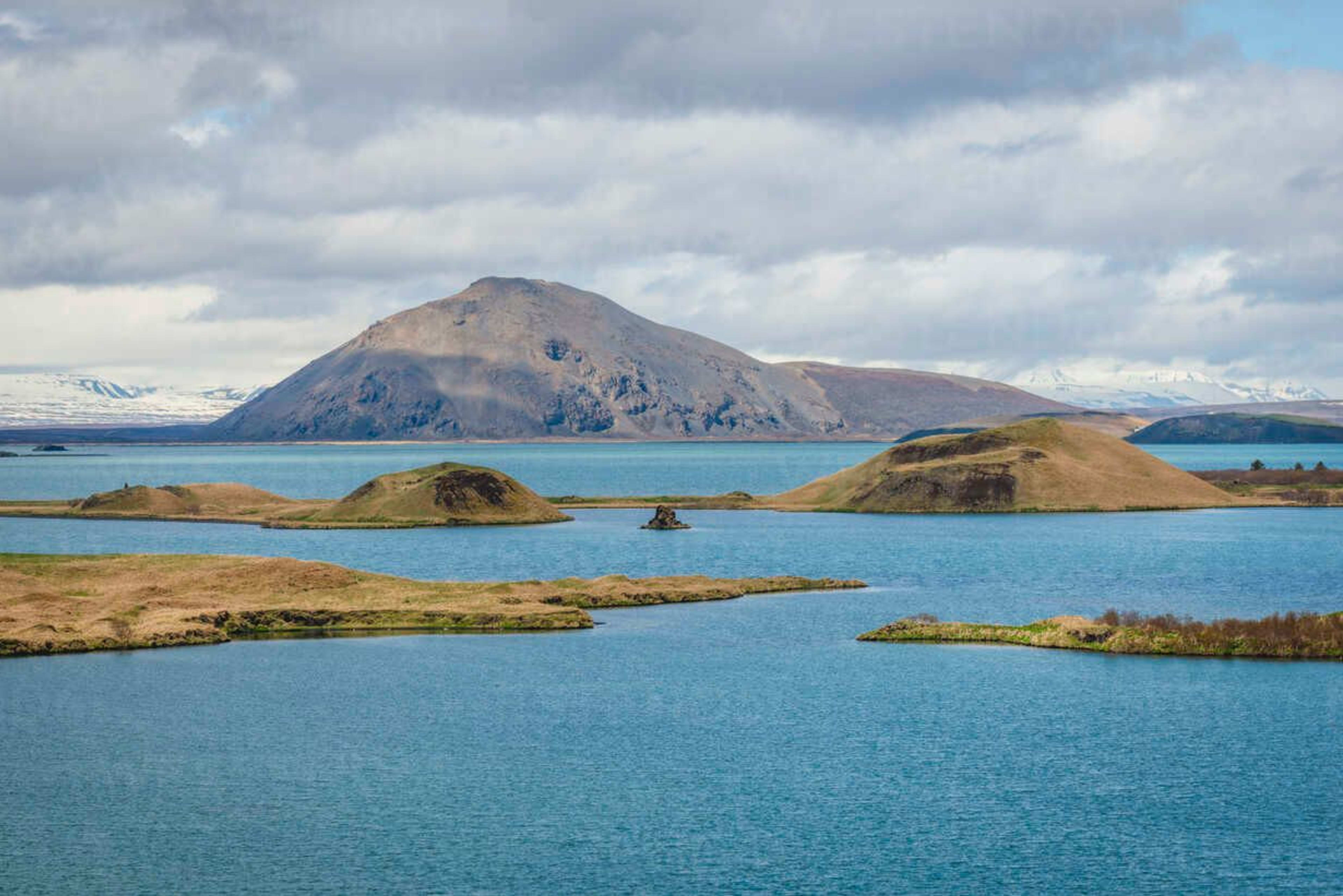
The highlight of the Diamond Circle tour – Lake Mývatn! Lake Mývatn is Iceland's fourth largest lake, covering 37 square kilometers and dotted with approximately 50 small islands. Exotic flora and fauna thrive here, rare birds inhabit and breed, and the wetland landscape is breathtaking. However, this alone is not enough to make Lake Mývatn the core of the entire Diamond Circle tour. Lake Mývatn is renowned largely due to its geothermal activity and volcanic scenery.

Lake Mývatn originated approximately 2,300 years ago from a volcanic eruption. The massive lava flow blocked a river, forming the lake and shaping the surrounding landscape into a unique, otherworldly panorama. The area around Lake Mývatn is dotted with numerous scattered volcanic geological sites, so densely packed that visitors can enjoy the essence of northern Iceland's beauty within a short distance. These sites are of high quality, offer excellent experiences, and are distinctive, making the Lake Mývatn area a popular destination and a highlight of the Diamond Circle travel route.
Besides its stunning scenery, Lake Mývatn also has an interesting name. The Icelandic name Mývatn is composed of Mý (small flying insect) and Vatn (lake), literally meaning "Lake of Flying Insects." Every summer, many small flying insects gather at Lake Mývatn, but don't worry, these insects don't bite, and compared to the lake's breathtaking beauty, they're insignificant! Of course, it's advisable to bring sunglasses and a face mask for sun protection and insect repellent, enhancing your visit. If you enjoy fishing, summer is the best time to visit Lake Mývatn, as the shallow, warm waters attract many trout and salmon.
Lake Mývatn is a breathtakingly beautiful, almost otherworldly landscape, imbued with a fantastical charm. For instance, the Grýla, a legendary troll from Icelandic folklore, is said to have a connection to this place, with the troll family reportedly residing in nearby caves. Furthermore, it has served as a filming location for numerous epic films and television series, such as *Game of Thrones*, making it feel as if standing on Lake Mývatn allows those magnificent and classic scenes to be recreated…
So, what are the must-see attractions when visiting Lake Mi? Let me list them for you one by one.
Recommended reading: Iceland Island road trip packages including Lake Mývatn: 8 Days 7 Nights Iceland Summer Island Road Trip: Lake Mývatn & Black Sand Beach ; Iceland Summer 12 Days Romantic Island Road Trip: Island Road & Snæfellsnes Peninsula ; 8 Days 7 Nights Iceland Winter Route 1 Island Road Trip: Eastfjords & Lake Mývatn
1. Dimmuborgir Lava Fields (Dark Castle)
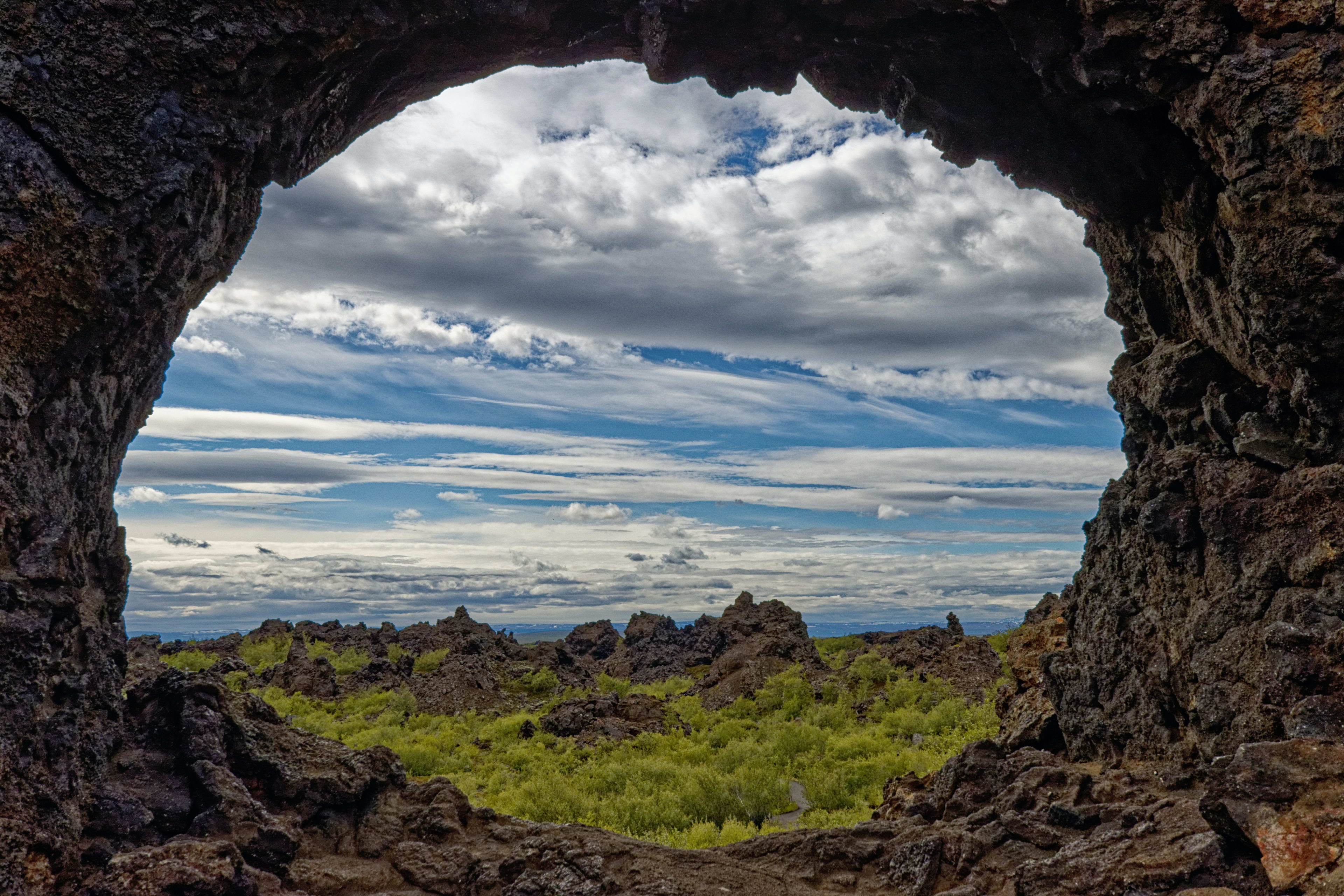
The Dark Castle Lava Fields, another landmark of the Diamond Circle, are located in the eastern part of Lake Mývatn and were also shaped by volcanic activity 2,300 years ago. Long ago, this area was a swamp. When the volcano erupted, the molten lava flowing overhead caused the groundwater to boil. As the lava cooled, the continuous flow of steam sculpted it into various unique shapes, which are the lava formations we see today—a spectacle extremely rare on Earth.
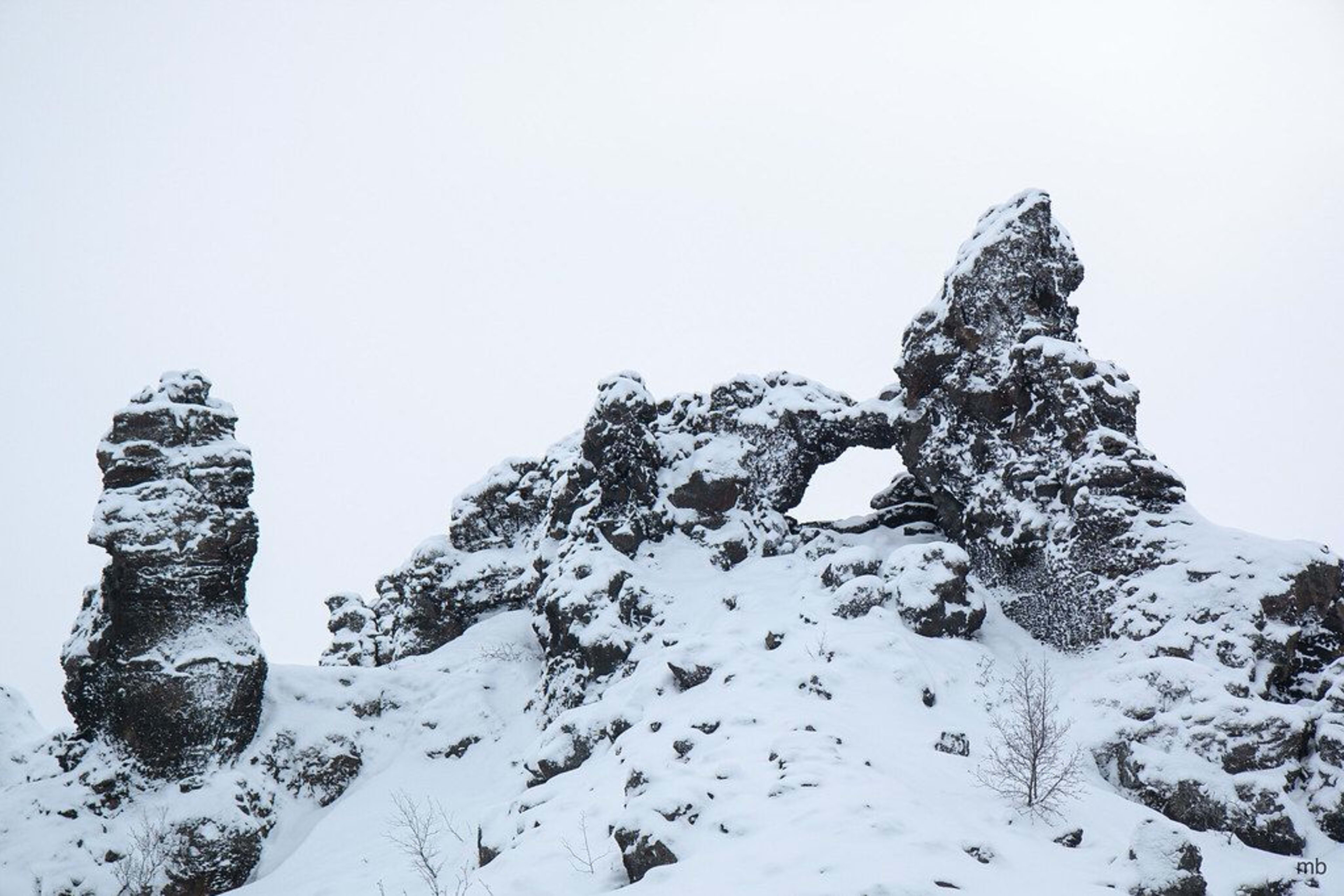
The Dark Castle Lava Field is now a black lava field composed of lava pillars, caves, cliffs, and rocks. Some of the lava pillars and rock bases are so large that people can be accommodated inside, hence the name Lava Maze or Dark Castle.

Beyond its unique appearance, Icelandic folklore adds a great deal of magic to the Dark Castle. As mentioned earlier, the cave was the home of the troll Grýla and her husband Leppalúði. Grýla and her pet cat would eat children who didn't receive new clothes during Christmas to encourage them to finish knitting and sewing before winter began. Grýla's children, the 13 Icelandic Santas, would frighten Icelanders in various ways; for example, Skyr-Gobbler would sneak into Icelandic homes and steal all the Icelandic yogurt. Many other stories from Iceland's Christian period also took place here; you can read about five of Iceland's most well-known mysterious folk tales . The Dark Castle thus appears even more eerie and legendary, eagerly awaiting exploration.

The hiking trails at Dark Castle are not complicated, with three routes of varying lengths for visitors to choose from. The shortest route takes only 15 minutes, the medium-length route takes about 1 hour, and the longest route takes 3 hours (which offers a view of Dark Castle's most famous "Gates of Hell"). As long as you choose a route, you can easily explore the castle, but be sure to pay attention to the corresponding colored signs to avoid getting lost.
Fans of the series shouldn't forget to visit this location, as the Wildling camp and the Vale of Arryn were filmed here. You can practically travel through Iceland like a character from Game of Thrones and experience the true essence of the epic tale.
Also, please note that the trails are closed during heavy snowfall in winter, as the snow can obscure trail markers and even block roads. For a suggested itinerary including the Dark Castle, consider: 8-Day Winter Tour of Iceland: Spa Culture & Golden Circle , ensuring a worry-free trip.
2. Námafjall Geothermal Area
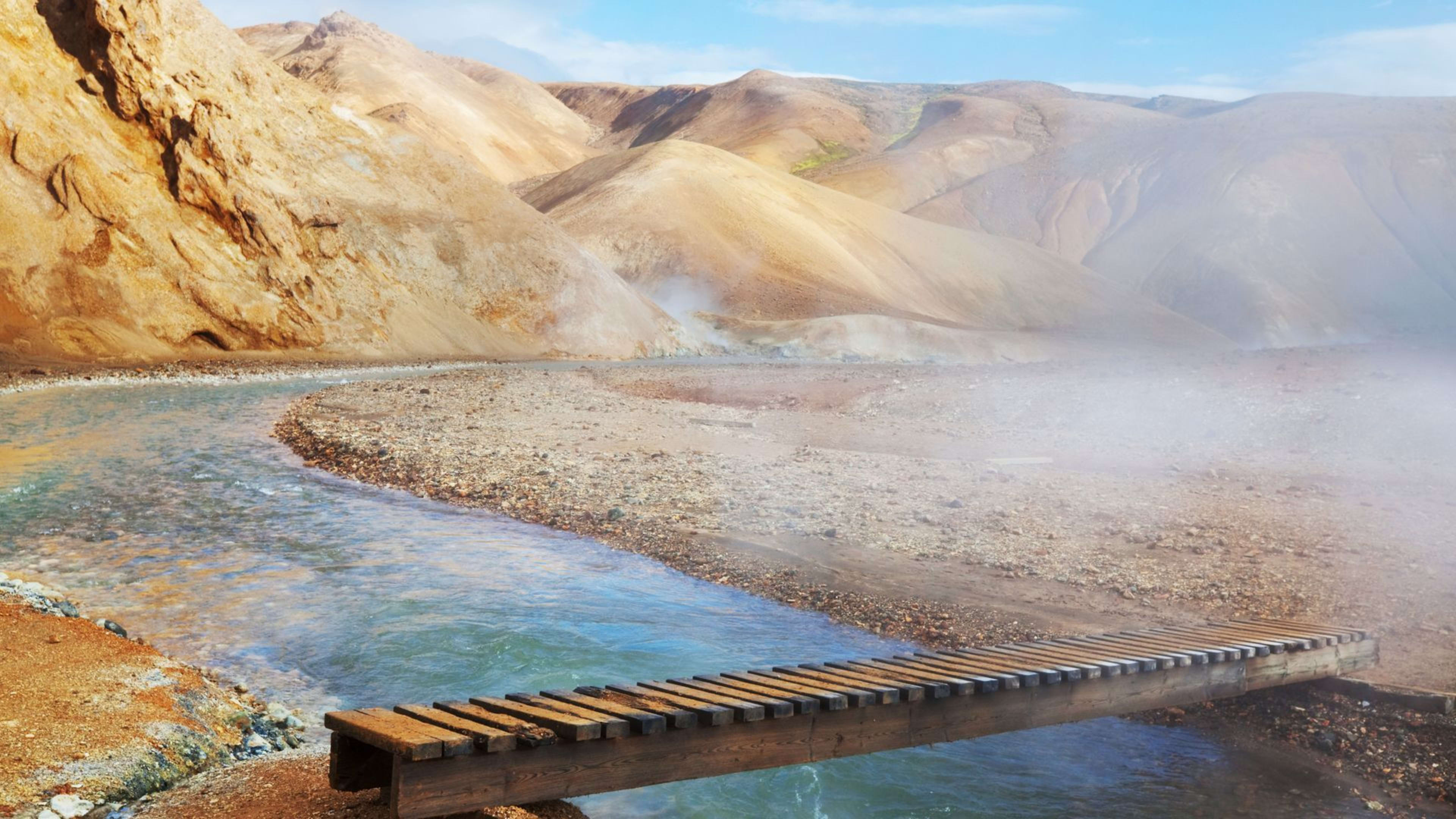
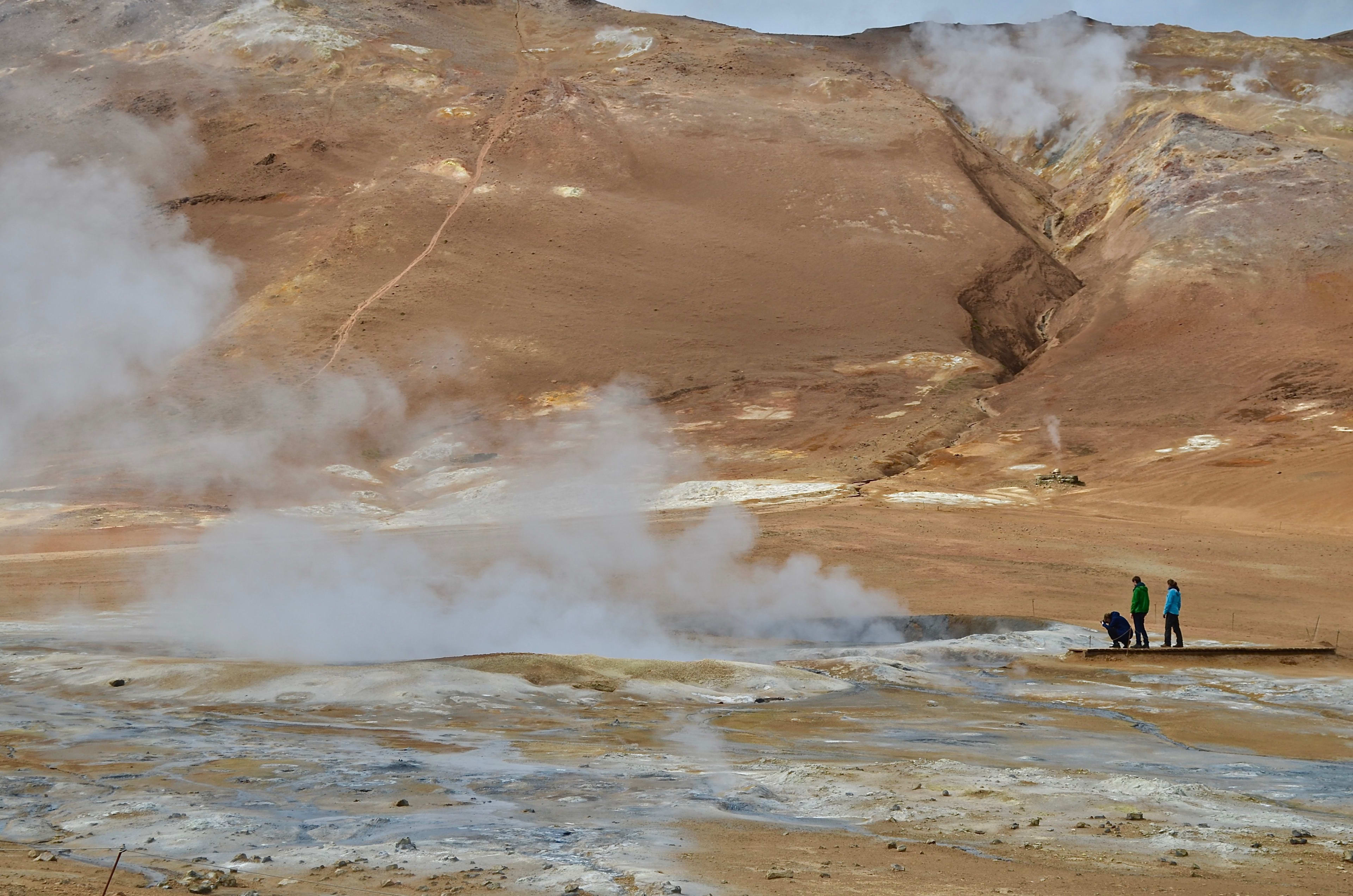
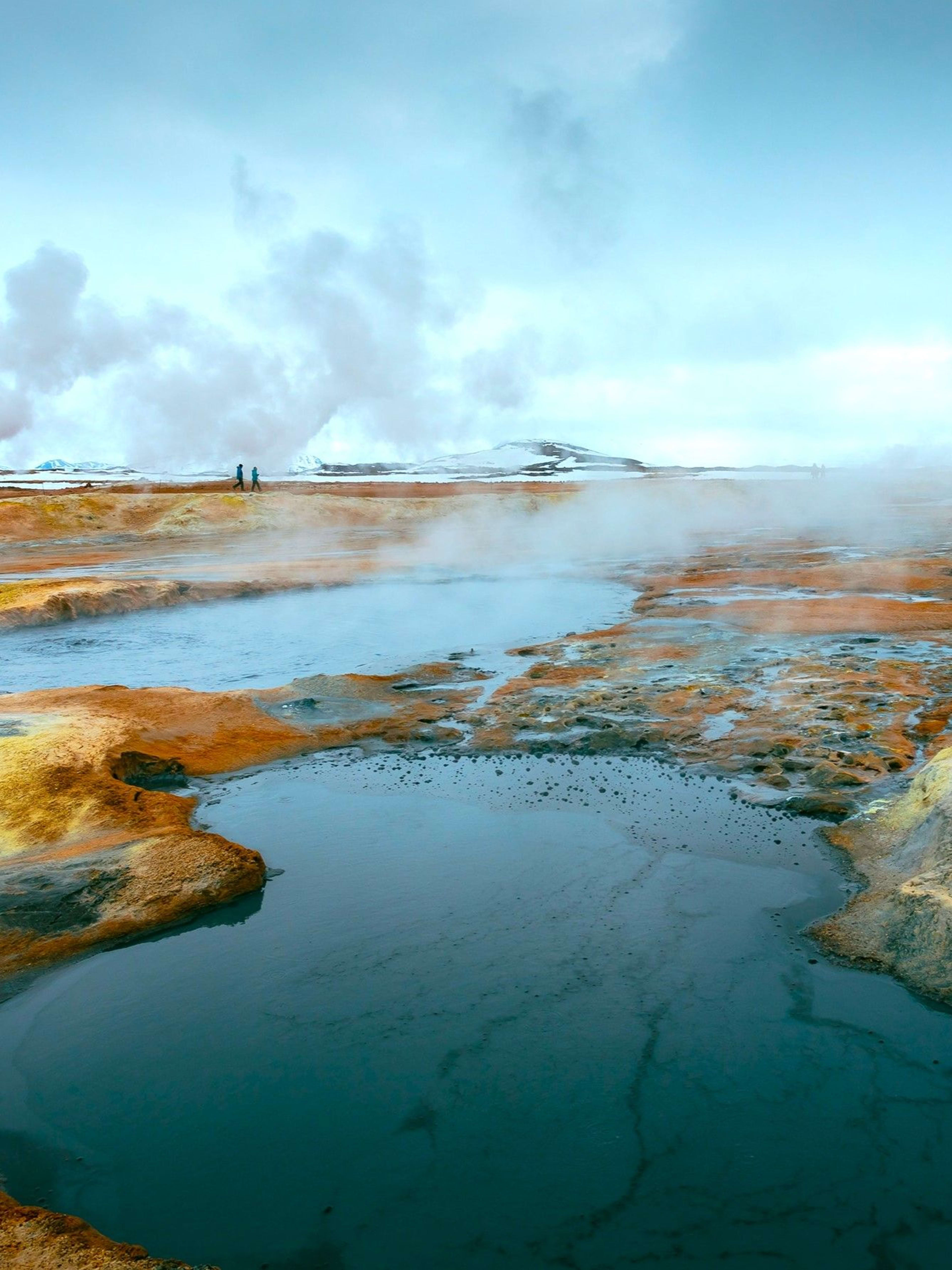
Volcanic activity and geothermal activity often go hand in hand. The Námafjall geothermal area, located at the foot of Mount Námafjall in northern Iceland, is a geothermal valley with an otherworldly atmosphere. Numerous fumaroles and boiling mud pools cover the surface, spewing geothermal steam into the sky, while the gurgling sound of bubbling lava can be heard. Locals call this "Hverir," meaning "hot spring." Curious about geothermal wonders? Click on " Iceland's Geothermal Wonders: Exploring Iceland's Geothermal Wonders" for more information.

Due to the extremely high temperature below the surface and the continuous spread of smoke and dust, no vegetation grows in the entire geothermal valley. However, the minerals precipitated from the Earth's core give this area a unique and vibrant color scheme. Yellow, orange, and red intertwine on the surface, creating a color scheme that is quite different from the blue-green impression of Earth. Visitors feel as if they are on Mars or visiting prehistoric Earth.

The geothermal area features a 2.5-kilometer-long wooden walkway with a 100-meter elevation gain, taking about an hour to complete. It's recommended to stay away from the steam vents for sci-fi-like photos or to create interesting perspective shots. A slight sulfurous smell in the air is normal; avoid the high-temperature steam and boiling mud pits to prevent injury. Visitors with children should supervise them closely to prevent accidents. The previously recommended 8-day winter tour of Iceland, focusing on geothermal culture and the Golden Circle, also includes a visit to the Námafjall geothermal area.
3. Skútustaðagígar (fake volcano)
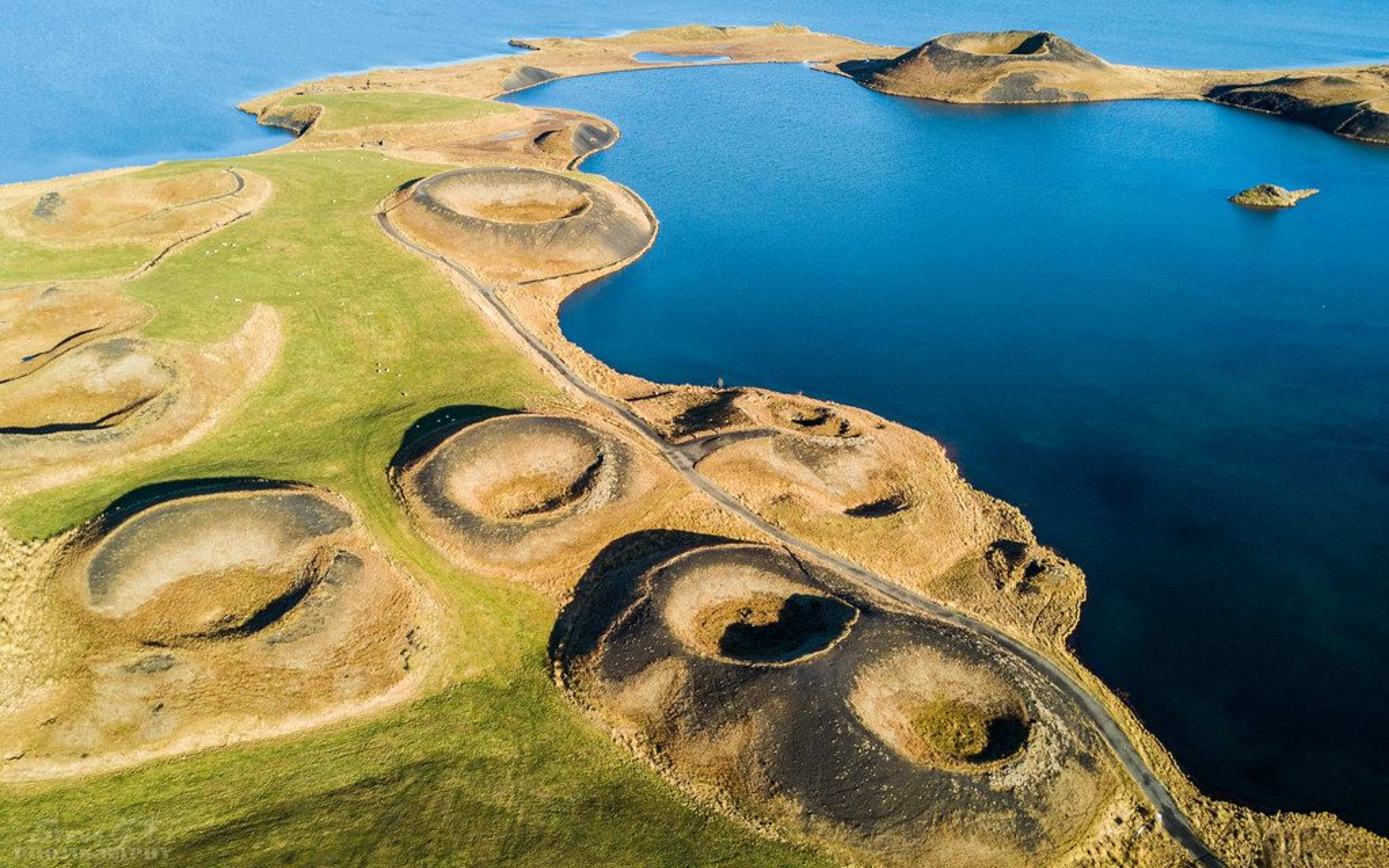
Want to take a walk on the lunar surface? Skútustaðagígar, a pseudocrater located on the southern shore of Lake Mývatn, is easily accessible by car. It's also a product of volcanic activity over 2000 years ago. On a group of wave-shaped islands are many huge, deep pits resembling volcanic craters or meteorite craters, initially leading one to wonder if they are on the moon or the work of extraterrestrials. However, they are not actually volcanic craters or meteorite craters, but rather formed by steam explosions.

At that time, the nearby volcanoes Lúdentaborgir and Þrengslaborgir erupted, spewing out scalding lava that covered the cool, damp ground and exerted pressure on the surface. Under the immense pressure of the lava, steam became trapped, creating tremendous internal pressure. When the pressure became too great, it triggered a steam explosion, causing the ground to cave in, forming the pseudo-crater we see today.

Although its landscape is unusual and rare, the natural scenery of the Skútustaðagígar pseudocrater is captivating, blending seamlessly with the Mývatn wetlands. Especially in summer, the surface of these deep craters is covered with moss and grass, pink wildflowers sway in the breeze, and soft Icelandic sheep roam freely nearby, resembling fluffy white cotton balls. Various ducks and waterbirds frolic in the lake, their liveliness and vitality needless to say. Of course, the winter scenery is also beautiful. If you happen to be there during a heavy snowfall, only white and black remain, allowing you to enjoy peace and tranquility. It's also worth mentioning that this is a famous birdwatching spot, where you can see 150 species of birds – a must-see for nature enthusiasts.
Like other tourist attractions, Skútustaðagígar pseudocrater thoughtfully offers two hiking trails: a long trail of 3 kilometers and a short trail of 1.5 kilometers. You can choose according to your needs. Both trails are easy and friendly to tourists of all ages.
Goðafoss (Waterfall of the Gods)
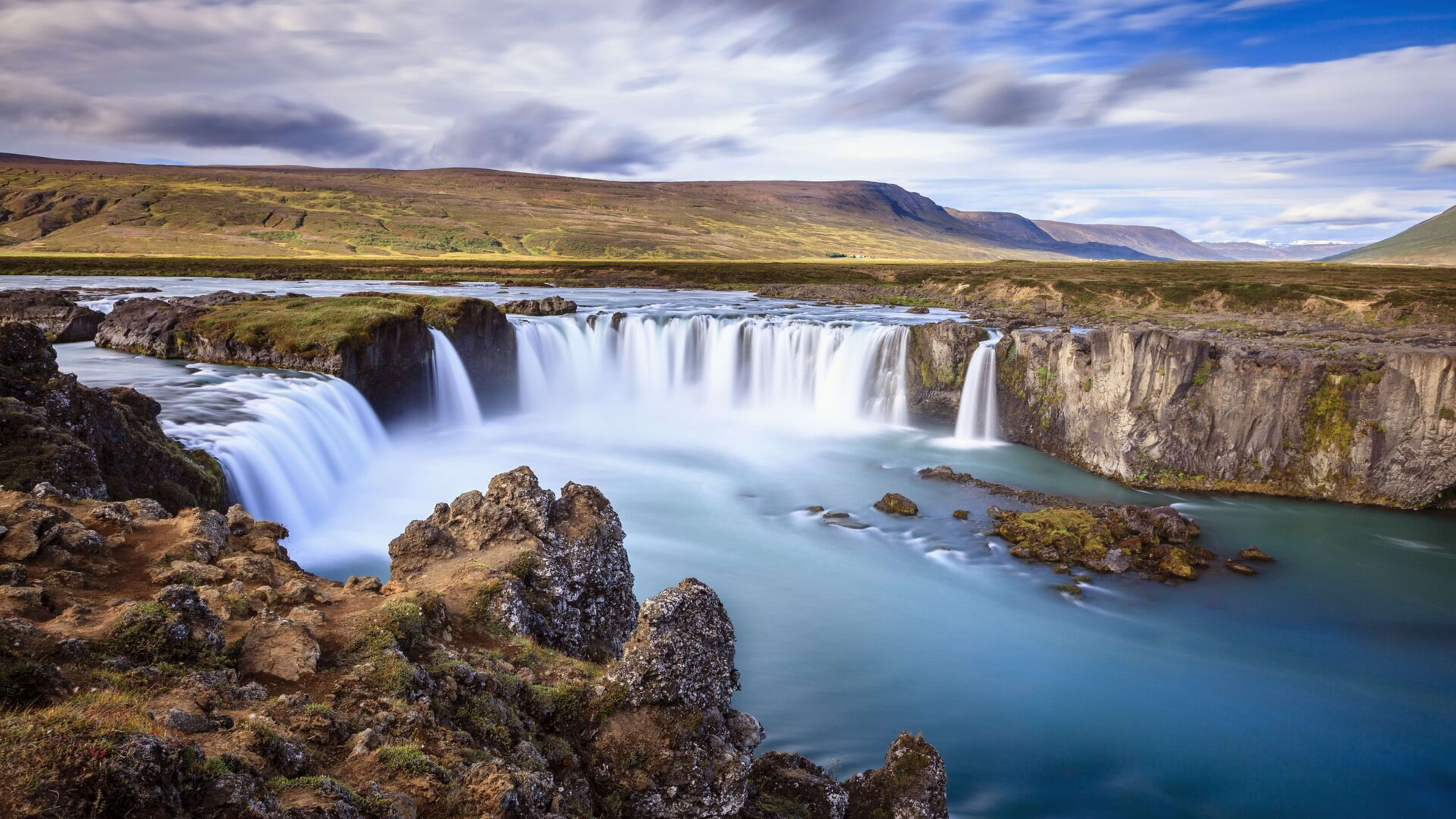
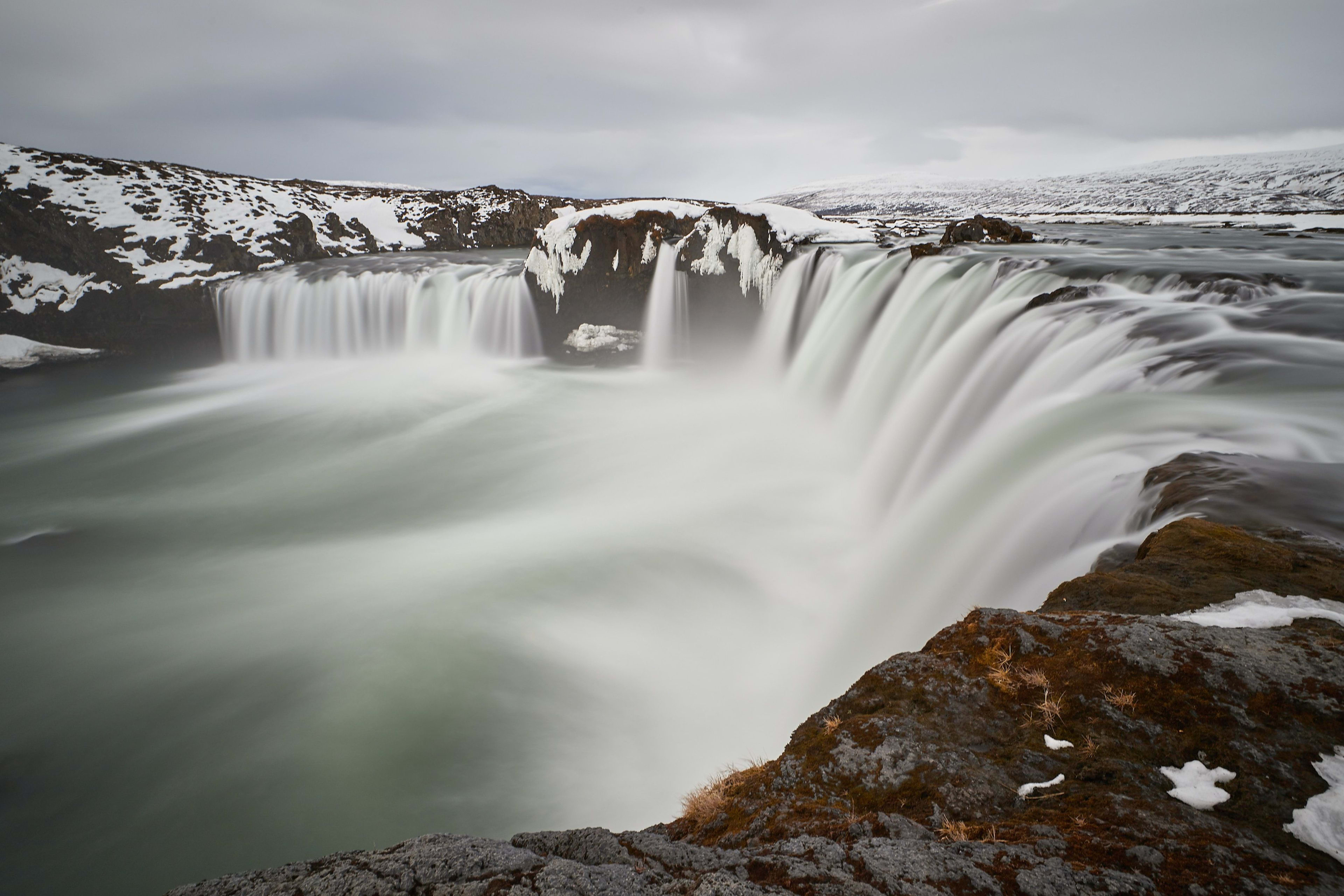
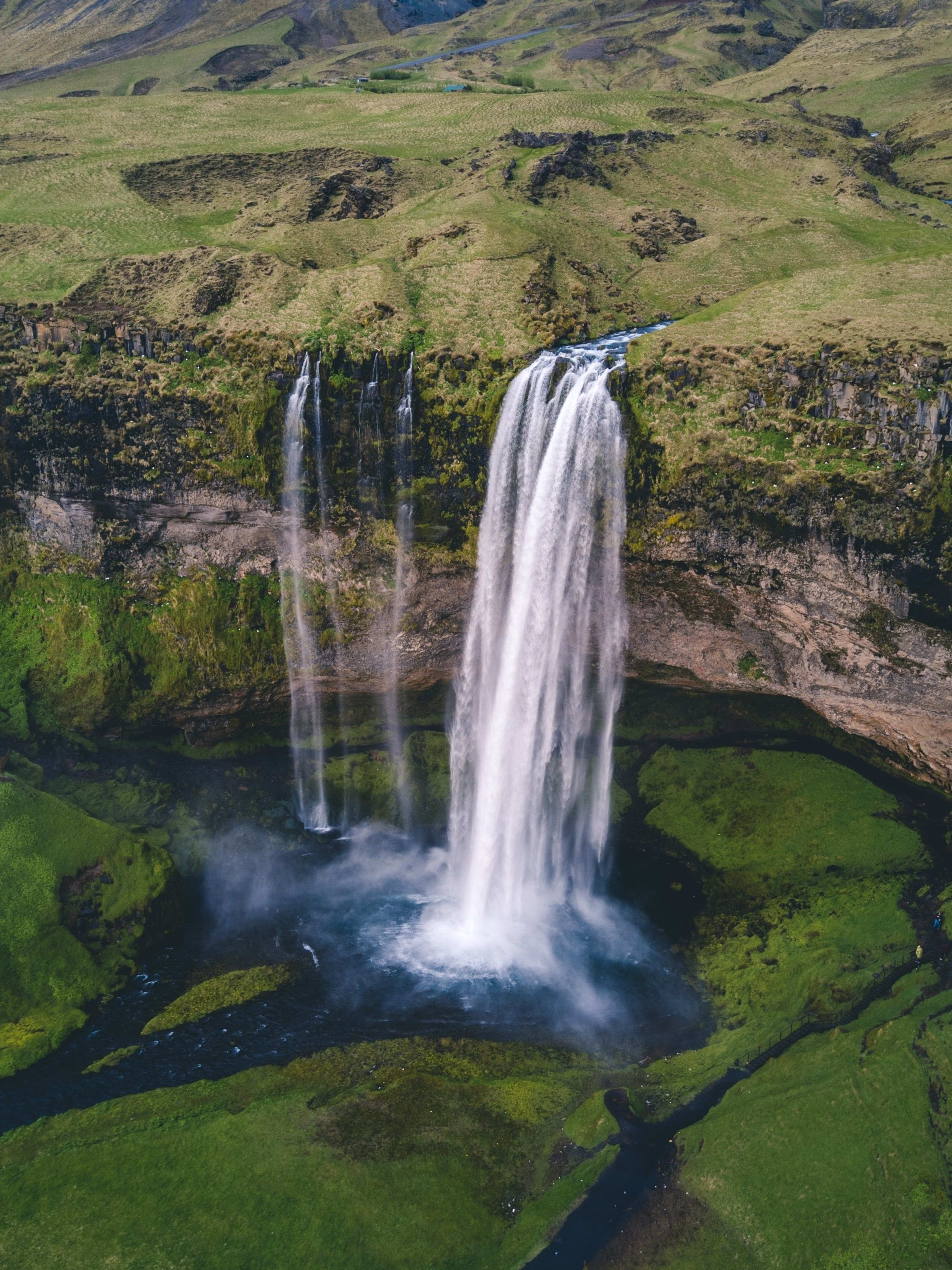
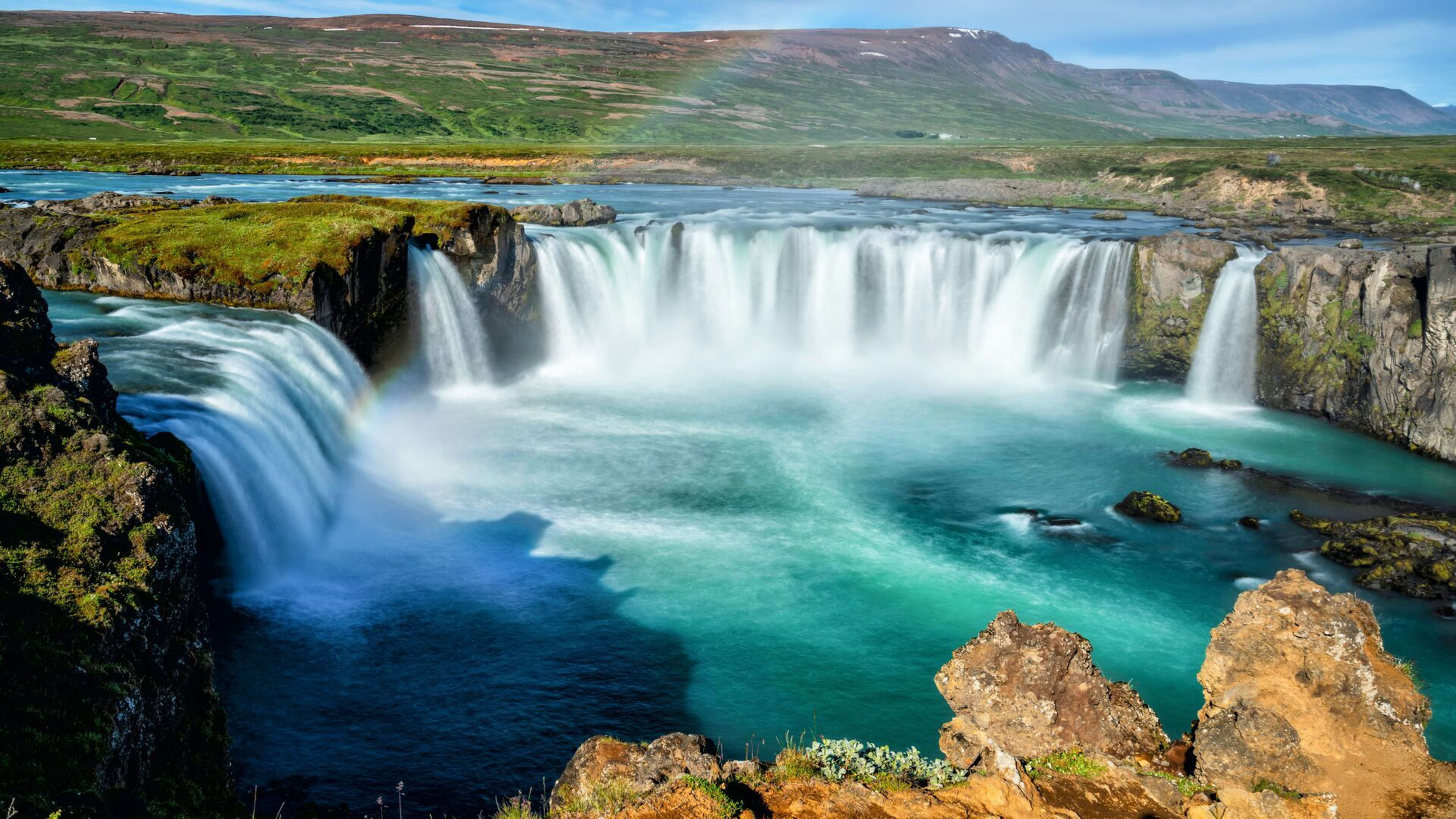
Godsfall is one of Iceland's most beautiful and spectacular waterfalls, standing 12 meters high and 30 meters wide. The water comes from the glacial meltwater of the Skjálfandafljót River, cascading down a semi-circular cliff to create a blue-green swirling pattern. The overall scenery is both expansive and gentle.

The beauty of Zephyrus Falls lies not only in its scenery but also in its name, and the history behind that name. According to Icelandic legend, in the 9th and 10th centuries AD, the vast majority of Icelandic immigrants from Norway worshipped Norse gods such as Thor, Odin, Loki, and Freya. However, around 1000 AD, due to the differences between Iceland's religious beliefs and the mainstream European religion of Christianity, conflicts gradually escalated, and Iceland was labeled as "pagan." Due to continued pressure from Norway, Iceland was forced to make a choice. Þorgeir Ljósvetningagoði, a legal orator at the time, was a follower of Norse gods, but he was respected and revered by both religious factions. He was chosen to make the final decision. After contemplating for a day and a night under a birch tree, he declared that Icelanders should adopt Christianity, but without prohibiting or restricting their freedom to worship the Norse gods. Finally, he symbolically threw his Norse god statues into the falls, marking Iceland's formal acceptance of Christianity as its official religion. The falls thus became known as Zephyrus Falls. The act of throwing the statues is said to have angered the gods, causing the waterfall to split apart, becoming the Falls of the Gods that we see today, divided by a huge black rock.

Godsfoss is open year-round and is about a 45-minute drive from Akureyri. For safety reasons, during winter, we offer a 9-day in-depth Iceland winter tour with experienced drivers and guides. Alternatively, if you wish to admire Iceland's waterfalls and other natural scenery, you can also read about Iceland's top ten must-see natural attractions .
Dettifoss
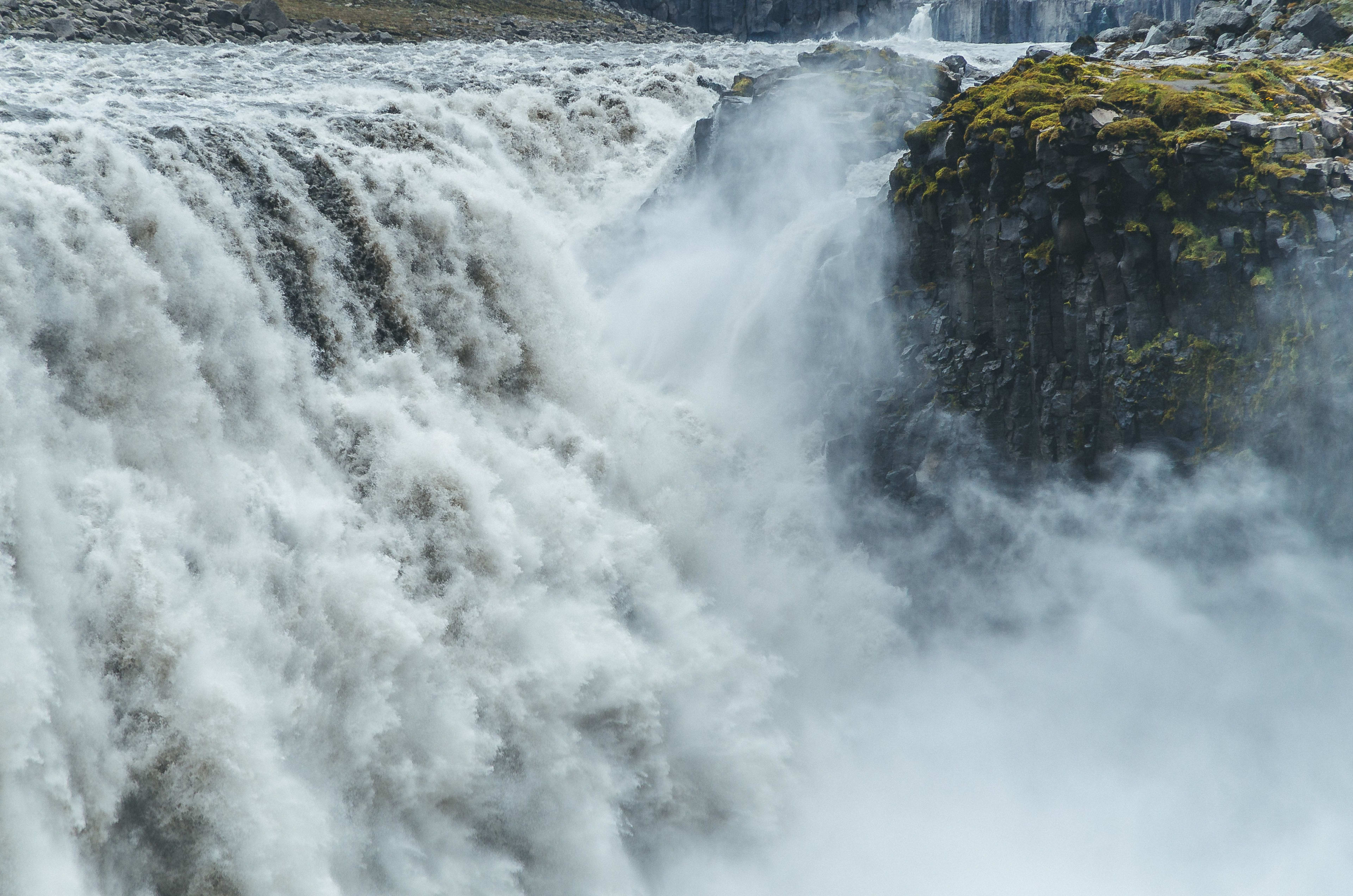
Dettifoss is a star attraction in the Diamond Circle. It is Iceland's largest waterfall and also Europe's waterfall with the greatest drop and flow rate, standing 45 meters high and 100 meters wide, with a water flow of up to 200 cubic meters per second. (However, some say that the Rhine Falls, located on the border of Germany and Switzerland, may have a higher water flow during the summer flood season.) Compared to the Godsfall, Dettifoss lacks some of its layered and delicate beauty, presenting instead a powerful and surging spectacle. Its immense and overwhelming force is breathtaking, awe-inspiring, and instills a sense of reverence.

Dettifoss is actually located within Vatnajökull National Park. The waterfall's water comes from the Jökulsá á Fjöllum glacier, which originates from Vatnajökull itself. Pure glacial meltwater rushes down, mixing with silt and pebbles. Against the backdrop of the surrounding greyish-black rock formations, the cascading waterfall takes on a pale greyish-black hue, possessing a unique and sophisticated dark beauty within its ruggedness. The water roars as it plunges into the Jökulsárgljúfur valley, splashing up a mist that refracts into a vibrant rainbow under the sunlight. It's also worth mentioning that not far upstream from Dettifoss is the smaller, more delicate Selfoss waterfall, and downstream is the Hafragilsfoss waterfall, offering panoramic views of the magnificent Jökulsárgljúfur valley.
We recommend choosing our island tour packages to find the best viewing spots: Iceland Winter Island Tour 10-Day Value Tour: Golden Circle & Glacier Hiking ; Iceland Winter In-Depth Island Tour 9-Day: South Coast Scenery & Eastfjords .
Ásbyrgi, Horseshoe Canyon
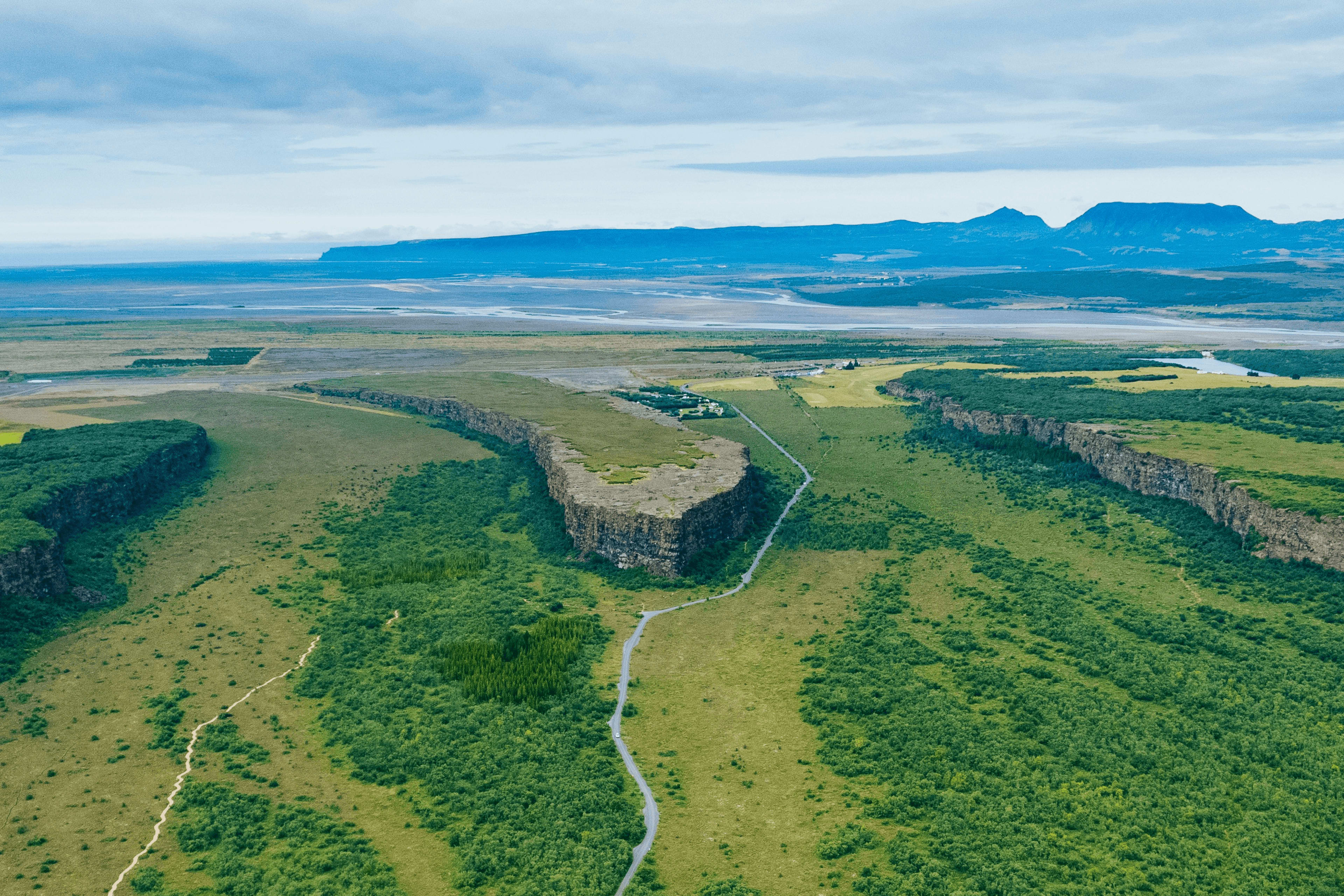
Horseshoe Canyon, also known as Aspigeon Canyon, is 3.5 kilometers long and 1.1 kilometers wide. The entire canyon is sunken, resembling a horseshoe, hence its name. People associate the shape of Horseshoe Canyon with Norse mythology. Legend has it that Odin, the chief of the Norse gods, had an eight-legged horse named Sleipnir. When Odin rode it, the horse left a complete hoofprint on the earth, which is the Horseshoe Canyon we see today. Even today, Horseshoe Canyon is lush and verdant, like a secluded oasis. Visiting here evokes a sense of awe at the vastness of the earth and the wonders of nature.

Horseshoe Canyon is easily accessible, located right next to the highway, and can be reached by car. Remember to enjoy the scenery along the trails and avoid climbing the cliffs.
Húsavík (town)
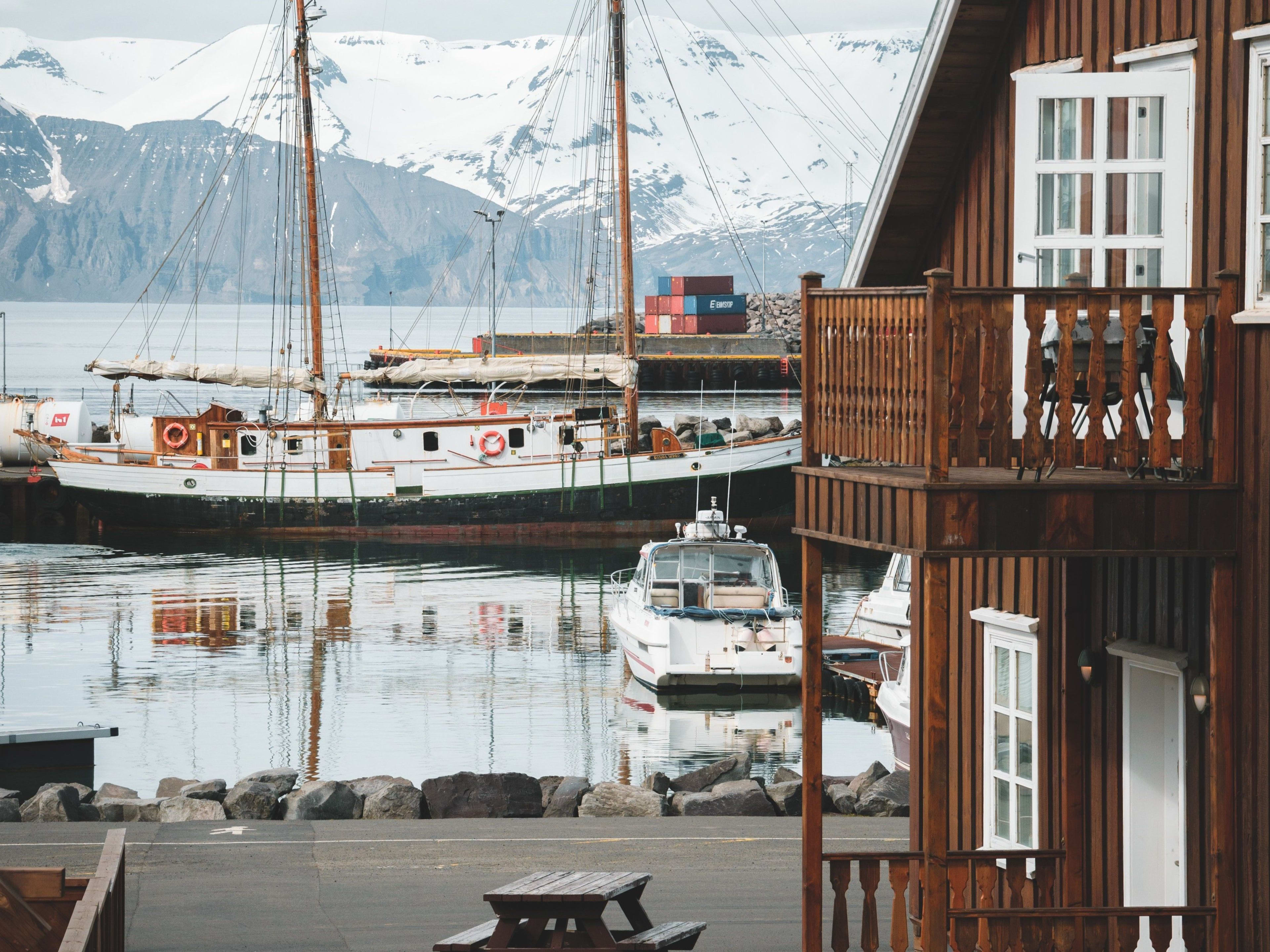
Húsavík is a tranquil town in the north. Its Icelandic name, Húsavík, means "bay of houses" because it was one of the earliest Icelandic settlements where people built houses. The most famous activity here is whale watching. Húsavík is known as the whale watching capital of Europe. Just 20 minutes from the harbor, you can see pods of whales and dolphins, with a success rate as high as 99%. In summer, whale watching is almost guaranteed! We recommend our 8-day, 7-night Iceland summer island-wide self-drive tour: Lake Mývatn & Black Sand Beach , taking you on a whale watching adventure in the north!

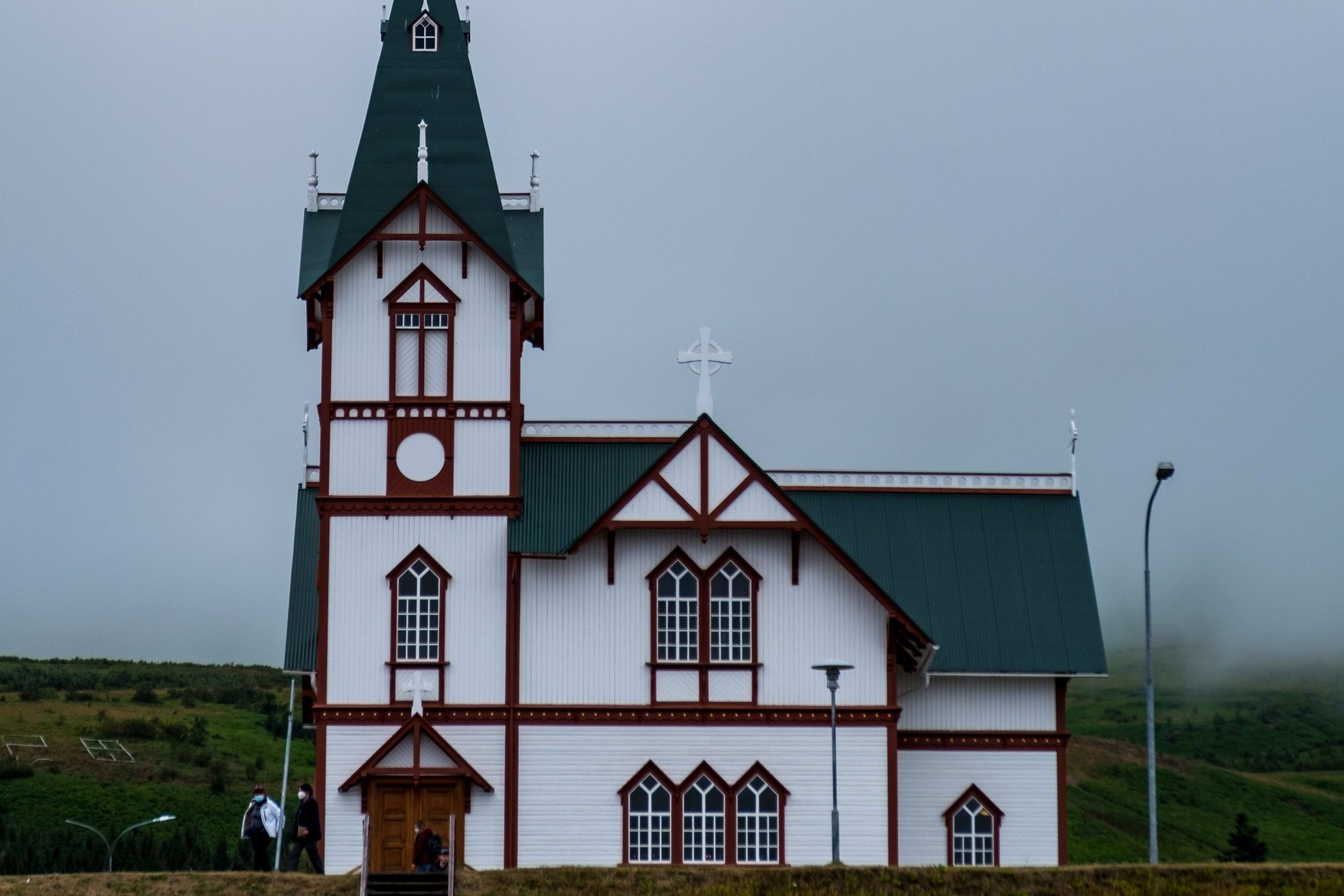
Besides whale watching, Húsavík, a charming Nordic town, is also perfect for tourists to linger and stroll around, taking photos and exploring. It boasts a marine museum, a natural history museum, a folk museum, a regional archive, a photo archive, and an art gallery, offering a true cultural and historical feast. A special recommendation is to visit the landmark Húsavík Church (Húsavíkurkirkja), a rustic and beautiful wooden church perfect for taking photos. The Whale Museum (Hvalasafnið á Húsavík) is also very unique, featuring a life-size blue whale skeleton. If you enjoy shopping, you can find some Icelandic sweaters and enjoy a cup of aromatic Icelandic coffee, experiencing the relaxed charm of this charming town. (Further reading: What you need to know about Icelandic sweaters ; A glimpse into Icelandic coffee culture at the ends of the earth )

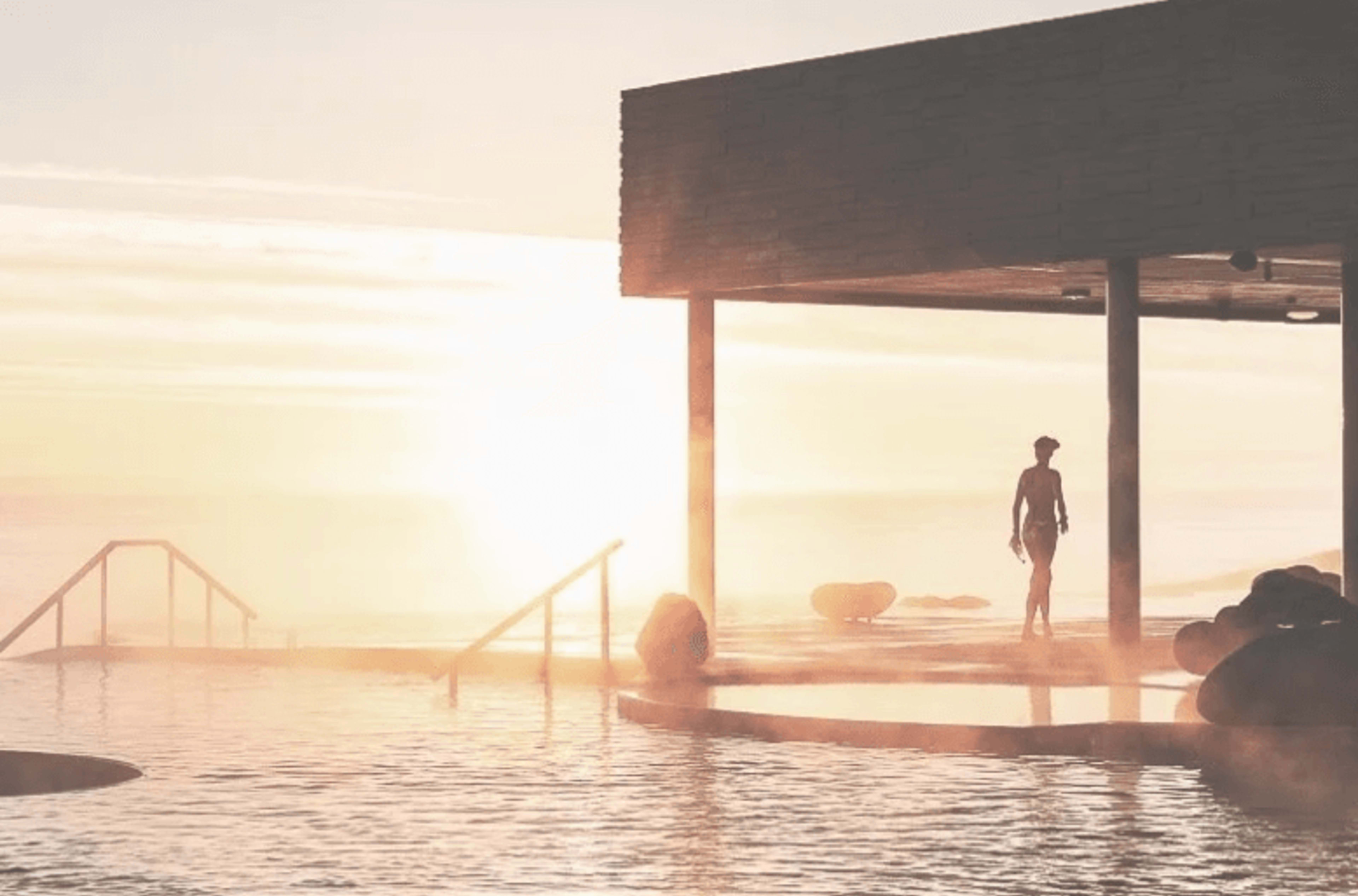
If you enjoy hot springs, don't miss the town's natural seawater hot spring, Geosaa, a rare combination of mineral-rich seawater and geothermal resources. Located on a west-facing cliff overlooking Skjálfandi Bay and the Arctic Circle to the north, Geosaa offers stunning views of the Northern Lights in winter. Enjoy a soak in the hot spring while admiring the seascape, and if you're lucky, you might even spot humpback whales surfacing in the distance. This is the perfect way to experience local life in Husavik! Click here to get your Geosaa natural seawater hot spring admission ticket .

Other attractions around Iceland's Diamond Circle
Akureyri
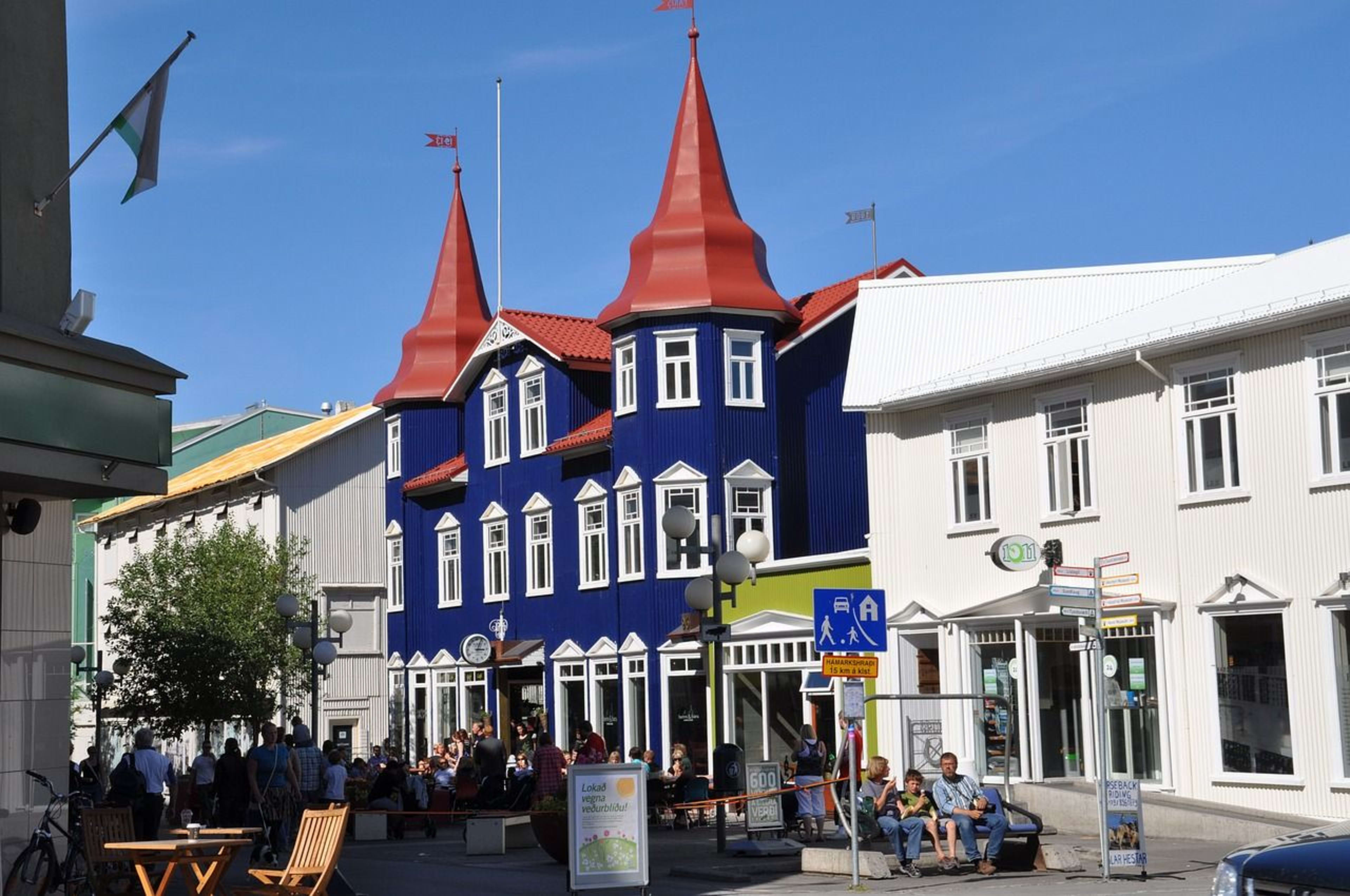
Akureyri, situated beside Eyjafjörður, Iceland's northernmost fjord, is the country's second-largest city after Reykjavik and is often referred to as the "Capital of the North." Located within the Diamond Circle, Akureyri, with its well-developed infrastructure, serves as a convenient base for tourists exploring northern Iceland, offering easy access to various attractions.

Beyond its convenient transportation hub status, Akureyri itself is a fascinating city. It boasts numerous attractions, including the world's northernmost botanical garden , the Akureyri Botanical Garden , the magnificent Akureyri Cathedral , and the Akureyri Museum, all well worth exploring.
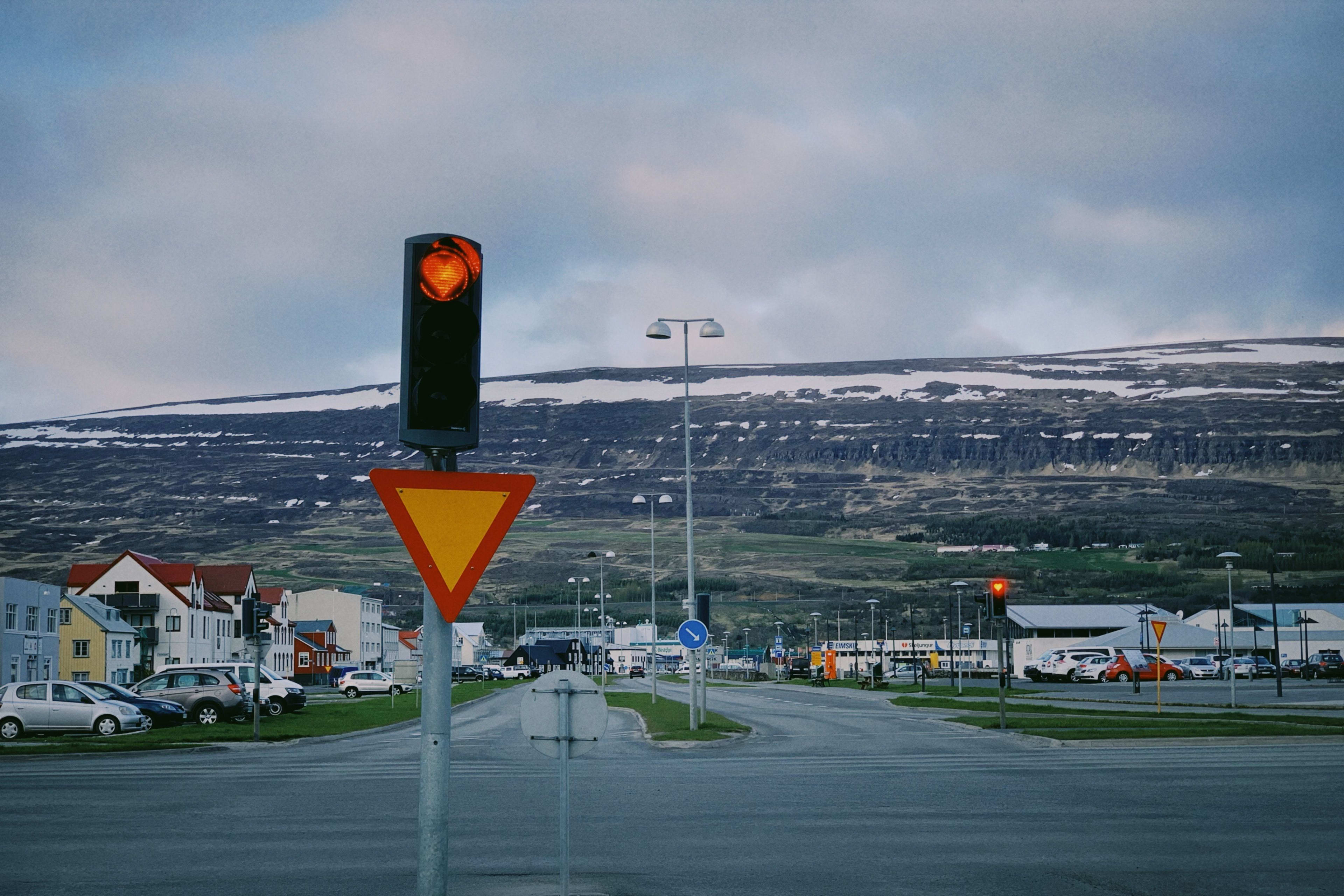
After visiting the sights, a city walk in Akureyri is a great option. Just a minute's stroll through the streets will reveal Akureyri as a warm and lovely city, with heart-shaped traffic lights scattered throughout. When the heart-shaped traffic lights illuminate, your heartbeat seems to resonate with the city and the heart of northern Iceland, bringing you boundless warmth. This traffic light originated during Iceland's 2008 financial crisis, when the Akureyri government changed the shape of the traffic lights to a heart to encourage the public and convey positive and optimistic sentiments to the people of the north. This heartwarming gesture continues to this day. Don't forget to take a stylish Nordic-style photo when stopping at red lights and going at green lights! But remember to make sure pedestrians obey traffic rules.

Most attractions in Akureyri are within walking distance, and public transportation is available if needed. We recommend trying the cafes and restaurants. Not far from Akureyri is a unique beer spa where you can enjoy a beer bath and drink beer! If you enjoy arts and culture, the town also boasts Iceland's only professional theater outside of Reykjavik, so don't forget to check it out.
Akureyri offers a wealth of activities, such as whale watching in Hauganes , riding Icelandic ponies in town, bird watching on Hrísey and Grímsey islands, and enjoying aurora skiing at Hlíðarfjall ski resort – come and explore!
Grjótagjá Hot Spring Cave
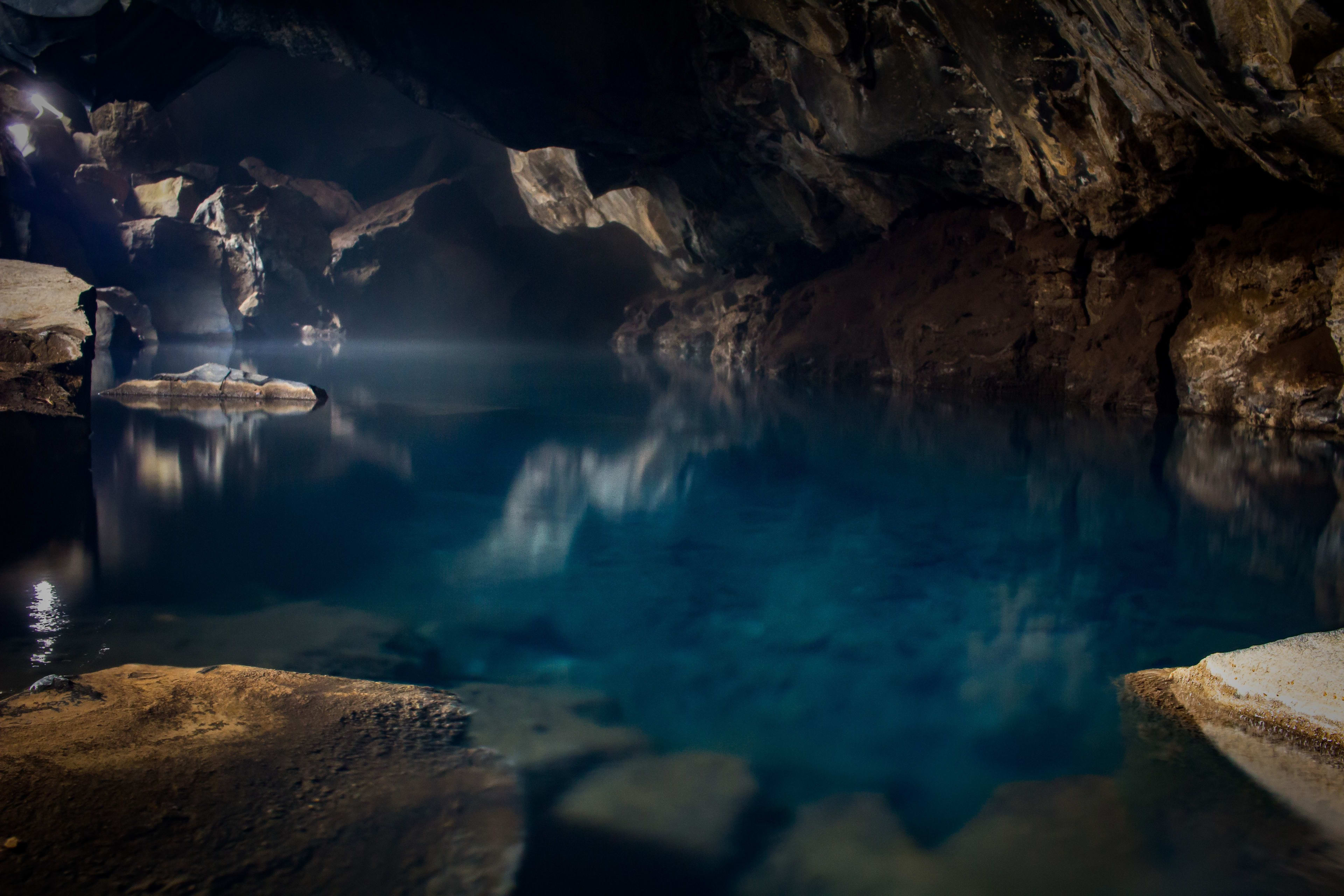
You might not recognize the name, but if you're a Game of Thrones fan, you'll immediately recall the romantic scene where Jon Snow and Ygritte shared their first kiss! That's right, Grjótagjá Cave was the filming location, right on the Diamond Circle tourist route.

Grjótagjá Cave is a small cave in the Lake Mývatn region, located between Lake Mývatn and the Mývatn geothermal area . It was once a popular, secluded hot spring. However, frequent geological and volcanic activity between 1975 and 1984 caused the water temperature to repeatedly rise to 50 degrees Celsius, making it unsuitable for bathing. Therefore, the hot spring experienced several periods of closure and reopening. Later, due to the popularity of Game of Thrones, many fans visited the site. For safety reasons, bathing is not allowed. Currently, the cave is only open for tours; please be sure to follow the regulations during your visit.
Iceland's Diamond Circle: Unique Activities
Mývatn Nature Baths
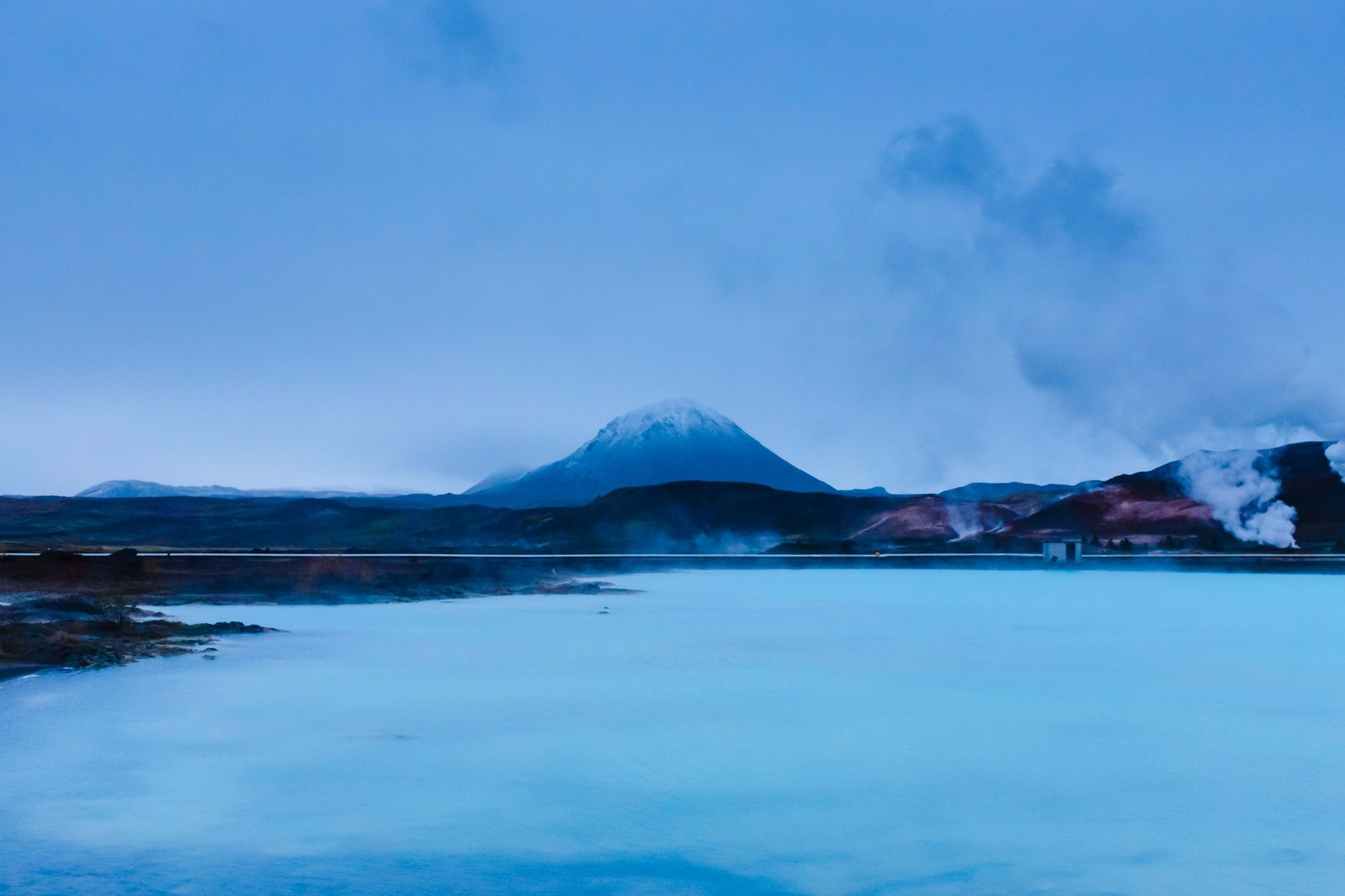
You read that right! Lake Mývatn has a hot spring, and it's one of the landmark attractions in the Mývatn scenic area! Opened in 2004, the Mývatn natural hot spring combines hot springs, sauna, hotel, and restaurant into one well-equipped facility, making it one of the most popular attractions in northern Iceland! Because the natural geothermal water in Mývatn has a high mineral content, the water is a pale blue color, similar to the Blue Lagoon, and its skin-beautifying effects are also similar. Therefore, Mývatn is also known as the "Blue Lagoon of the North," second only to the Blue Lagoon in popularity. Although Mývatn is slightly smaller than the Blue Lagoon, it's more affordable, doesn't require a long wait for reservations, and offers a better experience with fewer crowds, making it very cost-effective.

How about it? Feeling tempted? How about a relaxing open-air hot spring experience? Lying in the sapphire-blue water, enjoying the feeling of every pore opening up, then applying a mineral-rich face mask, admiring the vast wilderness and distant mountains amidst the rising steam – isn't this your ideal vacation? Moreover, Mývatn's unique location allows you to witness Iceland's seasonal wonders. In summer, you can enjoy the midnight sun in the hot springs, while in winter you can witness the dreamlike and dazzling Northern Lights. The ultimate natural experience is truly unparalleled.
If you have a particular fondness for Icelandic hot springs, you can definitely add a hot spring experience to your itinerary. Refer to the most worthwhile Icelandic hot springs to experience and book a relaxing and rejuvenating trip.
*Mihu Hot Spring Tips:
You need to bring your own swimsuit and towel; renting them will incur a fee. If you're worried about catching a cold, you can also bring a small hat—it'll keep you warm and look great in photos.
The hot spring has shower and changing areas, and you need to rinse your whole body before soaking in the hot spring.
The different hot spring pools at Miho Onsen have varying temperatures, ranging from approximately 35 to 41 degrees Celsius, so you can choose the temperature you prefer. Those who prefer warmer temperatures can also experience the sauna.
Opening hours: 12:00-22:00 (10:00-23:00 after June 1st). You can book admission tickets for Miho Hot Springs by clicking here.
Húsavík Whale Watching

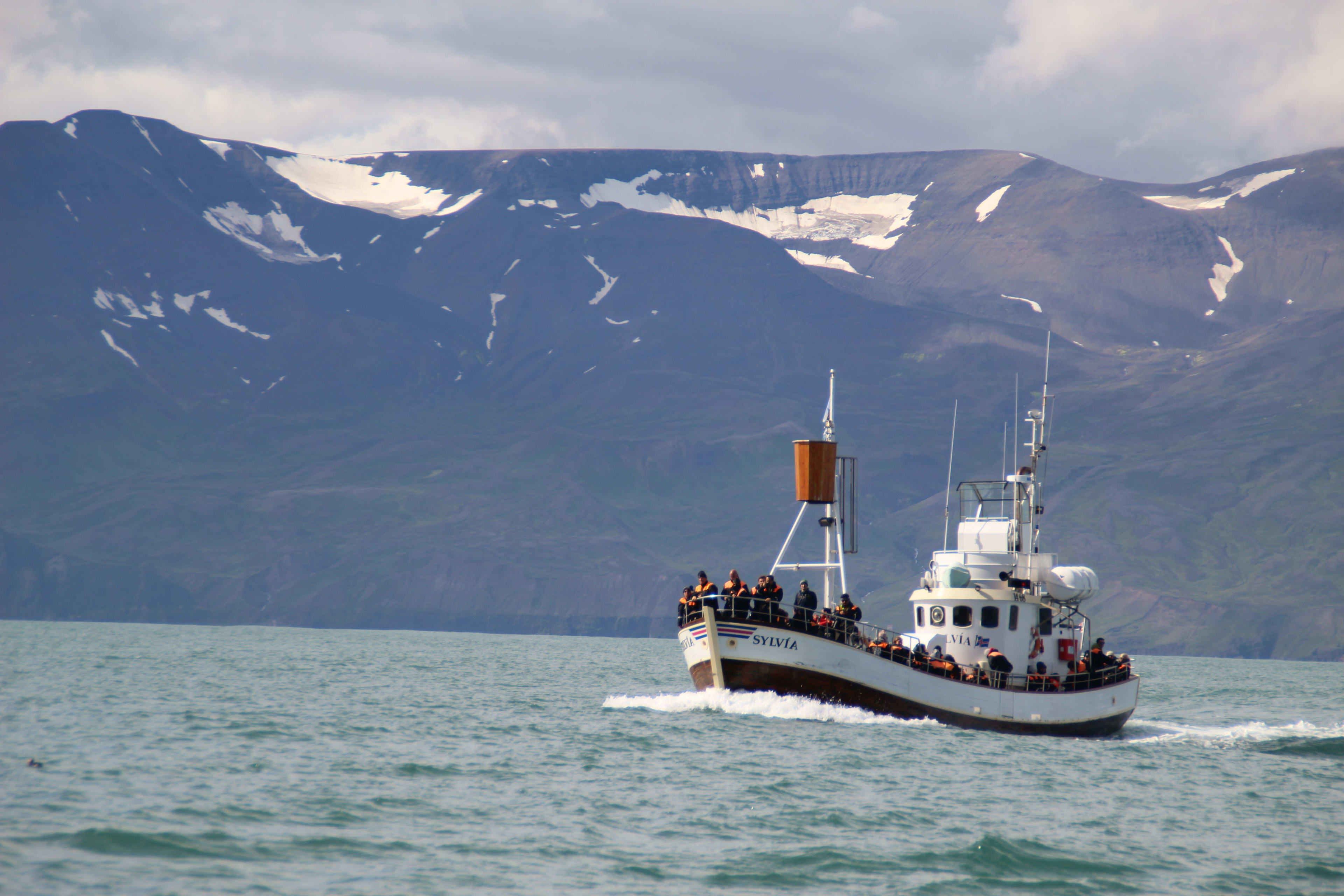
Whale watching is an unmissable activity in Husavik! It's recommended to experience it between April and November. Currently, four companies in Husavik offer whale watching boat tours, most lasting 2-3 hours. You can drive to Husavik and take a boat to nearby Skjálfandi Bay. We recommend choosing either the classic Husavik whale watching tour or the Husavik sailboat whale watching tour , and we'll arrange the perfect whale watching trip for you.
In Húsavík, northern Iceland, the most common whales are minke whales, white-beaked dolphins, and humpback whales. In addition, killer whales, blue whales, fin whales, and beluga whales can also be found there. Which of these marine giants you encounter depends on your luck! Every whale watching trip is a unique surprise for you! During the whale watching trip, experienced crew members will lead you to find whale tracks and explain whale facts, ensuring that your sea trip is a double reward of visual and educational experiences.
On your whale watching trip, besides seeing numerous whales, you'll also encounter many adorable birds, such as Arctic terns and puffins. In summer, you might even spot Iceland's national bird, the puffin! Choose a speedboat whale watching tour with puffins in Húsavík and enjoy interacting with these adorable creatures. For more information on whale watching in Iceland, check out this ultimate whale watching guide .
*Whale watching tips:
1. Whale watching is subject to weather and sea conditions. Please follow the arrangements of the travel agency and guide.
2. Wear windproof and waterproof clothing, and prepare warm items such as hats, gloves, and scarves.
3. Feeding marine animals or leaving trash is prohibited.
Akureyri riding an Icelandic horse
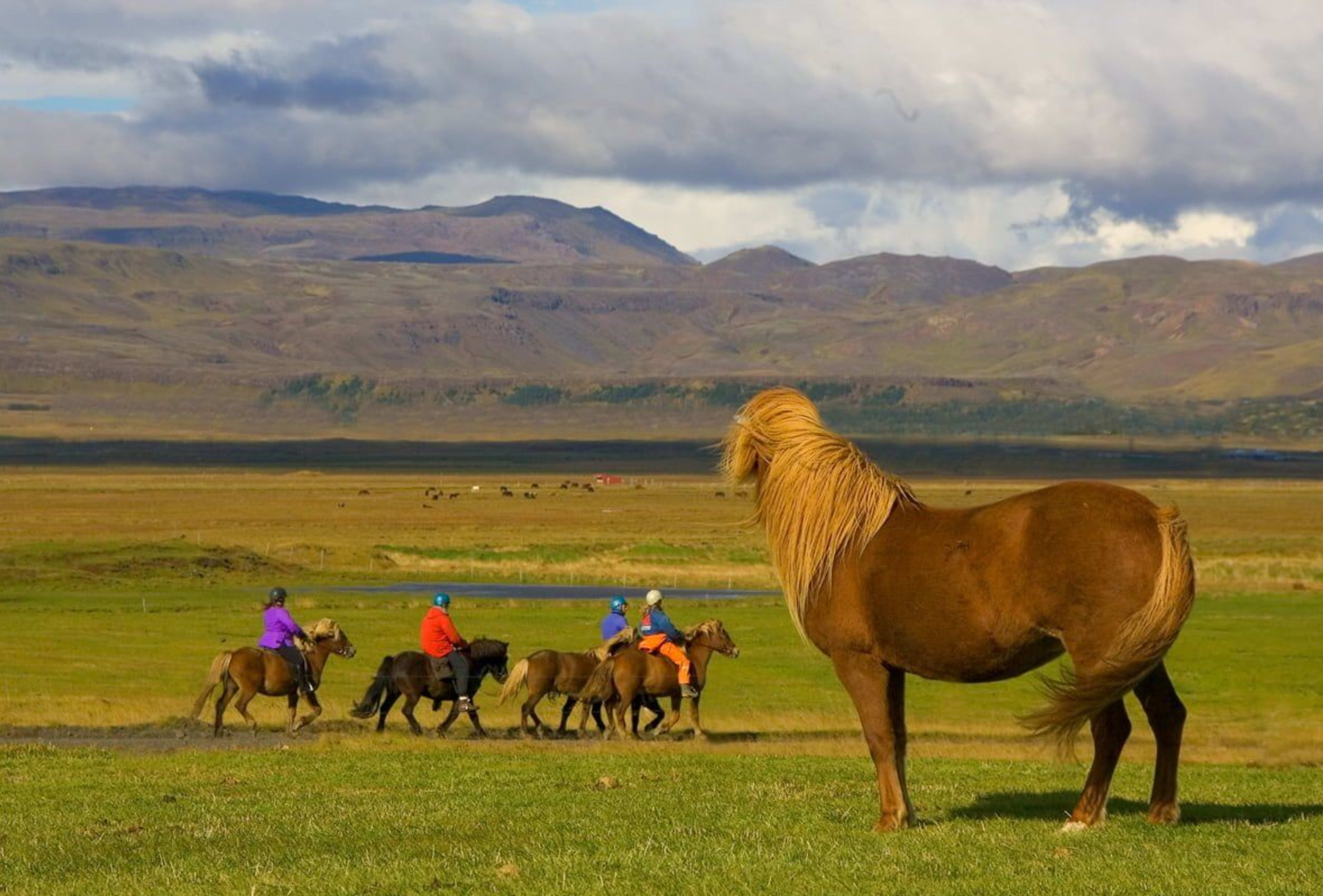
How about a horseback riding trip in Akureyri, the largest town in the north? Here, travelers can not only enjoy the charming cityscape but also participate in a special activity: a return to nature and close encounters with gentle Icelandic horses! Icelandic horses are small and adorable, with gentle temperaments, intelligent nature, and each has a charming and distinctive hairstyle, making them very endearing. Because they are so gentle and obedient, no riding experience is required to enjoy the scenery of northern Iceland from horseback. With a professional guide, there's absolutely no need to worry. During the ride, the intelligent Icelandic horses will also demonstrate their unique "Tölt" gait, which, although faster, is still steady. This is one of the reasons why Icelandic pony riding experiences are very suitable for the elderly and children.

Not enough time in the north and want to experience riding Icelandic horses in Reykjavik or elsewhere? Of course! We offer Viking horse riding experiences , tundra and lava field horse riding experiences in the spa town , and horse riding experiences in Iceland's geothermal hot spring areas for your consideration.
*Riding tips:
1. You cannot carry a backpack while riding a horse; you must store your belongings.
3. It is recommended to wear comfortable pants, shoes, and gloves. If you want to bring a camera, it is recommended to carry a small waist pack.
Important things to note when traveling to Iceland's Diamond Circle
1. When is the best time to visit the Diamond Circle area?
The Diamond Circle boasts stunning scenery that changes with the seasons, yet remains breathtaking at all times. Most areas are accessible year-round via Iceland's Ring Road (Route 1). Aside from inclement weather, travel can be undertaken at any time, but May to October is generally recommended. Summer offers comfortable weather, ideal for hiking and sightseeing, especially around the summer solstice when the magical midnight sun can be witnessed. Winter, being the off-season, offers fewer crowds, easier booking, and the chance to see the Northern Lights; however, be prepared for cold weather and slippery, icy roads, requiring a high-performance 4WD vehicle. A 3-day, 2-night self-drive tour of the Diamond Circle is ideal if you prefer a less rushed experience. Compared to the Golden Circle, the Diamond Circle has more attractions, which are more spread out, allowing for a 3-day drive to fully explore each one. Alternatively, a 2-day, 1-night tour focusing on the main attractions is also possible.
2. How many days are suitable for a Diamond Circle tour?
If you're driving the Diamond Circle and want to take your time, a 3-day, 2-night itinerary would be ideal, allowing you to see most of the attractions. Compared to the classic Golden Circle route, the Diamond Circle has more attractions, which are also more spread out. If you're short on time, you can use 2 days and 1 night to get a general overview and prepare for a more in-depth trip next time.
3. How to rent a car for a self-drive trip in the Diamond Circle?
Renting a car and driving yourself is the most convenient, flexible, and cost-effective way to explore Iceland, allowing you to visit hidden gems within Iceland's Diamond Circle at your own pace and interests. However, it's worth noting that self-driving is best suited for travelers planning a summer road trip around Iceland via Route 1, or those who prefer a more flexible itinerary, have some knowledge of Iceland, and possess extensive driving experience. Before deciding to rent a car, it's recommended to read the Iceland Self-Driving Guide .
If you choose to explore Iceland by car, consider our self-drive tour packages. We'll arrange vehicle rentals and provide route maps and other services to save you unnecessary hassle.
If you prefer not to drive yourself and would like to have a driver and guide, you can also consider our other tours, such as: Summer Selected 8-Day 7-Night Minibus Tour around the Island: Eastern Fjords, Snæfellsnes Peninsula, and Whale Watching.
What kind of vehicle is suitable for touring the Diamond Circle? In summer, if you are only touring the main routes, a two-wheel drive mid-size vehicle is sufficient. However, in winter, due to slippery and potentially icy roads and complex conditions, a four-wheel drive vehicle is essential for safety.
When driving in Iceland, please check the weather and road conditions multiple times before departure and during your trip, as Iceland's climate is highly variable, especially in winter, with frequent instances of wind, rain, snow, and sunshine within a single day. Also, please pay attention to weather warnings and road closures. Specific information can be found on the Icelandic Meteorological Office's official website , where you can check real-time road and traffic conditions .
4. What clothes should I wear when visiting northern Iceland?
Recommended items to bring: warm clothing, comfortable, waterproof and slip-resistant hiking boots, waterproof jacket and pants (for rain), swimwear, warm gloves, hat and scarf, camera, waterproof camera case, and backpack.
Iceland's weather is quite changeable, so layering is often necessary. In winter, bring a thick coat, warm gloves, a hat, and a scarf for protection against the wind. For more information, please click on the Iceland Clothing Guide: Dressing Right is Key to a Perfect Trip .
When traveling to Iceland, don't just focus on the Golden Circle! The Diamond Circle, a dedicated tour route showcasing the scenery of northern Iceland, covers five main attractions: Godzilla (Fountain of the Gods), Lake Mývatn (Lake Mývatn), Dettifoss (Dettifoss), Horseshoe Gorge, and the town of Húsavík. Of course, there are also many lesser-known, breathtakingly beautiful spots along the way. Experience the unique Icelandic landscapes and the Nordic charm you've always dreamed of here.