跳至主要內容

热能涌动的冰岛:探秘冰岛地热奇观

阅读时长6分钟

作者:方绿汀

2024年2月18日

When Iceland is mentioned, besides the Northern Lights, glaciers, and its role as a filming location for numerous acclaimed movies and TV shows (such as *Game of Thrones* and *The Secret Life of Walter Mitty*), its fiery volcanoes, hot springs, and geysers are also unavoidable keywords. These rare natural wonders have earned Iceland the nickname "Land of Ice and Fire." However, how can such a small country like Iceland boast so many natural wonders? This is largely due to the geothermal resources of this mysterious Nordic nation. These resources are like the lifeblood of the Earth, forming a vital pillar of Icelandic culture and sustainable development. Exploring these geothermal wonders during a trip to Iceland is an unforgettable experience!

This article will also introduce you to the formation of geothermal activity in Iceland, the utilization of Icelandic geothermal resources, and the rich and diverse geothermal wonders of Iceland. Forest Cat Travel also offers itineraries to help you explore Iceland and witness these natural wonders! Why not join our 8-day, 7-night Iceland summer road trip or the longer 11-day Iceland summer surprise road trip to explore the Mývatn geothermal area in the north and experience the authentic geothermal healing of Icelandic hot springs!

Alternatively, you can join a 6-day independent tour of Iceland during the winter and relax at the newly popular Sky Lagoon hot springs.

Geothermal formation in Iceland

Located at the mid-Atlantic ridge, on the tectonic boundary where the North American and Eurasian plates meet, Iceland experiences frequent geological activity. This unique geographical location makes Iceland one of the countries with the richest geothermal resources in the world, and has also created many iconic geothermal attractions.

Icelandic geothermal resources

For Icelanders, geothermal energy is not just a readily available resource, but something ingrained in their very being. In the early history of Icelandic settlement, geothermal energy was primarily used for hot spring baths and washing clothes. As society developed, geothermal energy became increasingly prominent in Icelandic life, for example, in cooking—a common cooking technique known as "slow cooking" or "Icelandic slow cooking." A pot or container filled with food is buried underground, using the earth's internal heat to slowly cook the food over a period of time. Another traditional method is baking, such as Icelandic rye bread (Rúgbrauð), which is made by burying a jar of dough near a hot spring or geothermal area. The natural heat from the ground slowly bakes the bread, giving it its unique flavor. Meanwhile, Icelandic bathing culture has also diversified, with activities like saunas. Subsequently, Icelanders have made extensive use of geothermal resources in agriculture, handicrafts, and industry to aid production. Technologies such as milk sterilization, geothermal heating (hot water from geothermal reservoirs is piped to homes and businesses for heating), power generation (power plants obtain steam through well drilling), and geothermal greenhouses (helping to maintain optimal growing temperatures for crops, extend the growing season, and increase the variety of plants that can be grown) have continuously expanded the uses of geothermal energy in Iceland and improved the quality of life for Icelanders.

grindavik geothermal
<font dir="auto" style="vertical-align: inherit;"><font dir="auto" style="vertical-align: inherit;">Geothermal resource utilization in Grindavik Town</font></font>

Even today, Icelanders still place great importance on expanding the uses of geothermal resources and exploring geothermal technology. Currently, Iceland uses almost 100% renewable energy (approximately 70% geothermal energy and 30% hydropower), with a total installed geothermal power capacity of 755 megawatts, making it one of the world's top ten geothermal power generating countries. While most of Europe suffers from rising fossil fuel prices and winter power outages, Iceland enjoys relatively stable energy prices.

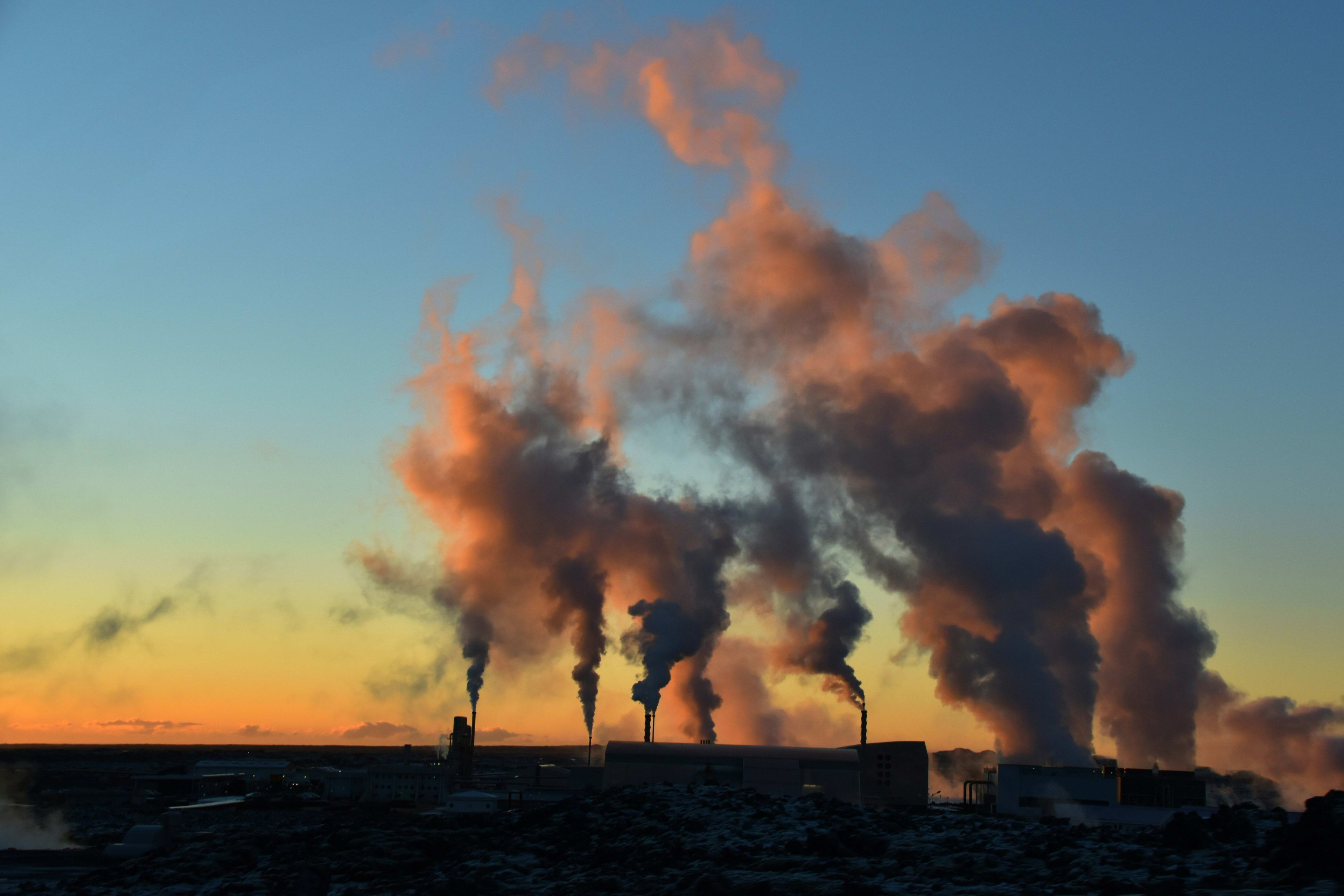
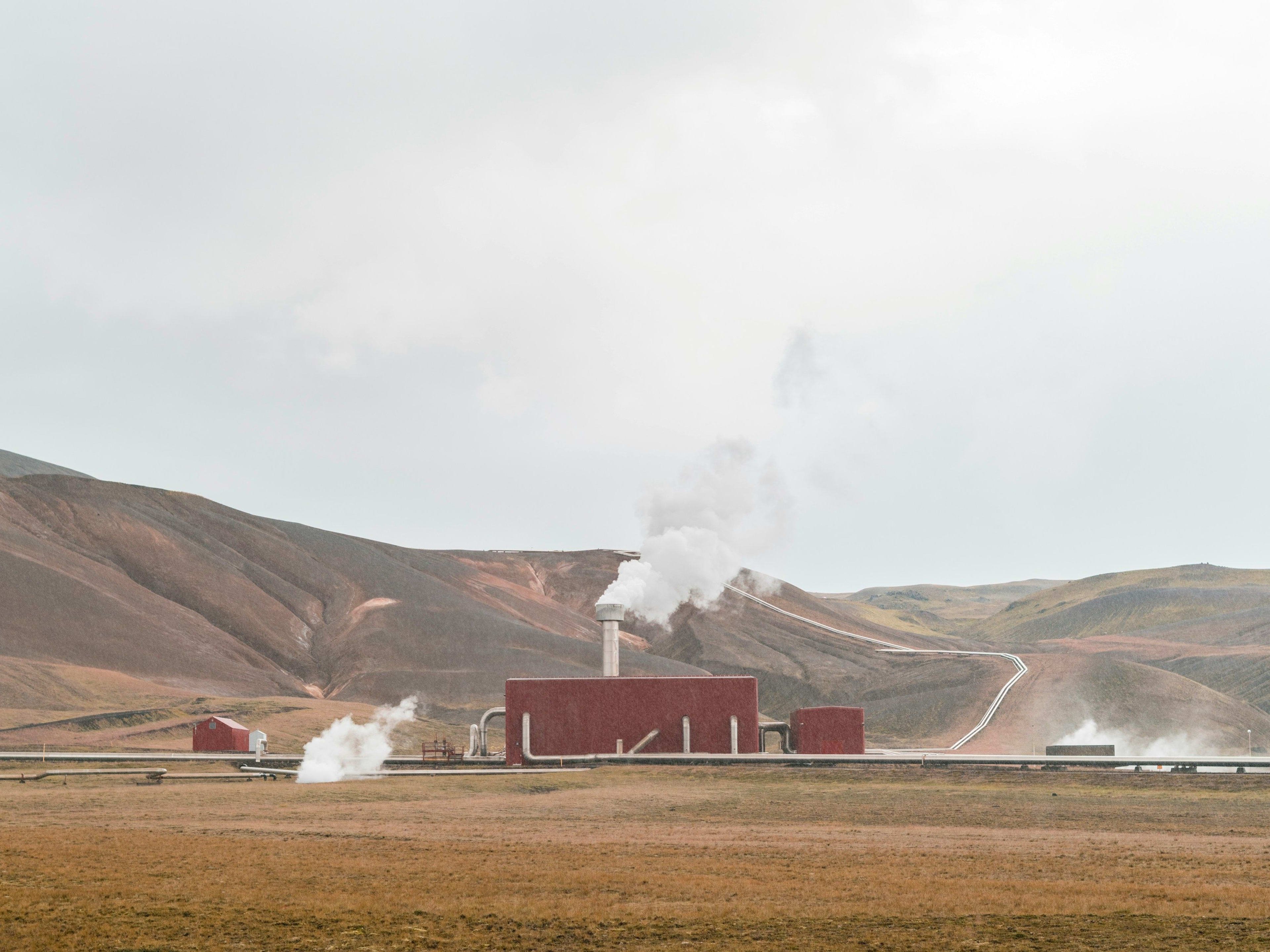
iceland geothermal plants
<font dir="auto" style="vertical-align: inherit;"><font dir="auto" style="vertical-align: inherit;">Icelandic geothermal power plant</font></font>

While continuously expanding the new frontiers of geothermal energy, Iceland is also committed to exporting geothermal technology to help other countries (China, Germany, Indonesia, etc.) carry out geothermal projects.

Icelandic geothermal landscape

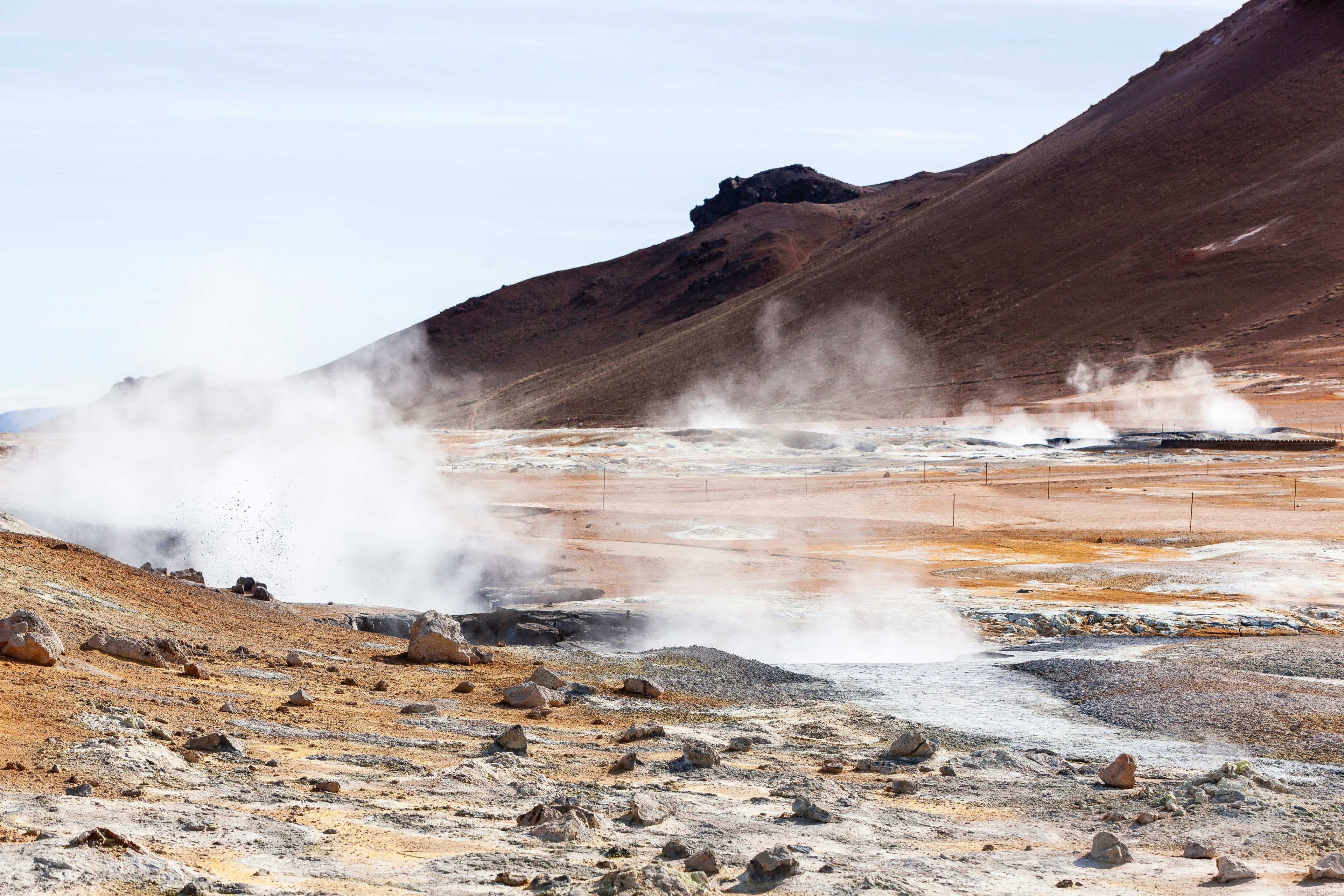
Iceland's geothermal energy is not only the country's most important energy source, but also a key driver in shaping many iconic landscapes.

Iceland boasts geothermal landscapes throughout the island, and the best way to explore them is by car. Why not check out the following self-drive packages selected by Forest Cat Travel to take you to the Lake Mývatn region in northern Iceland and witness the volcanic geothermal scenery?

In addition, you can also join a 6-8 day summer adventure tour, where you can visit the only volcano in the world that you can go inside and explore, and experience the colorful volcanic landscape while touring Iceland.

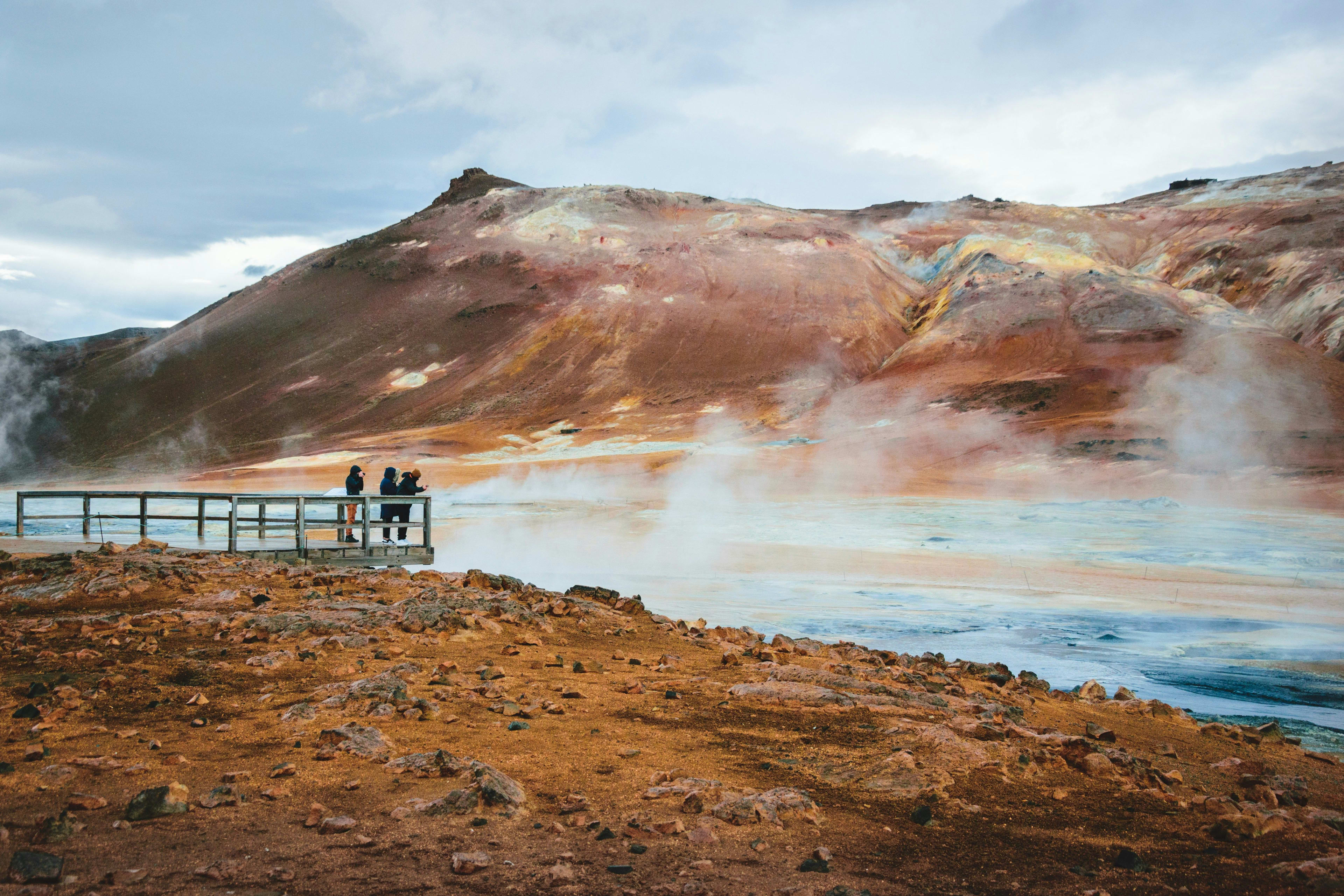
iceland myvatn geothermal area
<font dir="auto" style="vertical-align: inherit;"><font dir="auto" style="vertical-align: inherit;">Icelandic geothermal landscape</font></font>

1. Volcano

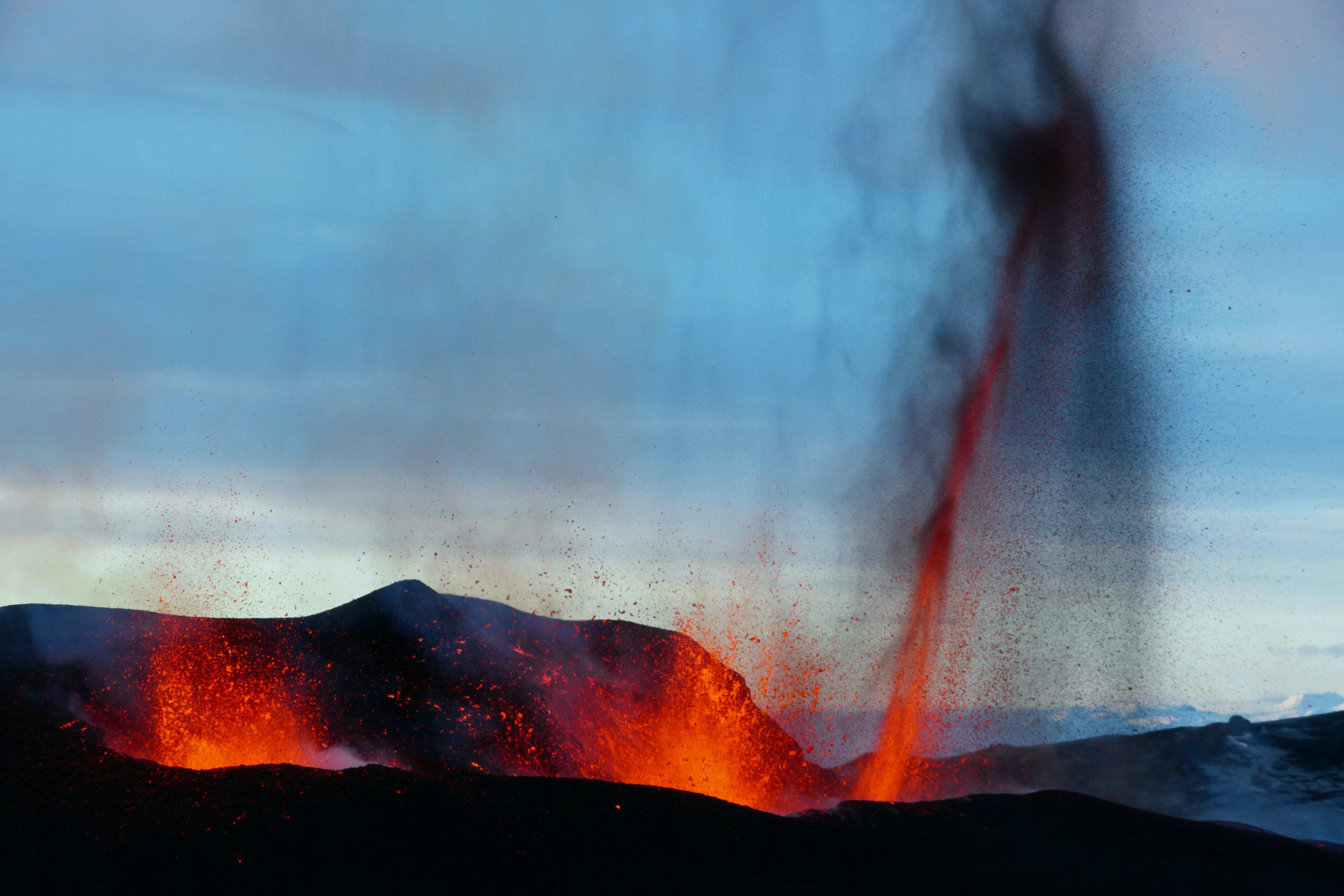
Volcanoes are the result of heat release from the Earth's interior and the interaction between tectonic plates, typically related to plate tectonics and magma activity within the Earth. Plate tectonics can cause collisions, separations, or slips of plates, leading to crustal deformation. Once magma forms in the mantle, it begins to move upwards through cracks or weak points in the crust, eventually emerging at the surface to form a crater. Over time, volcanic rocks, ash, and other volcanic deposits may accumulate around the crater, gradually forming volcanic structures such as volcanic cones and ridges around the crater. Many plate boundaries are rich in volcanoes. Iceland, located at a tectonic plate boundary, is a veritable "land of volcanoes."

(1) Eyjafjallajokull Volcano

Volcanoes under glaciers

The first impression of volcanoes is often "scorching" and "high temperature". They are orange-red magma that sometimes rolls and gathers power underground and sometimes erupts to the ground, trying to devour the dark soil. They are furnaces with red and dark earth tones as the base color. However, Eyjafjallajökull volcano in southern Iceland has subverted many people's imagination of volcanoes - it is a volcano crouching under a crystal-clear ice cap.

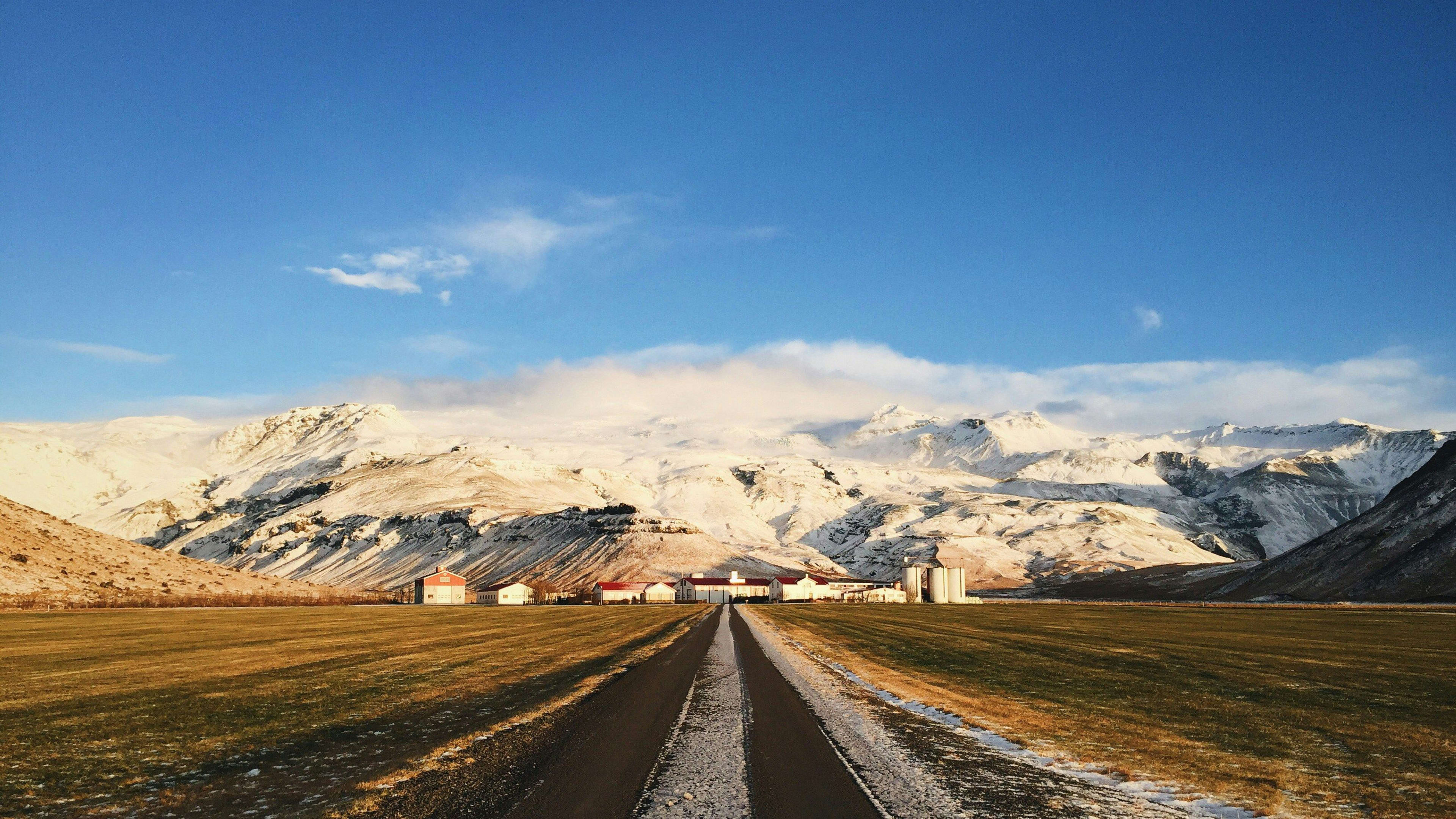
Eyjafjallajokull overview
<font dir="auto" style="vertical-align: inherit;"><font dir="auto" style="vertical-align: inherit;">Eyjafjallajökull volcano</font></font>

Eyjafjallajökull is the sixth largest glacier in Iceland. Its name means "mountain glacier on the island" in Icelandic. The ice sheet covers an area of ​​about 100 square kilometers and encloses the Eyjafjallajökull volcano, which is over 1,600 meters high.

The "Primordial Power" Hidden Beneath the Glacier

Between March and June 2010, the Eyjafjallajökull volcano erupted multiple times, not only affecting the normal lives of surrounding residents (forcing about 500 local residents to temporarily evacuate), but also severely disrupting European air traffic (directly leading to the evacuation of thousands of aircraft in Europe).

In reality, the 2010 Eyjafjallajökull eruption was not particularly powerful (its eruption index was only level 3, and Iceland experiences more than ten similar eruptions every year). However, the combination of factors—the eruption lasting for several months, the fine volcanic ash, and the winds blowing towards the European continent—made the 2010 eruption a global event. Local transportation routes, infrastructure, and houses were damaged, European air transport came to a standstill, resulting in losses of billions of euros and impacting import and export trade in Europe and many parts of the world (for example, Kenyan vegetables and flowers originally planned for export to Europe piled up at the airport and could not be transported normally).

While the eruption of Eyjafjallajökull caused socio-economic losses in the short term, it sparked interest in Icelandic volcanoes among many tourists. Following the 2010 eruption, numerous international tourists flocked to Iceland to participate in "volcano tours." On the other hand, the volcanic ash scattered into the North Atlantic after the eruption also promoted the reproduction of some marine life, bringing certain positive impacts.

Eyjafjallajökull volcano is relatively close to Vik, the southernmost town in Iceland. Iceland's south coast is breathtaking in summer, and driving is an excellent way to explore Iceland. Why not take the wheel yourself and drive along Iceland's Route 1? You might even catch a glimpse of the beautiful volcanic peaks in the distance!

Related itinerary:

(2) Hekla volcano

Active volcano

Hekla, standing at 1,490 meters, is one of Iceland's most famous volcanoes, located in southern Iceland, along with Eyjafjallajökull. Considered by many to be Iceland's most "active" volcano, Hekla's activity history dates back to the Middle Ages, with over 20 recorded eruptions since the Icelandic settlement period. For centuries, Hekla's eruptions were relatively infrequent (ranging from 250 years to as short as 10 years, averaging one eruption every 100 years). However, since 1970, its eruption pattern has changed, with smaller eruptions occurring approximately every 10 years. Hekla's largest eruption occurred in 1947, when lava was ejected 32 kilometers, and the resulting ash cloud reached as far as Helsinki; the eruption lasted for 13 months.

The last eruption of Hekla volcano was in February and March 2000, lasting 12 days. On the night of the eruption, Hekla opened a fissure nearly 7 kilometers long, and the steam and ash column rose to a height of nearly 15 kilometers. Fortunately, the 2000 eruption did not cause any deaths. Hekla volcano is currently under close monitoring.

Hekla View

Hekla means "cloak," and the name is generally believed to originate from the clouds and smoke floating on the mountain. In addition, this volcano has two other interesting nicknames—"The Witch's Mountain" and "The Gateway to Hell"—because in 1104, an eruption of Hekla covered half of Iceland with volcanic ash, and farms and settlements within a 15-kilometer radius of Hekla were abandoned. This eruption shocked all of Europe and gave rise to a famous myth about the volcano—Christians at the time believed that Hekla was one of the main passages to Hell.

hekla volcano
<font dir="auto" style="vertical-align: inherit;"><font dir="auto" style="vertical-align: inherit;">Hekla volcano</font></font>

The activity of Hekla volcano and its unique religious significance attract many adventurers to hike there. Locally, professional guides lead tourists to choose suitable hiking routes, allowing visitors to enjoy the beauty of Hekla volcano from multiple perspectives, including the south coast, the ring road, and the lava mountain range.

Forest Cat Travel offers a day trip to the Landmannalaugar highlands , where you'll travel through the fertile fields of southern Iceland, take in the peaks of Hekla, and enjoy the stunning scenery of the surrounding area.

Katla, Iceland's second highest volcano.

Cattra Overview

Katla is one of Iceland's most powerful and active volcanoes, and the second highest volcano in Iceland (1512 meters). As an active volcano, Katla is an excellent location for studying and observing volcanic activity. Here, visitors can get up close to the volcanic landscape.

Katla has a rich and intense history of eruptions. One eruption, occurring between 1918 and 1919, had a widespread impact on southern Iceland. The volcanic activity led to massive glacial melting and flooding, altering local communities and ecosystems.

The name Katla can be traced back to Old Icelandic, meaning "small, round container, pot, or urn." This may be related to the topography of the Katla volcano, or it may originate from an old folktale. Legend has it that every time the volcano erupted, the fierce glacial floods that poured out from under the ice cap were the venting of a woman named Katla's rage.

Katla Volcano surrounding area

Frequent volcanic activity has impacted the surrounding ecosystem, making Vik one of the few remaining settlements in the region. Glacial floods once swept through the entire village, but also created unique scenery. The area around Katla volcano boasts spectacular glaciers, waterfalls, black sand beaches, and other distinctive terrain, many of which are top tourist attractions in Iceland. In addition, there are many other popular tourist destinations around Katla, such as Vik, Skógafoss, and Gullfoss. These attractions offer a wide range of outdoor activities, including hiking, glacier exploration, and ice climbing. The changeable weather in the Katla region also provides diverse shooting scenarios for photography enthusiasts.

Related itinerary:

If you're interested in volcanoes, you can also visit the Þríhnúkagígur dormant volcano, the only one in the world where you can go inside for an adventure , or watch the world's first Vík Lava Show in Vik , where you can feel the intense heat of volcanic lava in a safe environment.

2. Geyser

Geysers (The Great Geysir and Strokkur) are geographical phenomena caused by unique geological structures and geothermal activity. Surface water seeps underground and its temperature rises when it encounters the hot rocks in the geothermal area. The heated water and high-temperature water vapor gather underground and enter columnar cavities between rock layers. When the water and gas fill the cavities and reach a certain pressure, the water will gush out along the cavities, forming geysers.

(1) Great Geysir

Great Geysir is located in southwestern Iceland, in the Haukadalur Valley, about an hour's drive from Reykjavik, the capital of Iceland, and is an important stop on the famous "Golden Circle" tourist route.

Geysir is a must-see in Iceland, not only because the geysers themselves are rare and spectacular, but also because of Geysir's status as a "foundational" geyser. The eruption history of Great Geysir dates back over 10,000 years. In the 13th century, Europeans discovered Geysir (the first geyser discovered in Europe). "Geysir" means "gushing; gushing" in Icelandic, from which the English word "geyser" originates.

Before the 20th century, Geisel's geysers were relatively regular, often coinciding with earthquakes, and their flow was extremely powerful. Reports indicate that in the 19th century, the geyser's eruption height reached 170 meters. However, after 1916, sediment accumulated in the underground cavities supplying water and gas to Geisel, causing the geyser's activity frequency to decrease significantly, and eruption times became unpredictable. In 1935, a channel was artificially dug beneath the geyser, temporarily giving it a new lease on life, but this channel was quickly blocked, and Geisel once again ceased to function.

However, visitors who want to see geysers in Iceland can still enjoy the Geysir geothermal area – there are many geysers to visit in the area, including Strokkur, which has become increasingly popular with tourists in recent years.

(2) Strokkur Geyser

After Geyser gradually "rested," Strokkur took over as the main geyser in Iceland.

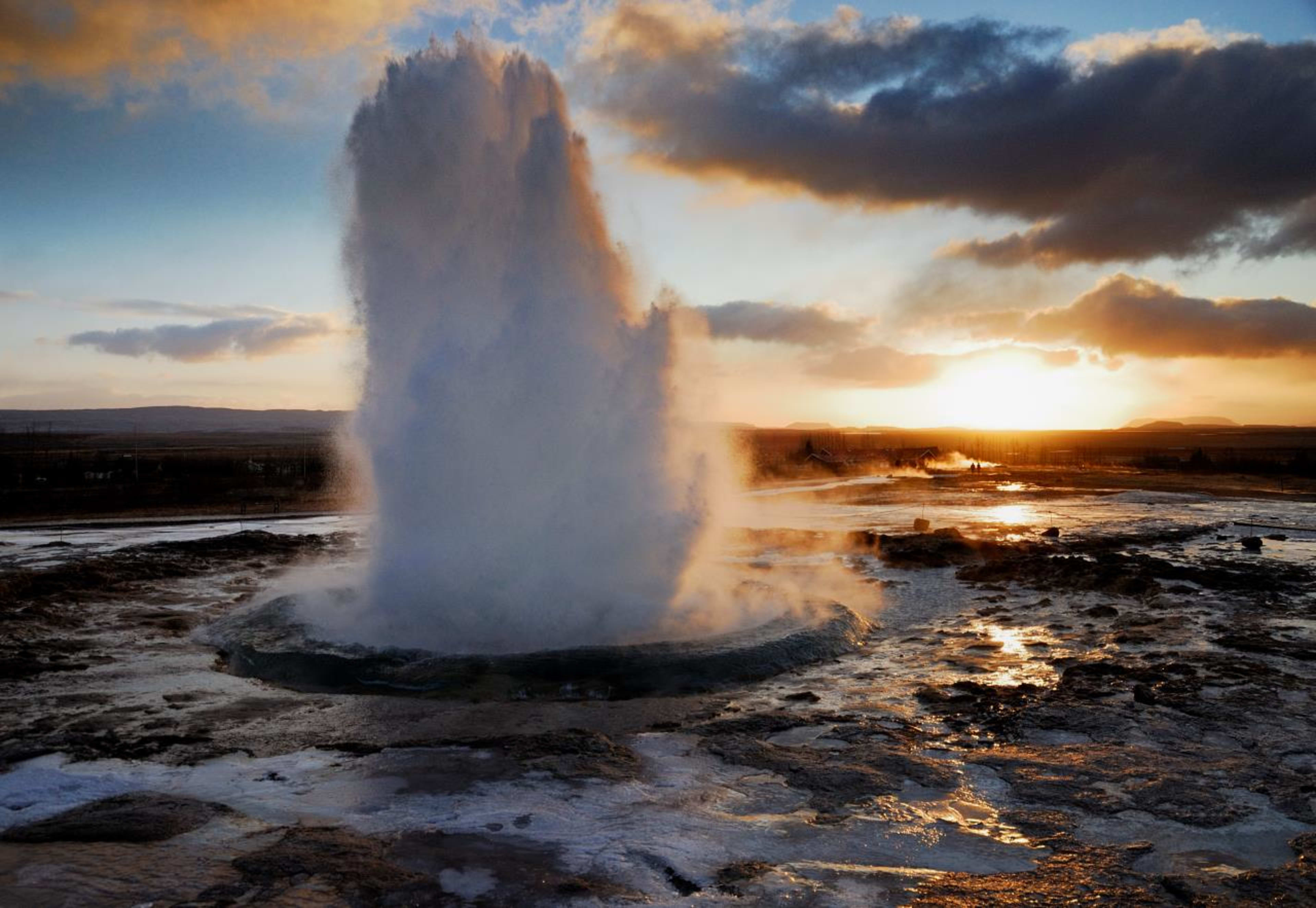
Located in the same area as Geyschel Geyser, Stokke Geyser is less than 100 meters away from Geyschel. Although its eruption height is not as high as Geyschel at its peak (Stokke's eruption height is generally more than 10 meters, but it can reach 40 meters at times), it has the advantage of frequent eruptions - erupting once every 5-10 minutes or so, so one trip can see it multiple times.

strokkur eruption at sunset
<font dir="auto" style="vertical-align: inherit;"><font dir="auto" style="vertical-align: inherit;">Stok Geyser</font></font>

Although both are hot springs, they are different from hot springs that can be used for bathing. Geysers that gush directly from the ground are extremely hot, even close to boiling point. Visitors must keep their distance to avoid being scalded.

The Golden Circle tourist loop brings together many of Iceland's most iconic attractions. Why not join a day trip to the Golden Circle offered by Forest Cat Travel, visiting Geysir, Gullfoss , and Þingvellir National Park? You can also combine it with other unique activities and off-the-beaten-path attractions to make your trip truly unforgettable!

Related itinerary:

3. Hot Springs

Among Iceland's many geothermal attractions, hot springs are undoubtedly the most engaging and immersive.

(1) Blue Lagoon

As the "Land of Ice and Fire," Iceland is practically overflowing with hot springs. Among these numerous hot springs, the Blue Lagoon is undoubtedly the crown jewel.

The Blue Lagoon is ideally located in southwestern Iceland, approximately 40 kilometers from Reykjavik, the capital, a 40-minute drive. The nearest town is Grindavík, about 10 kilometers from the hot springs. Furthermore, the Blue Lagoon is close to Keflavik International Airport, about 20 kilometers away, a 30-minute drive.

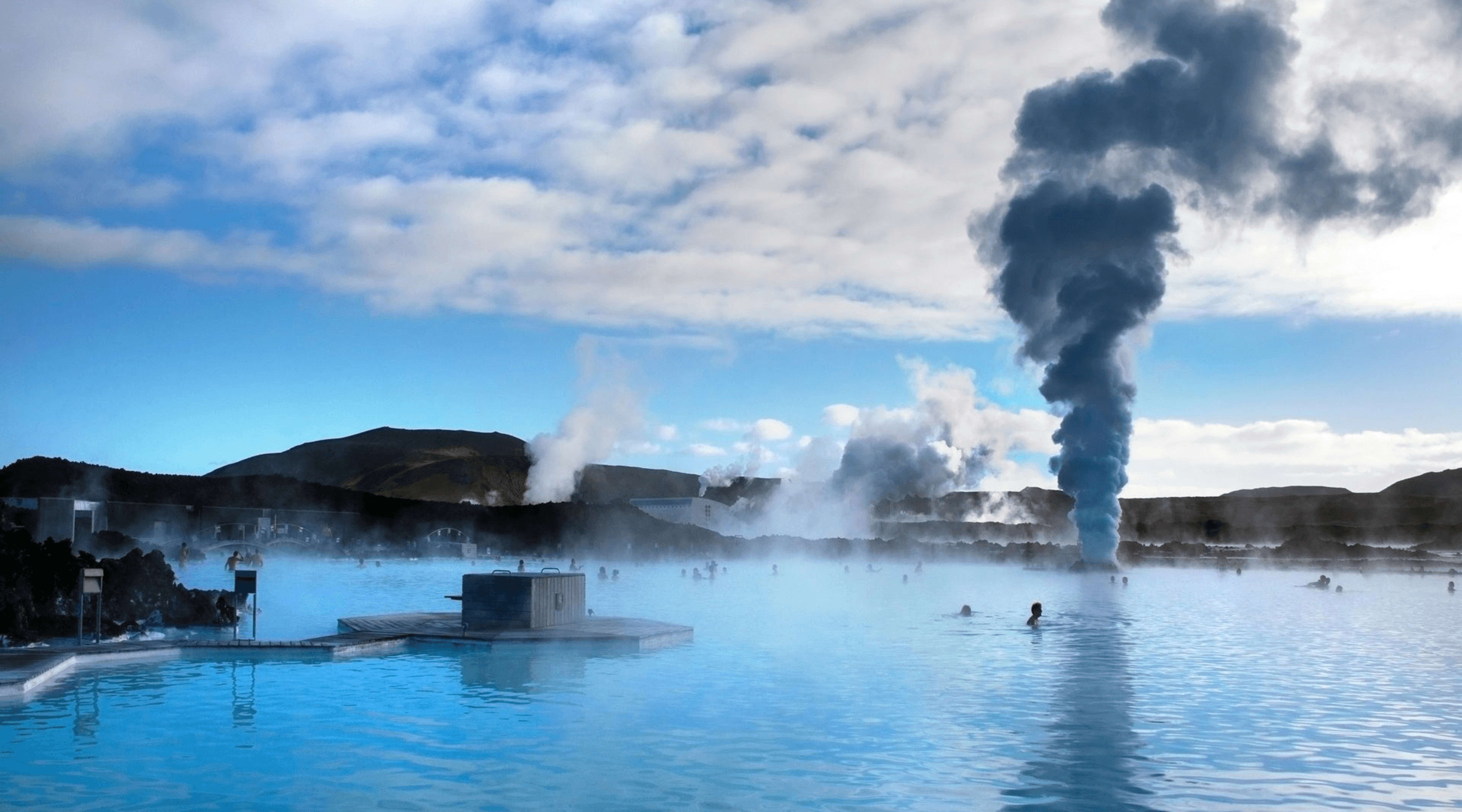
blue lagoon in sunny day
<font dir="auto" style="vertical-align: inherit;"><font dir="auto" style="vertical-align: inherit;">Blue Lagoon</font></font>

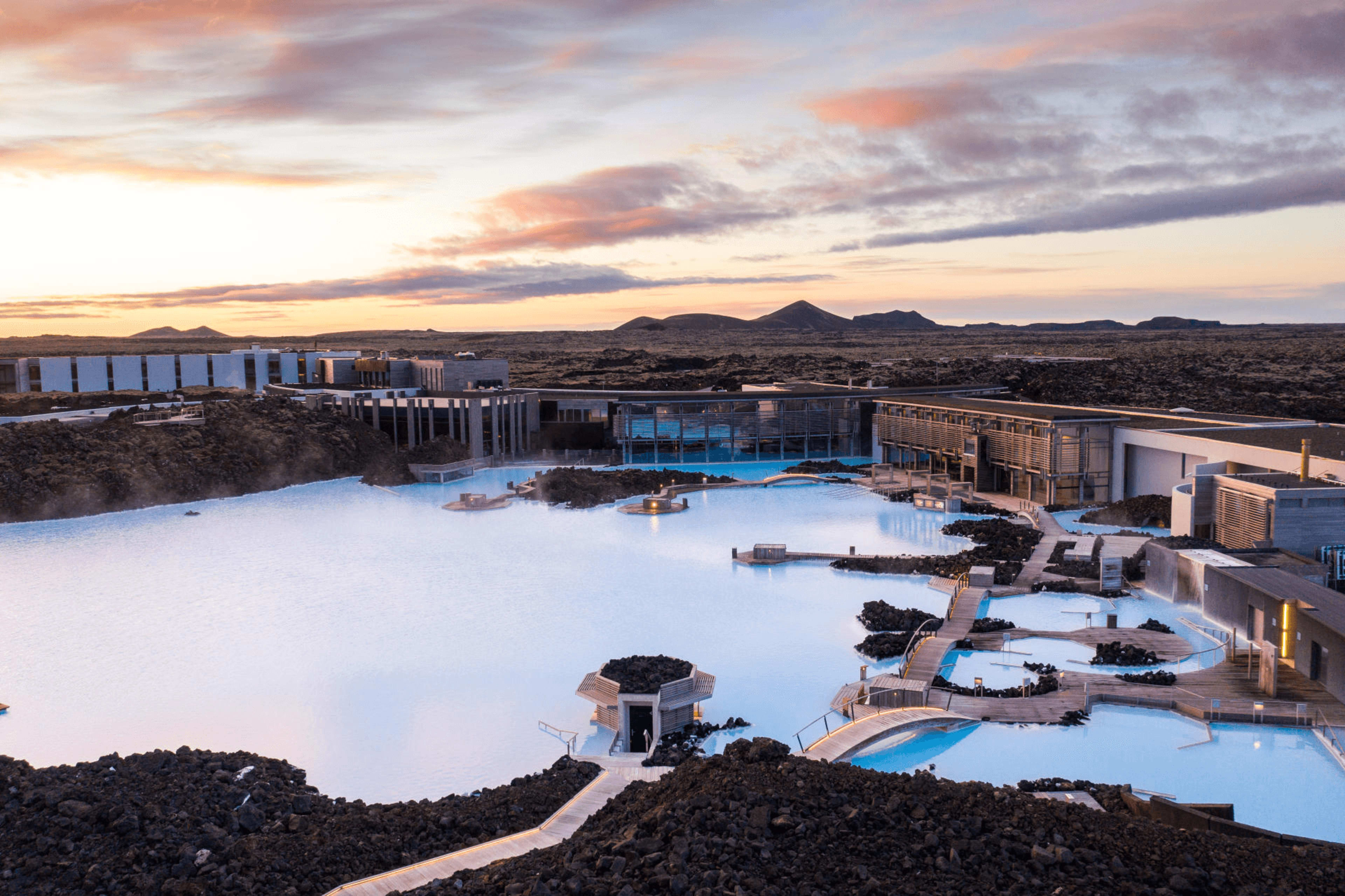
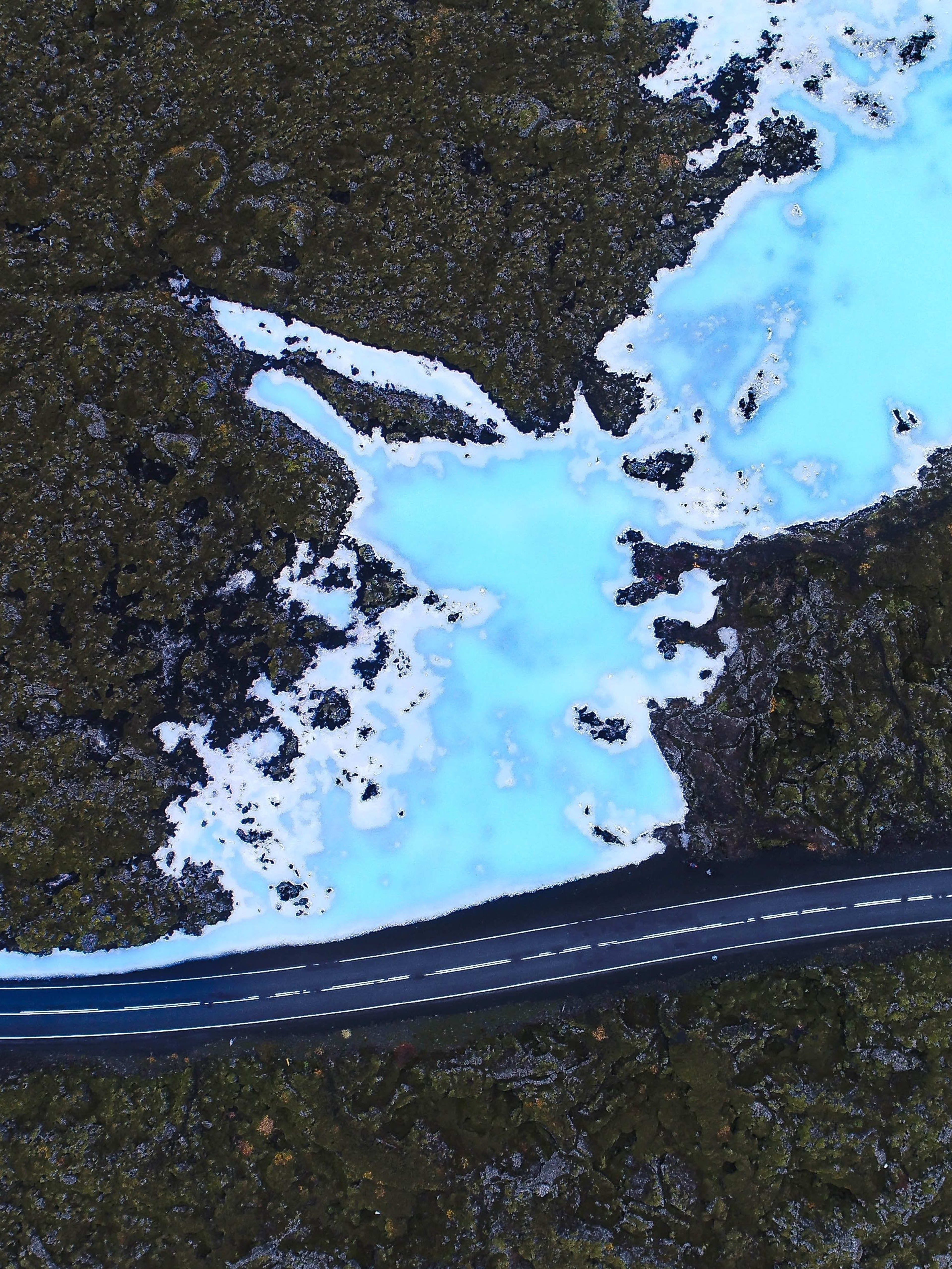
Although Blue Lagoon is a hot spring, it can be considered a completely independent scenic area. The hot spring water of Blue Lagoon is rich in minerals and algae, with a low-saturation blue color. Steam floats and drifts above the hot spring, and the surrounding dark rock walls are dotted with dark green moss. The bridges over the hot spring and the walkways next to it are covered with wooden planks. The facilities and buildings have a low-key color scheme, and the entire bath center has a tranquil and pure style, which is perfect for sightseeing and taking pictures. Brands such as Apple and Mercedes-Benz have filmed their commercials here.

panoramic view of blue lagoon
<font dir="auto" style="vertical-align: inherit;"><font dir="auto" style="vertical-align: inherit;">Blue Lagoon</font></font>

As for the hot springs themselves, the Blue Lagoon has amazing healing properties, which can alleviate skin conditions such as psoriasis to some extent, as well as nourish the skin and promote overall health. In addition, the Blue Lagoon offers complimentary natural silica mud masks to visitors, allowing them to cleanse their skin and unclog pores while enjoying the hot springs.

Due to the immense popularity of Blue Lagoon, visitors are advised to book several weeks in advance (children aged 2-13 enter for free). For more details, please see: Blue Lagoon Comfort Experience .

(2) Sky Lagoon

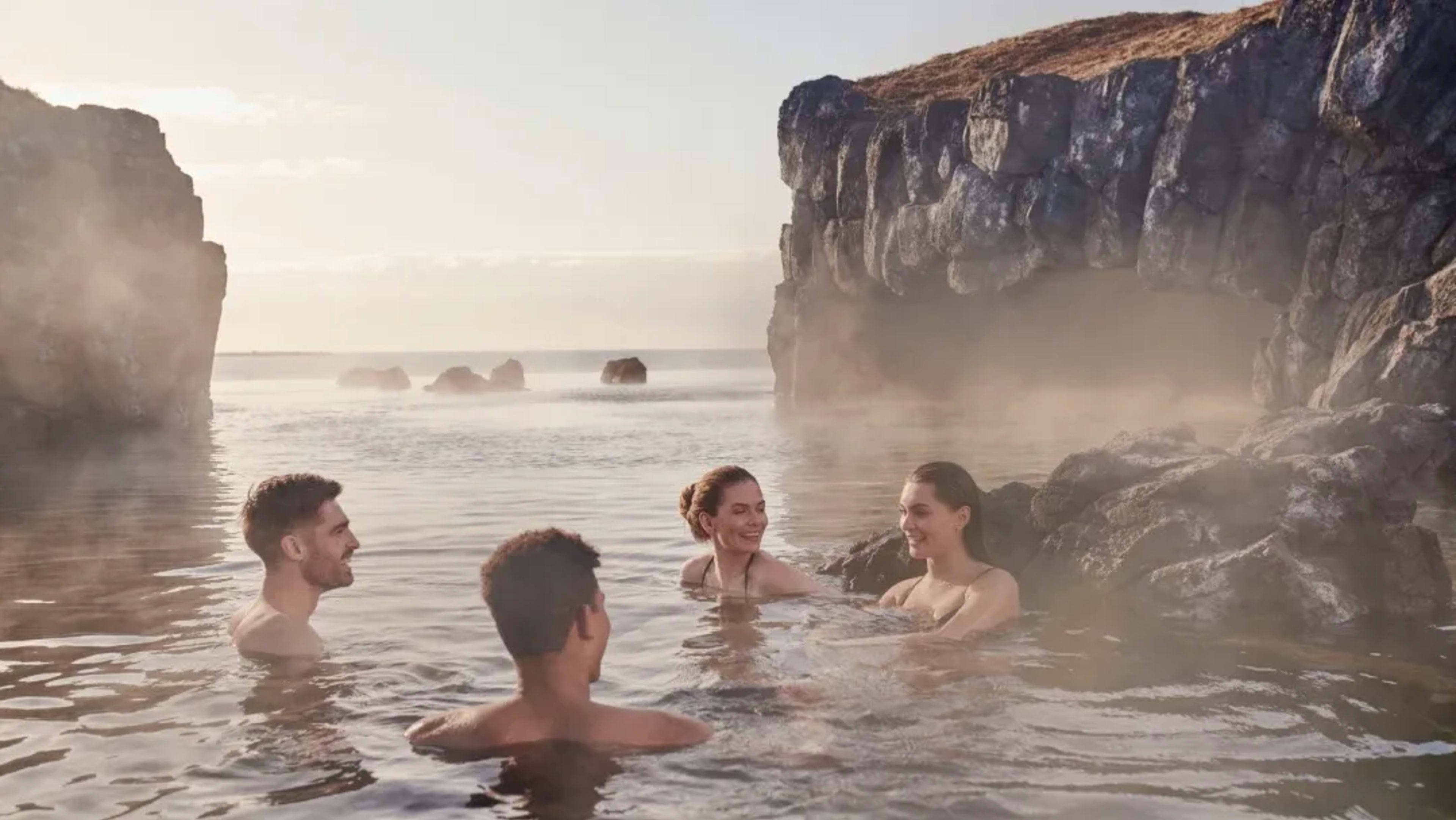
Compared to the Blue Lagoon, Sky Lagoon is newer and more easily accessible. Located in Reykjavik, and also close to Keflavik International Airport, Sky Lagoon is ideal for travelers staying near Reykjavik.

group in sky lagoon
<font dir="auto" style="vertical-align: inherit;"><font dir="auto" style="vertical-align: inherit;">People relax at the Sky Mirror Hot Spring</font></font>

Unlike the more modern Blue Lagoon, Sky Lagoon boasts a more natural and rustic design, drawing inspiration from Iceland's natural elements and local culture. The grass-roofed houses in Sky Lagoon recreate ancient Icelandic architecture, allowing visitors to appreciate the ingenious use of nature by Iceland's early inhabitants for warmth and protection even in the bathing facilities.

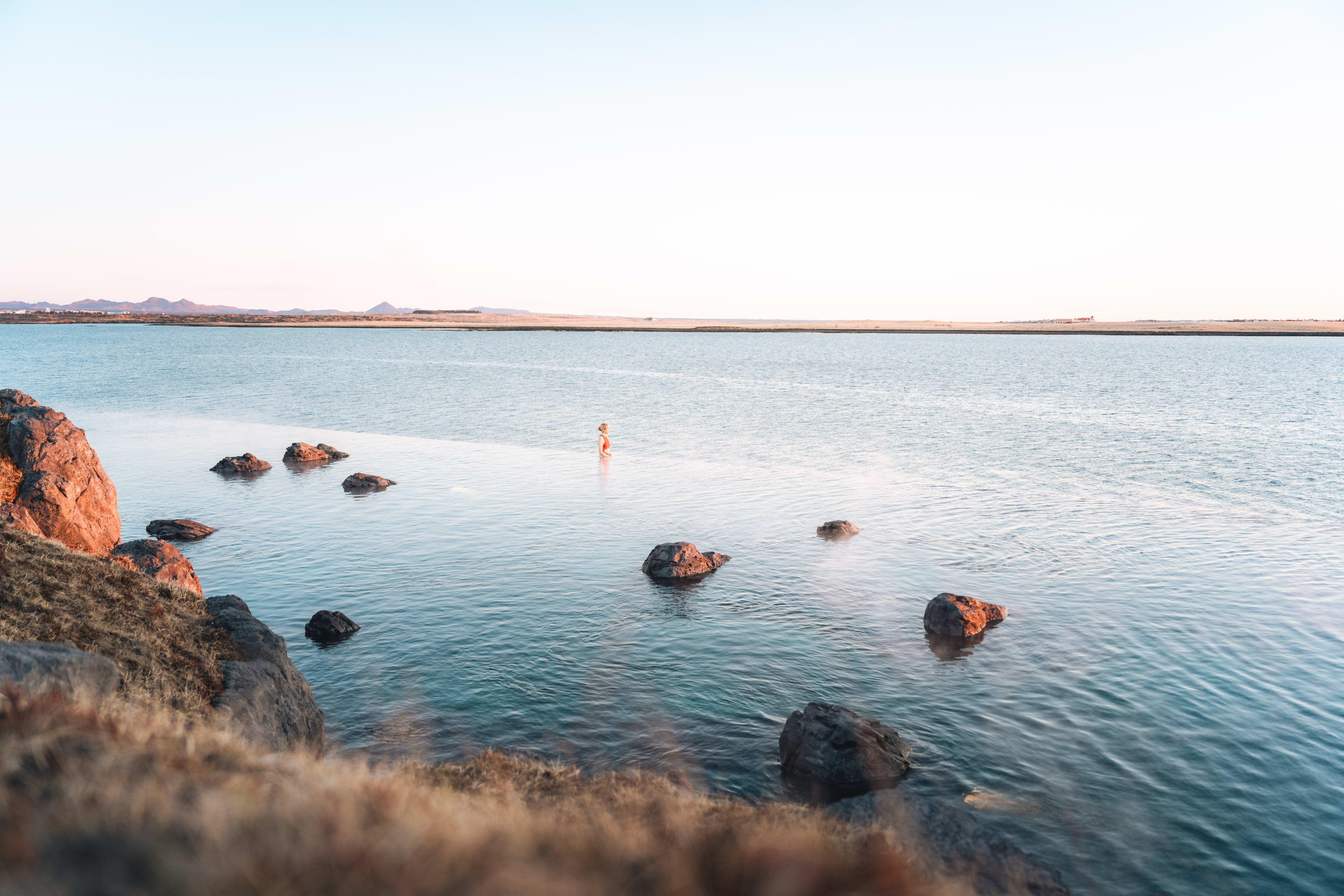
Sky Lagoon's most famous feature is its 70-meter-long oceanfront infinity pool, where visitors can enjoy stunning views of the Atlantic Ocean.

Sky Lagoon landscape
<font dir="auto" style="vertical-align: inherit;"><font dir="auto" style="vertical-align: inherit;">Sky Mirror Hot Spring</font></font>

In addition, Sky Lagoon combines traditional Icelandic bathing with modern bathing techniques to create a unique "seven-step bathing ritual"—first, a hot spring bath, then a cold water bath, followed by a dry sauna, ice water therapy, body scrubbing, steam bath, and tasting Icelandic dark berry drinks. It can truly be described as "a bathing experience with variety."

You can also include Sky Lagoon in your Golden Circle day trip to end your day with a relaxing hot spring experience: Golden Circle and Sky Lagoon, Crater Day Trip: Explore the Golden Circle and experience the hot spring culture.

Sky Lagoon is currently making full use of natural resources and practicing a new concept of sustainable development. Hot water flowing from the Sky Lagoon pools flows into indoor pipes for indoor heating, heating bath water, hot spring walkways, and melting winter snow. At the same time, Sky Lagoon does not use single-use plastic products, striving to reuse resources multiple times as much as possible and minimizing the use of items that require washing, thus reducing its carbon footprint to the greatest extent possible.

(3) Mývatn Nature Baths

Mývatn Nature Baths is located in the Mývatn region of northern Iceland.

Lake Mývatn is one of the largest lakes in Iceland. Surrounded by numerous volcanic craters, it boasts a beautiful natural environment and is home to a wide variety of animals, including diverse ducks and birds (such as the adorable puffins), as well as delicious trout. Other unique landscapes include the horseshoe-shaped Godsfall and hot mud pits.

The abundant geothermal resources near Lake Mývatn have created the Mývatn thermal spa – one of Iceland's best spa centers and a great place to relax in northern Iceland. For tourists visiting the "Diamond Circle" attractions, Lake Mývatn is a choice that combines accessibility and a unique experience.

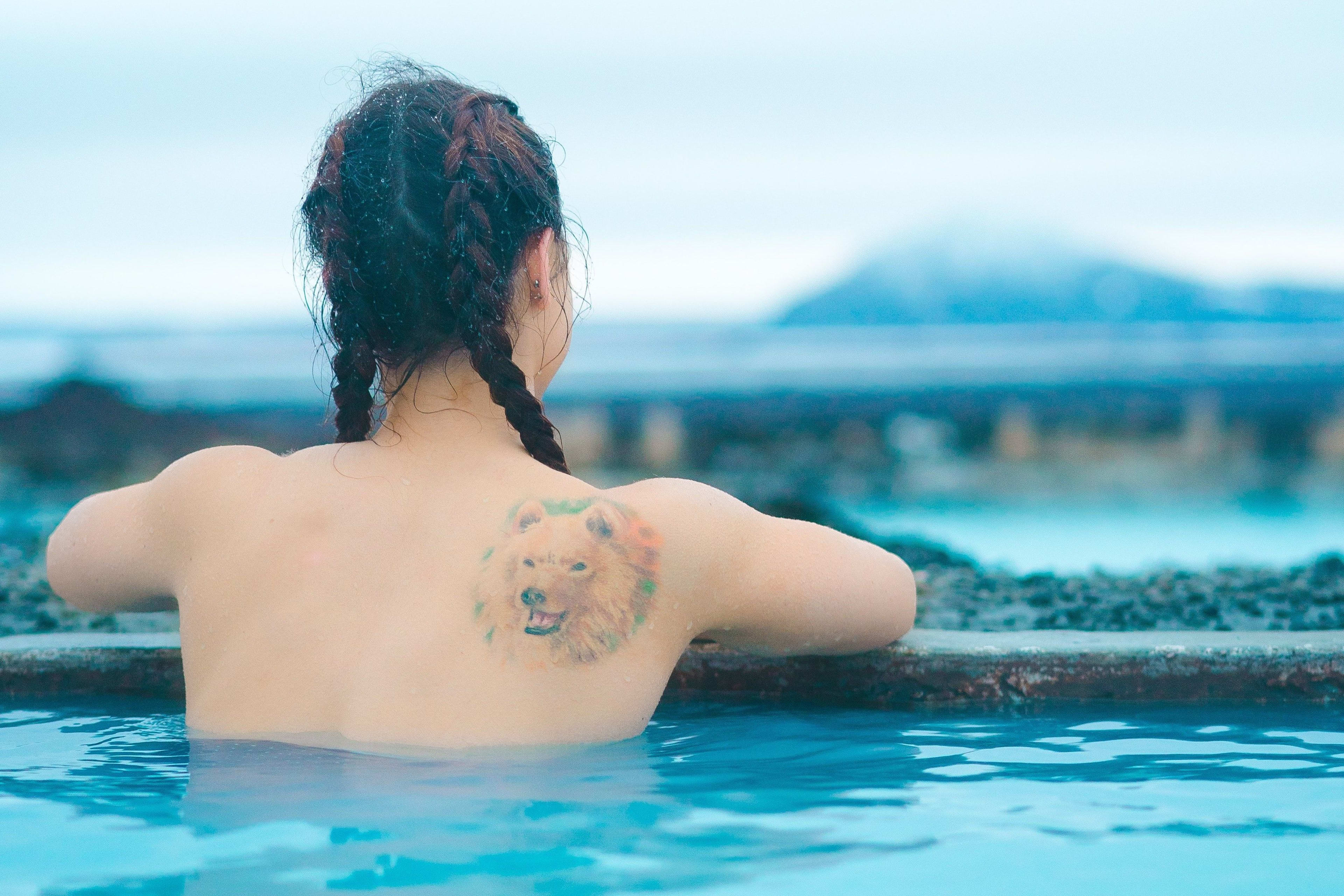
woman in the myvatn nature baths
<font dir="auto" style="vertical-align: inherit;"><font dir="auto" style="vertical-align: inherit;">Bathing in Mihu Hot Spring</font></font>

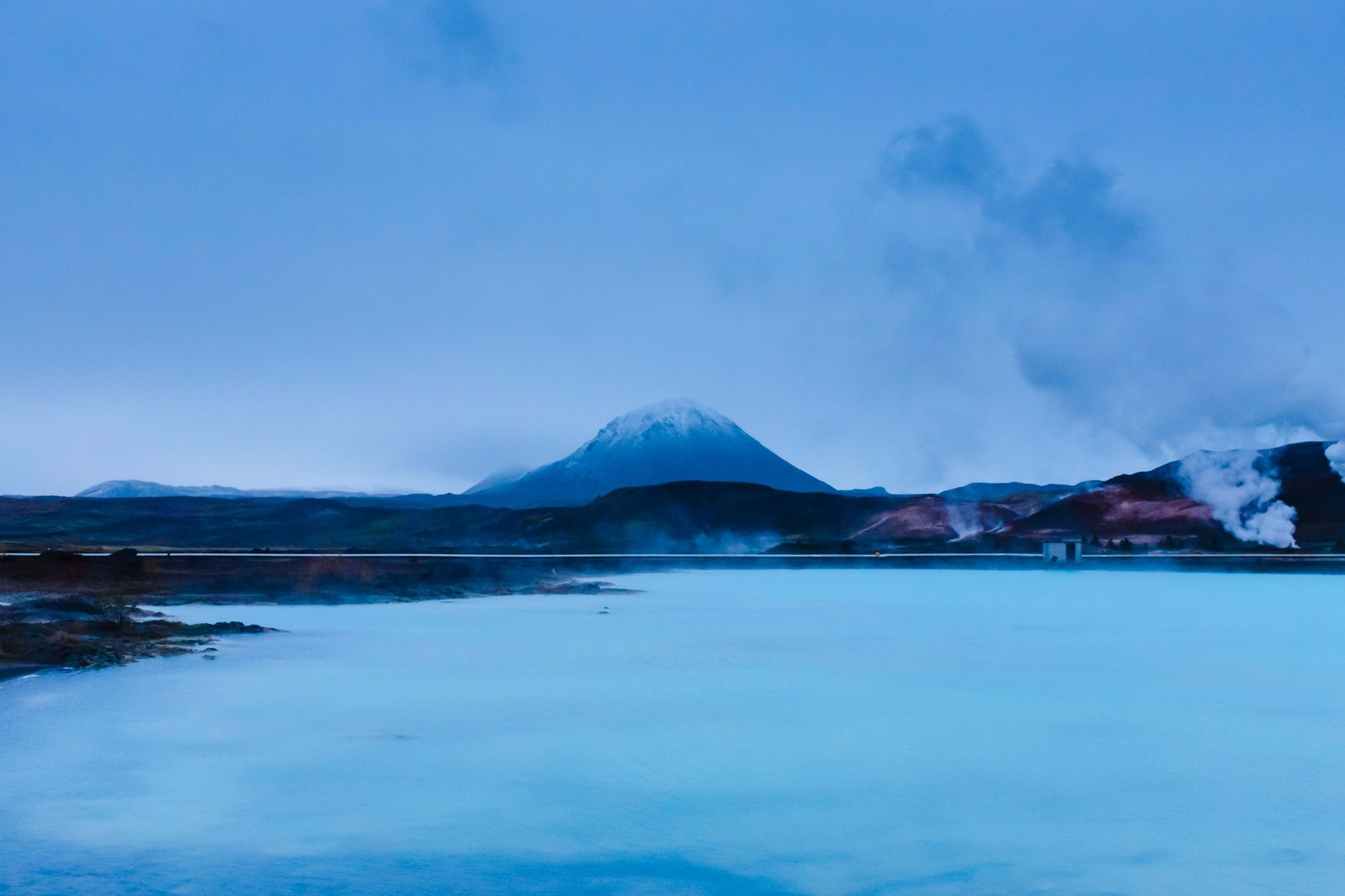
Like the Blue Lagoon, Lake Mývatn's geothermal water is also blue, hence it's often considered Iceland's equivalent of the Blue Lagoon (though much more affordable and smaller, it still features a natural steam room, a restaurant, and a self-service beverage area). The geothermal water comes directly from the Icelandic National Geothermal Power Plant, drawn from 2500 meters underground, and is rich in skin-benefiting minerals and microorganisms. Located within the Lake Mývatn scenic area, the surrounding landscape is exceptionally beautiful. Forest Cat Travel also offers reservations for admission tickets to the natural geothermal spa , allowing visitors to enjoy the surrounding volcanic scenery while soaking in the hot springs. More Icelandic hot spring recommendations: The most worthwhile Icelandic hot spring experiences .

myvatn nature baths
<font dir="auto" style="vertical-align: inherit;"><font dir="auto" style="vertical-align: inherit;">Lake Miho Hot Spring, where you can see the distant volcano.</font></font>

If you'd like to experience Lake Mývatn and its surrounding attractions in one trip, why not check out our 8-day, 7-night Iceland Summer Island Tour by Car: Lake Mývatn & Black Sand Beach , or our 8-day or longer self-drive packages, to see the Diamond Circle scenery and enjoy the northern landscape?

Conclusion

Overall, Iceland's geothermal resources are not only a vital energy source and a major contributor to the country's clean energy development, but they have also shaped natural wonders such as volcanoes and geysers, as well as countless hot spring resorts. A trip to Iceland centered around geothermal energy can be a wonderful opportunity to experience Icelandic traditional culture and enjoy its natural beauty.


关于作者

身为游者,我被冰岛深深召引,去追逐宇宙的节律,在黑夜的亘古不变中,遥望极光的跃动和变换,在海水与岩壁相拥蜿蜒的峡湾中,静观轻巧的小鸟、从海底猛然跃起的鲸鱼,深入晶莹的冰洞,追寻世外的纯净和梦幻,走近炽热的火山,用双脚抚触冰岛的滚烫脉搏。 我爱这个冰火交融的国度,我想用笔头镌刻这里的峡湾与冰川,云霞与火山,记录下她的光影、晴雨与律动。

查看绿汀更多的文章

相关文章

从森林猫旅行的冰岛攻略中了解更多信息