跳至主要內容

打卡冰岛最美灯塔 收集最北启明回忆

阅读时长11分钟

作者:方绿汀

2024年11月4日

Located in the North Atlantic, Iceland boasts a long coastline and countless islands, with numerous ships traversing its waters daily. In this island nation adrift on the vast ocean, lighthouses are ubiquitous; one could say that wherever there are people, fjords, glaciers and aurora borealis, volcanoes and hot springs, there will be a lighthouse. These lighthouses are deeply connected to the land—serving as guides on the sea, directing ships, helping them avoid reefs, and ensuring safe navigation; they are also part of Icelandic scenery, even a local specialty, appearing frequently in Icelandic films and wallpapers; yet they also stand like indifferent observers, perched atop Iceland's rocky cliffs, gazing at the distant sea, bidding farewell to the ever-changing land and sea breezes. This article selects 12 of Iceland's most famous and photogenic lighthouses, introducing each lighthouse's characteristics, location, history, and nearby transportation, providing a comprehensive guide to Iceland's most beautiful lighthouses.

Icelandic lighthouse history

Iceland is surrounded by the sea, with a rugged and varied coastline. The ocean plays a vital role in the national economy and daily life, and the country has a long history of maritime navigation. However, the harsh and unpredictable weather makes sea voyages quite challenging. To cope with frequent maritime disasters and ensure the safety of ships, Iceland began building lighthouses in the 19th century.

Reykjanesviti Lighthouse, Iceland's first lighthouse, was built in 1878 and is located on the Reykjanes peninsula . The Reykjanes peninsula is situated in southwestern Iceland, connecting the Eurasian and North American tectonic plates. These plates are separating at a rate of 2 centimeters per year, leading to frequent volcanic and seismic activity in the region. The original Reykjanes lighthouse collapsed due to an earthquake, and the current lighthouse was rebuilt in 1929. To this day, the Reykjanes lighthouse continues to serve, guiding ships.

As Iceland's trade and fishing industries developed, the number of lighthouses increased. In the late 19th and early 20th centuries, several new lighthouses were added along the Icelandic coast to guide ships through complex sea conditions. The famous Dyrhólaeyjar and Garskaga lighthouses are prime examples. These lighthouses not only aided navigation but also became iconic landmarks in their respective regions.

Malariff lighthouse iceland
<font dir="auto" style="vertical-align: inherit;"><font dir="auto" style="vertical-align: inherit;">Malariff Lighthouse</font></font>

In the 20th century, with technological advancements, Icelandic lighthouses gradually became automated. Early lighthouses required keepers to be stationed day and night, manually operating the lights and signaling equipment. By the mid-20th century, lighthouses began to be equipped with electric lighting and automated systems, eliminating the need for 24-hour keeperships and significantly reducing maintenance costs. These changes expanded the function of lighthouses beyond simple light guidance to include radio navigation and other uses.

In Icelandic, the word for lighthouse is "viti," meaning "to know," signifying that sailors who saw these lighthouses would "know" whether their course was correct. Lighthouses in Iceland are not only lifelines for navigation but also symbols of culture and spirit. In Icelandic folklore, poetry, and literature, lighthouses often appear as symbols of light, hope, and resilience. The lighthouse's beam guides ships adrift at sea home, symbolizing the Icelanders' pursuit of light and the future.

Today, Iceland's lighthouses have gradually become tourist attractions, with many built on cliff edges, complementing Iceland's natural wonders. We've selected 12 of Iceland's most representative lighthouses to introduce to you one by one.

Reykjavik and the Reykjavik Peninsula

The performance venue in the Icelandic sky: Gróttaviti Lighthouse

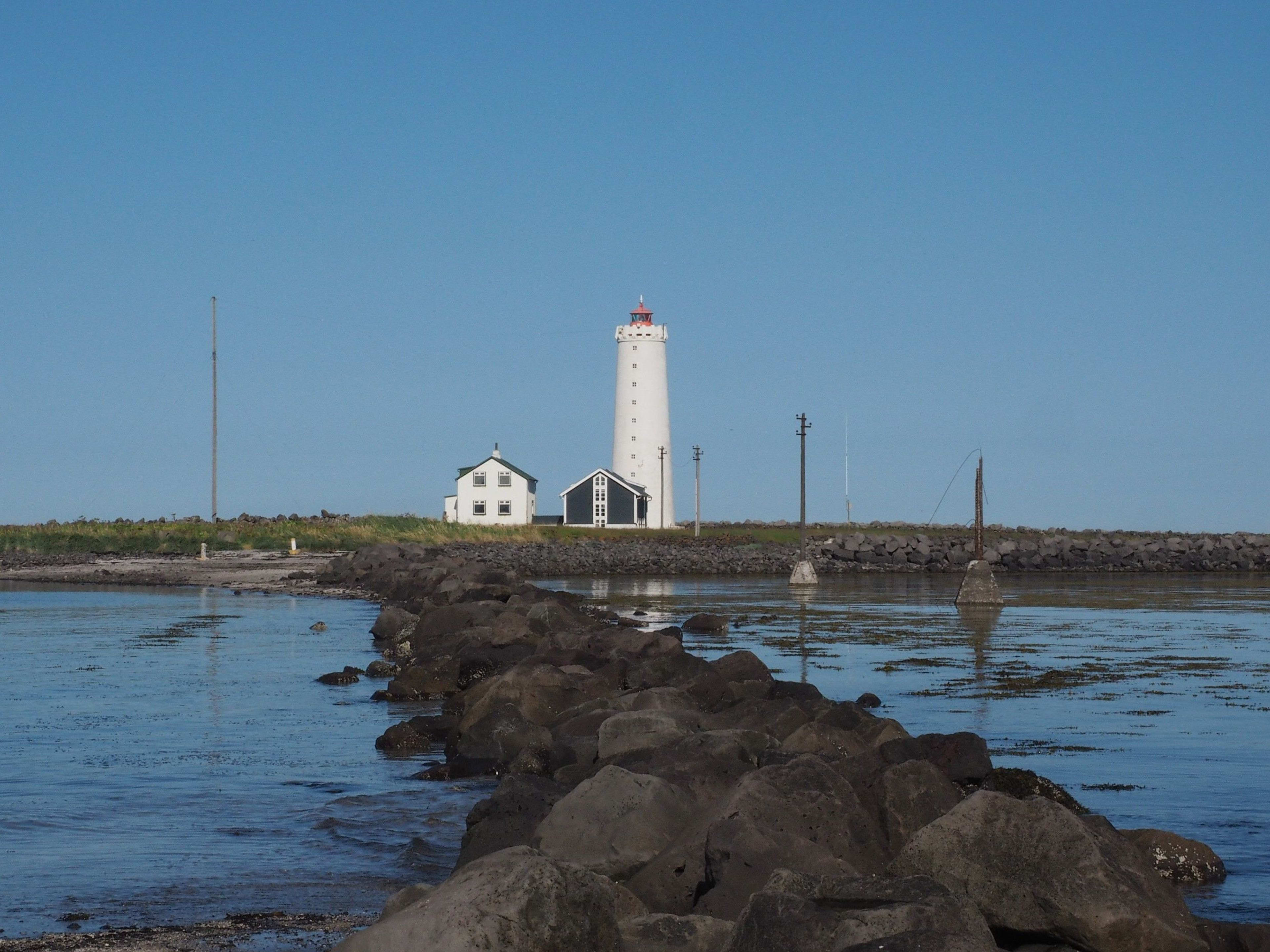
Grótta Lighthouse is located on the Seltjarnarnes peninsula on the outskirts of Reykjavik, the capital of Iceland, about 5 kilometers from Hallgrímskirkja, a landmark in the city center. This lighthouse has a long history, having been used to guide ships since 1897. The current lighthouse was built in 1947 and connected to the power grid in 1956. Since then, Grótta Lighthouse has remained virtually unchanged, retaining its original rustic appearance.

Grotta Lighthouse is not only an important navigational beacon near Reykjavik, but also a popular destination for residents and tourists alike. The peninsula where the lighthouse is located is surrounded by several routes suitable for cycling and hiking, and it's also a great spot for viewing the Northern Lights.

grotta lighthouse
<font dir="auto" style="vertical-align: inherit;"><font dir="auto" style="vertical-align: inherit;">Grotta Lighthouse</font></font>
Grotta in iceland
<font dir="auto" style="vertical-align: inherit;"><font dir="auto" style="vertical-align: inherit;">Grotta Lighthouse</font></font>

The area where the lighthouse is located is also of great ecological importance; it was officially designated a nature reserve in 1974. Every June, seabirds nest on the beach opposite the lighthouse, during which time the government closes the beach to protect their habitat. Anyone who trespasses during the restricted period will not only be attacked by seabirds but may also face hefty fines.

The uniqueness of Grotta Lighthouse lies not only in its history and geographical location but also in its connection to the land. At low tide, one can walk across the beach to reach the lighthouse; at high tide, the lighthouse is isolated from the land, seemingly floating on the sea, creating a detached aesthetic. This phenomenon also makes Grotta Lighthouse a photographer's paradise, especially during the winter when the aurora borealis is frequently visible. The lighthouse and the aurora borealis reflect each other on the dark sea, creating a truly spectacular sight.

The lighthouse is just a 15-minute drive from downtown Reykjavik. A stroll along the coastline offers stunning sea views and the opportunity to capture beautiful light and shadow effects at dawn or dusk, as well as the ebb and flow of the tides.

A witness to the meeting of sky and sea: the Garðskaga Lighthouse (Garðskagaviti)

Garðskaga Lighthouse is located at the northern tip of the Reykjavik Peninsula in southwestern Iceland, near Keflavik International Airport (KEF) and the capital Reykjavik. It is one of the region's famous landmarks. Garðskaga actually refers to two lighthouses, an old one and a new one. The old lighthouse was originally built in 1897, designed and constructed by the Danish Lighthouse Committee. Concerned about structural instability, the city government renovated and refurbished it in 1933. The new lighthouse is a modern structure, completed in 1944, and replaced the old one to guide ships. Standing approximately 26 meters tall, the new lighthouse is made of concrete and features a red and white exterior. It is considered one of Iceland's most beautiful lighthouses. Although the old lighthouse was decommissioned in 1944, it remains on its original site, forming a unique twin-tower landscape with the new one.

Gardur Old Lighthouse in Sudurnesjabaer of Iceland
<font dir="auto" style="vertical-align: inherit;"><font dir="auto" style="vertical-align: inherit;">Garðskaga Lighthouse</font></font>

Garðskaga Lighthouse not only plays a vital navigational role at sea but is also a popular tourist and photography spot. Located on the seashore, surrounded by a vast coastline, the lighthouse offers breathtaking views of the boundless Atlantic Ocean—the sea calm and expansive, waves crashing against the black volcanic rock shore, full of natural power and wild beauty, especially at sunrise or sunset (and often in winter when the aurora borealis is visible), providing excellent photographic opportunities. Not far from the lighthouse is the historic stone church, Hvalsneskirkja Church, built in the early 19th century, with its distinctive Icelandic architectural style, well worth a visit.

Getting to Garðskaga Lighthouse from Reykjavik is easy. Drive west along Route 1 (the ring road) to the Reykjavik Peninsula, then turn onto Route 45 and continue driving to reach the area where the lighthouse is located. The entire journey takes approximately 45 minutes. There is also a designated parking lot near the lighthouse.

Iceland's oldest lighthouse: Reykjanesviti Lighthouse

The Reykjavik Lighthouse is a quintessential Icelandic lighthouse, located at the southwestern tip of the Reykjavik peninsula. Known as the "Land of Light" of Keflavik and Reykjavik , its history dates back to 1878. It was Iceland's first lighthouse, but unfortunately, an earthquake in 1886 destroyed it, severely hindering maritime traffic. In 1929, Iceland rebuilt the lighthouse, using concrete as the primary building material to withstand future natural disasters. To this day, the Reykjavik Lighthouse stands tall and is still maintained by a resident staff, making it one of the most prominent landmarks on the Reykjavik peninsula.

lighthouse in reykjavik
<font dir="auto" style="vertical-align: inherit;"><font dir="auto" style="vertical-align: inherit;">Reykjani Lighthouse</font></font>

It is recommended to travel from Reykjavik to the lighthouse. You can drive along Highway 1 for about 50 minutes, then turn onto Highway 425 and continue driving to reach the lighthouse.

Wishing you a peaceful moment on Viti Levu: Imagine the Peace Tower

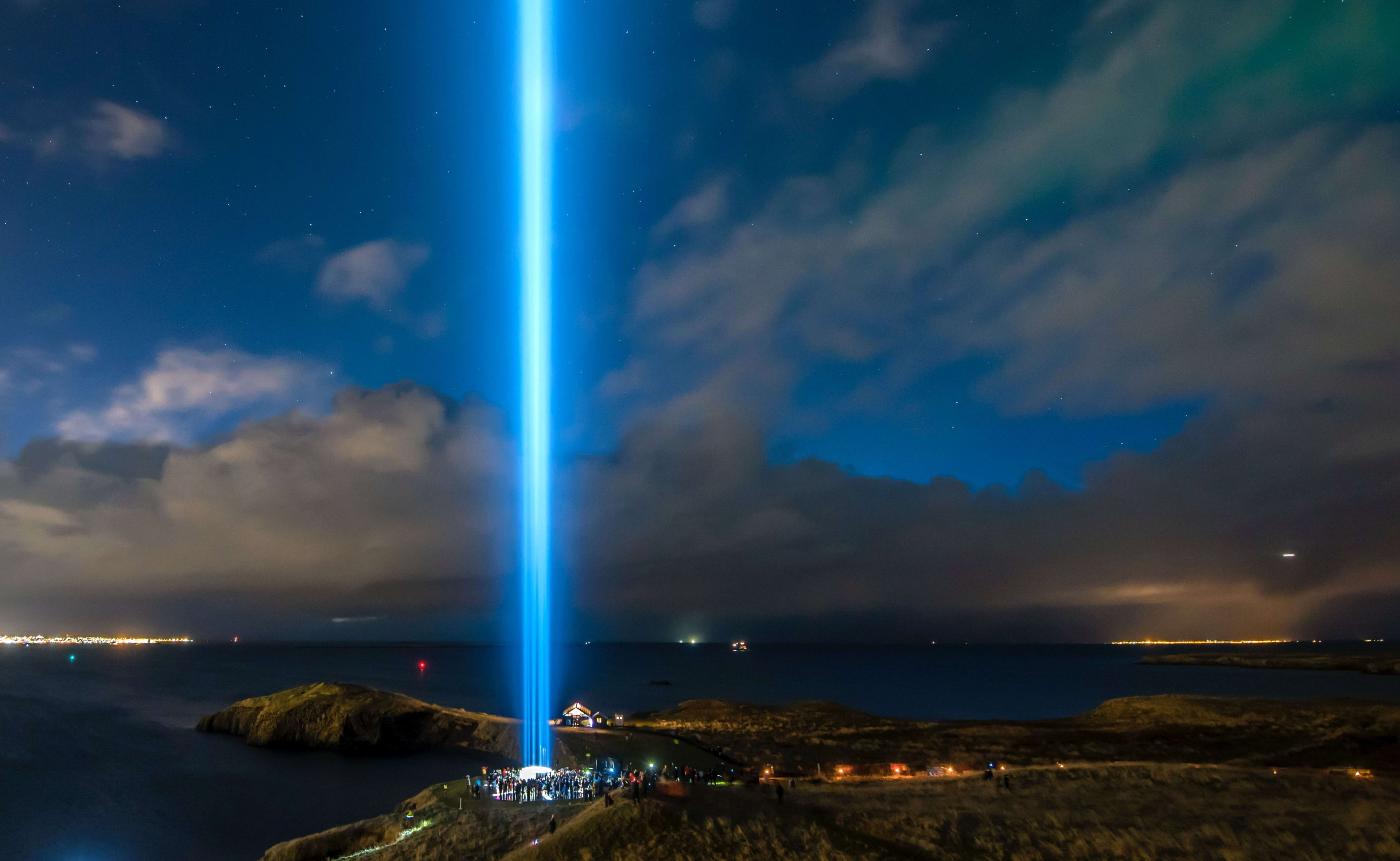
The Viðey Lighthouse, located on the island of Viðey near Reykjavik, Iceland, is a memorial lighthouse equipped with a unique lighting system. Also known as the "Imagine Peace Tower," it was designed by Yoko Ono, the widow of John Lennon. The base is constructed of white stone blocks inscribed with the words "Imagine Peace" in 24 different languages, reflecting Ono and Lennon's wish for world peace. The central base is 10 meters wide and houses 15 searchlights, whose beams of light form the "tower's" structure. On a clear day, the beams of light reach over 4 kilometers in height, making the "tower" clearly visible even from downtown Reykjavik.

Imagine Peace Tower with lights
<font dir="auto" style="vertical-align: inherit;"><font dir="auto" style="vertical-align: inherit;">Imagine the Peace Tower</font></font>

The Vidi Lighthouse, completed in 2007, is lit annually on October 9th (John Lennon's birthday) and extinguished on December 8th (John Lennon's death anniversary). Yoko Ono attends the lighting ceremony almost every year. When the lighthouse is lit, people can make a wish at its base, write it down, and bury it beneath the lighthouse. To date, over one million people have made wishes at the lighthouse. The Vidi Lighthouse is powered by geothermal energy from Iceland, reflecting Yoko Ono's commitment to environmental protection.

Vide Island not only boasts a world-famous lighthouse, but also numerous walking and cycling trails, making it perfect for strolling or cycling. With the sea and sky meeting in the background, the lighthouse creates a dreamlike scene at sunrise and sunset, where the soft light combined with the light reaching towards the horizon.

Getting to this lighthouse from Reykjavik is easy; just a 15-minute drive to Skarfabakki pier, then take a ferry to Viti Island. Ferries typically run hourly, with a journey time of only about 10 minutes. Ferry schedules may vary depending on the season, so it's advisable to check schedules in advance.

Southern Iceland

Iceland's first concrete lighthouse: Knarrarósviti (Lighthouse of Nararósviti)

Nararos Lighthouse, a jewel of Iceland's south coast, was built between 1938 and 1939. It was Iceland's first lighthouse constructed entirely of reinforced concrete and is located about 5 kilometers east of the town of Stokkseyri. The lighthouse features two stacked cuboids, retaining the original concrete color of its structure, and stands approximately 26 meters tall. Designed by architect Axel Sveinsson, its style is heavily influenced by Iceland's national treasure, Guðjón Samúelsson, combining classical and modern architectural aesthetics with functional and Art Deco elements, marking a breakthrough in Icelandic construction technology. The lighthouse's simple yet imposing appearance contrasts sharply with the vast coastline and surrounding black sand beaches, making it particularly striking. The natural environment surrounding the lighthouse is also captivating: open wetlands, expansive grasslands, and expansive seascapes.

stokkseyri lighthouse under dreamy sky
<font dir="auto" style="vertical-align: inherit;"><font dir="auto" style="vertical-align: inherit;">Nararos Lighthouse</font></font>

The easiest way to get to Narralos Lighthouse is by car. From Reykjavik, drive east along Ring Road 1, pass Selfoss, turn onto Highway 33, then onto Highway 34, and continue driving until you reach the vicinity of Stokeseri. The journey takes approximately 1 hour and 15 minutes, and the road conditions are good, suitable for all types of vehicles. Summer is the best time to visit, as the light is particularly soft in the morning or evening, making it the best time to admire and photograph the lighthouse.

The guardian of Iceland's south coast: Dyrhólaeyjar Lighthouse (Dyrhólaeyjarviti)

Dyrhólaeyjar Lighthouse, located on Dyrhólaey Cape on the south coast of Iceland , is one of the most captivating attractions in southern Iceland. The name Dyrhólaey means "gateway island" (Dyr means "gate" or "archway"; Hóla ​​means "hill"; Ey means "island" or "cape"), derived from the unique natural landscape—a natural sea arch, a massive stone arch spanning the sea like a natural gateway.

The lighthouse is 13 meters tall. Standing near it, you can take in the beautiful scenery of the entire south coast – the vast black sand beach, the rugged coastline and the famous sea arches. Sometimes you can even see tour boats passing through the gaps in the arches.

 Dyrholaey lighthouse Iceland
<font dir="auto" style="vertical-align: inherit;"><font dir="auto" style="vertical-align: inherit;">De Horary Lighthouse</font></font>

The Di Horary Lighthouse, built in 1927, was renovated from a lighthouse constructed in 1910. The natural landscape surrounding the lighthouse—black sand beaches, the surging Atlantic Ocean, and the distant, faintly visible Mýrdalsjökull glacier—offers unique photographic opportunities. Sunrise or sunset create particularly dreamlike scenes. The area around the lighthouse is also a habitat for Arctic puffins, which flock there every summer to nest on the cliffs and soar along the coast.

Getting to this lighthouse from Vík is easy; drive west on Highway 1 for about 20 minutes, then turn onto Highway 218 and continue south. Note that the roads near the lighthouse are quite rough; if driving, a four-wheel drive vehicle is recommended for safety.

The Three Rocks Lighthouse in Iceland: Þrídranga Lighthouse (Þrídrangaviti)

Þrídranga Lighthouse, also known as the "Three Rocks Lighthouse," is one of Iceland's most unique lighthouses. Perched atop a 37-meter-high basalt column off the coast of the Westman Islands (other must-see islands in Iceland: Iceland's most worthwhile islands ), it stands isolated in the North Atlantic, about 7 kilometers from the mainland. Far removed from the world, it appears to float on the sea, like a solitary island. Both its geographical location and the difficulty of its construction make Þrídranga Lighthouse a legend among Icelandic lighthouses.

Construction of the lighthouse began in 1938, with a construction team from Westminster Island responsible for its building. Due to the extremely steep rock face on which the lighthouse stands, the team had to construct a temporary climbing path along the cliff edge. Relying on ropes and other tools, they overcame numerous difficulties, including strong winds and high waves, and finally completed the project in 1939. After its completion, the lighthouse became an important navigational landmark in Iceland, and also a testament to the wisdom and perseverance of the Icelanders in their struggle against nature.

The uniqueness of Þrídranga Lighthouse lies not only in its extreme geographical location but also in its sense of isolation—the lighthouse is situated in a secluded environment, surrounded only by the surging sea and rugged rock walls. The seascape surrounding the lighthouse contrasts sharply with the black sand beaches, glaciers, and volcanic landscapes of southern Iceland. Aerial photography is the best way to capture the lighthouse and its surrounding scenery.

Because the lighthouse is remote and rugged, tourists cannot drive there. The only two ways to reach it are by helicopter from southern Iceland or by boat. Due to weather and rough seas, helicopter flights and boat trips to the lighthouse area are not frequent. Therefore, it is also possible to view the beautiful scenery near the lighthouse from certain areas on Iceland's south coast, such as Cape Djhoralli and Vik. Even from a distance, the solitary beauty of Þrídranga Lighthouse standing atop the rock pillar is fully appreciated.

Eastern and Northern Iceland

The only privately built lighthouse in Iceland: Dalatanga Lighthouse (Dalatangaviti)

Dalatanga Lighthouse is located in eastern Iceland, at the entrance to Mjóifjörður, surrounded by desolate natural scenery and steep mountains. Built in 1959, the lighthouse primarily guided the MS Norröna international ferry between Seyðisfjörður (Iceland) , Bergen (Norway), and Scrabster (Scotland) during the summer. The lighthouse's history dates back to 1895, when it was built by a shipowner named Otto Wathne, making it the only lighthouse in Iceland built by a private entrepreneur. It was officially decommissioned in 1917, ceasing its navigational services. The current Dalatanga Lighthouse was completed in 1959, standing approximately 100 meters from the old lighthouse. It is a vibrant orange lighthouse with a modern design and equipped with electronic devices. Dalatanga is quite remote, with few tourists in the surrounding area, giving it a sense of tranquility and seclusion.

Dalatanga Lighthouse is best reached by car. Starting from Egilsstaðir in eastern Iceland , take Route 92, then turn onto the narrow and winding Route 953; the entire journey takes about two hours. While this road is challenging, the scenery along the way offers views of winding fjords, towering mountains, and even the occasional lesser-known waterfall (one of Iceland's ten most breathtaking waterfalls ), adding considerable enjoyment to what could have been a mundane trip.

A witness to the Arctic Circle: Grímsey Island Lighthouse

Grímsey Lighthouse is located on Grímsey Island in Iceland. Built in 1988, it guides ships traveling between Grímsey Island and the Arctic Circle. Grímsey Island is the only island in Iceland that straddles the Arctic Circle, so Grímsey Lighthouse is often seen as a lone star in the Arctic Circle.

The Grímsey Lighthouse is surrounded by stunning scenery. Grímsey Island boasts a rugged coastline where visitors can observe marine life such as seals and whales. The area around the lighthouse is also a bird sanctuary, with flocks of seabirds nesting there during the summer. The white exterior of the Grímsey Lighthouse contrasts beautifully with the azure sea, creating a simple yet striking Nordic scene.

I recommend driving from Reykjavik to Akureyri , which takes about 5 hours. After arriving in Akureyri, take a ferry or plane to Grímsey Island.

Westfjord region

A famous birdwatching cliff viewpoint: Bjargtangarviti Lighthouse

Bjargtangar Lighthouse is Iceland's westernmost lighthouse, located near the Látrabjarg cliffs in the Westfjords region . Although not open to the public, it is a must-see attraction on the way to the Látrabjarg cliffs. A white, two-story concrete lighthouse built in 1948, it illuminates the sea up to 60 meters in front of it and is an important navigational point in Iceland.

Historically, the earliest lighthouse in the area was built in 1913. The current lighthouse replaced the old one in 1948, providing navigation services for ships traveling across the North Atlantic. Near the lighthouse, Cape Latral is a world-renowned birdwatching cliff, home to thousands of migratory birds, including Iceland's national bird, the puffin ( Iceland Birdwatching Guide: Searching for Iceland's National Bird, the Puffin ). The Cape Latral cliffs stretch for 14 kilometers, reaching a maximum height of 441 meters. The rugged terrain allows birds to use the terrain to avoid predators such as Arctic foxes.

You can drive from Seyðisfjörður , a town in western Iceland that is also considered one of Iceland's most beautiful secluded fishing villages , along Highway 612 to the lighthouse. The journey takes 3-4 hours and passes through the stunning Westfjords. Highway 612 is a narrow, gravel road and is quite rugged, so it is recommended to drive a four-wheel drive vehicle.

Snæfellsnes Peninsula and western

Iceland's twin coastal landmarks: Akranesviti Lighthouse

Akranes Lighthouse is located in the town of Akranes in western Iceland, about 50 kilometers from the capital Reykjavik. Akranes is a popular rest stop for road trips in western Iceland, a town with a thriving heavy industry and a long history of fishing. With a permanent population of about 7,000, the town is small but rich in history and culture. There are two lighthouses in the town. The older one, built in 1918, is one of the oldest lighthouses in Iceland. Today, it no longer provides navigation services but has become a symbol of Icelandic history. The newer lighthouse, built in 1947, has been converted into a museum, primarily showcasing Icelandic scenery and introducing the history of lighthouses.

An old lighthouse on Breidinn in Akranes
<font dir="auto" style="vertical-align: inherit;"><font dir="auto" style="vertical-align: inherit;">Akranes Lighthouse</font></font>

Akranes Lighthouse boasts a prime location, offering panoramic views of the vast North Atlantic and rugged rocky coastline. On a clear day, you can even see the glaciers of the Snæfellsnes Peninsula (Explore the Snæfellsnes Peninsula: Iceland in a Miniature – Unveiling the Secrets of Snæfellsnes Peninsula ), with snow-capped peaks shimmering in the sunlight.

Akranes Lighthouse receives relatively few visitors, making it a quiet and peaceful environment, perfect for travelers who prefer tranquility. For travel photography, the lighthouse's simple exterior and white tower stand out against the vast Icelandic landscape, evoking a sense of serenity and solitude, resulting in stunning images.

To reach Akranes Lighthouse, you can drive ( Iceland Driving Guide ), heading north along Route 1 (the ring road), passing through the Hvalfjörður undersea tunnel. The entire journey takes approximately 45 minutes and covers about 50 kilometers. Alternatively, you can take the fjord route, driving along Route 1 to Hvalfjörður Fjord (Whale Bay), and then continue towards the town of Akranes. This route takes longer but offers more scenic views of the fjords and natural landscapes. If driving is not convenient, you can also choose a minibus from Reykjavik to Akranes. Minibus services are infrequent, so it's recommended to check the departure schedule in advance to avoid missing your bus and affecting your itinerary.

Carrot Lighthouse: Svortuloft Lighthouse (Skalasnagaviti)

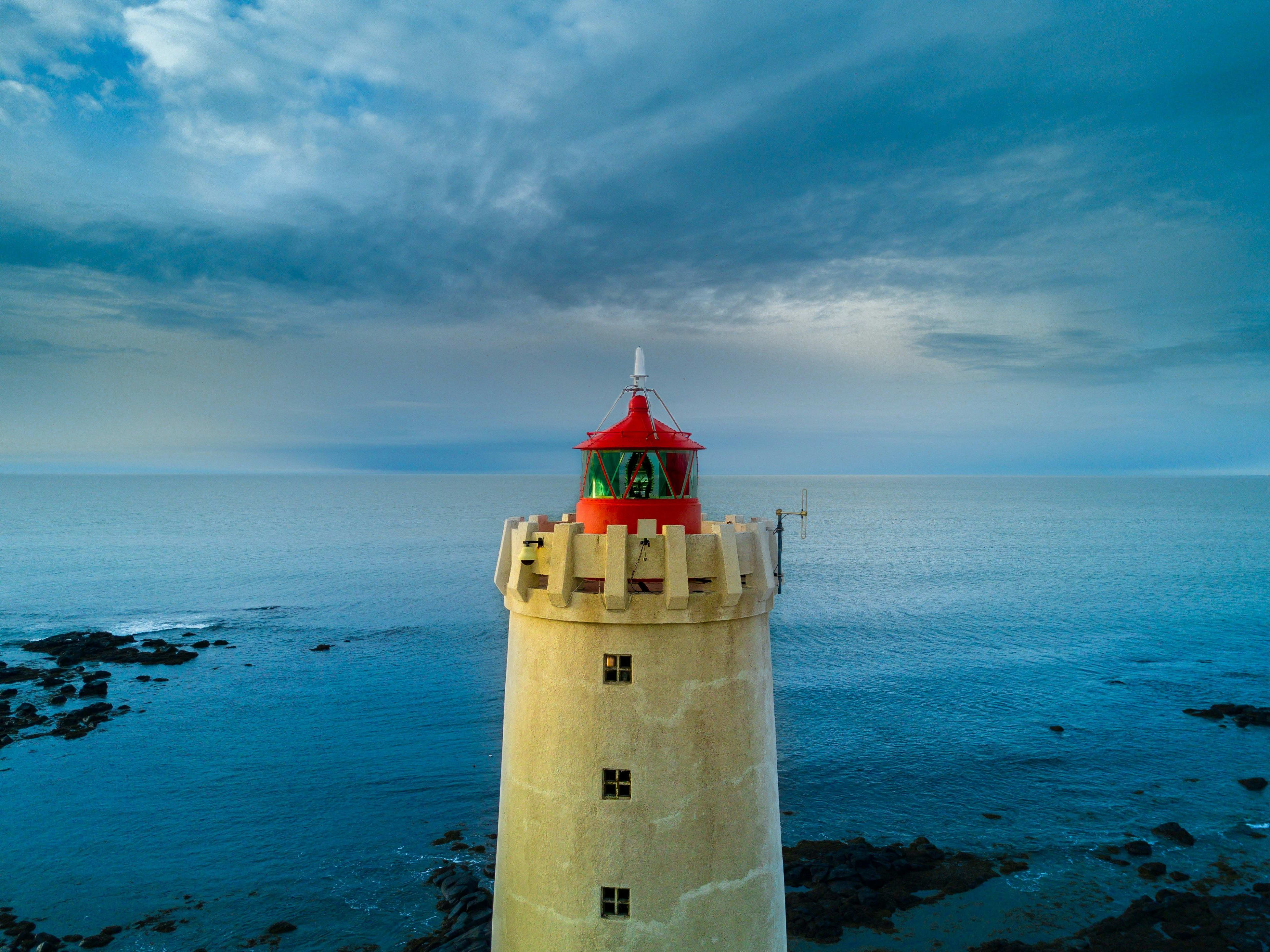
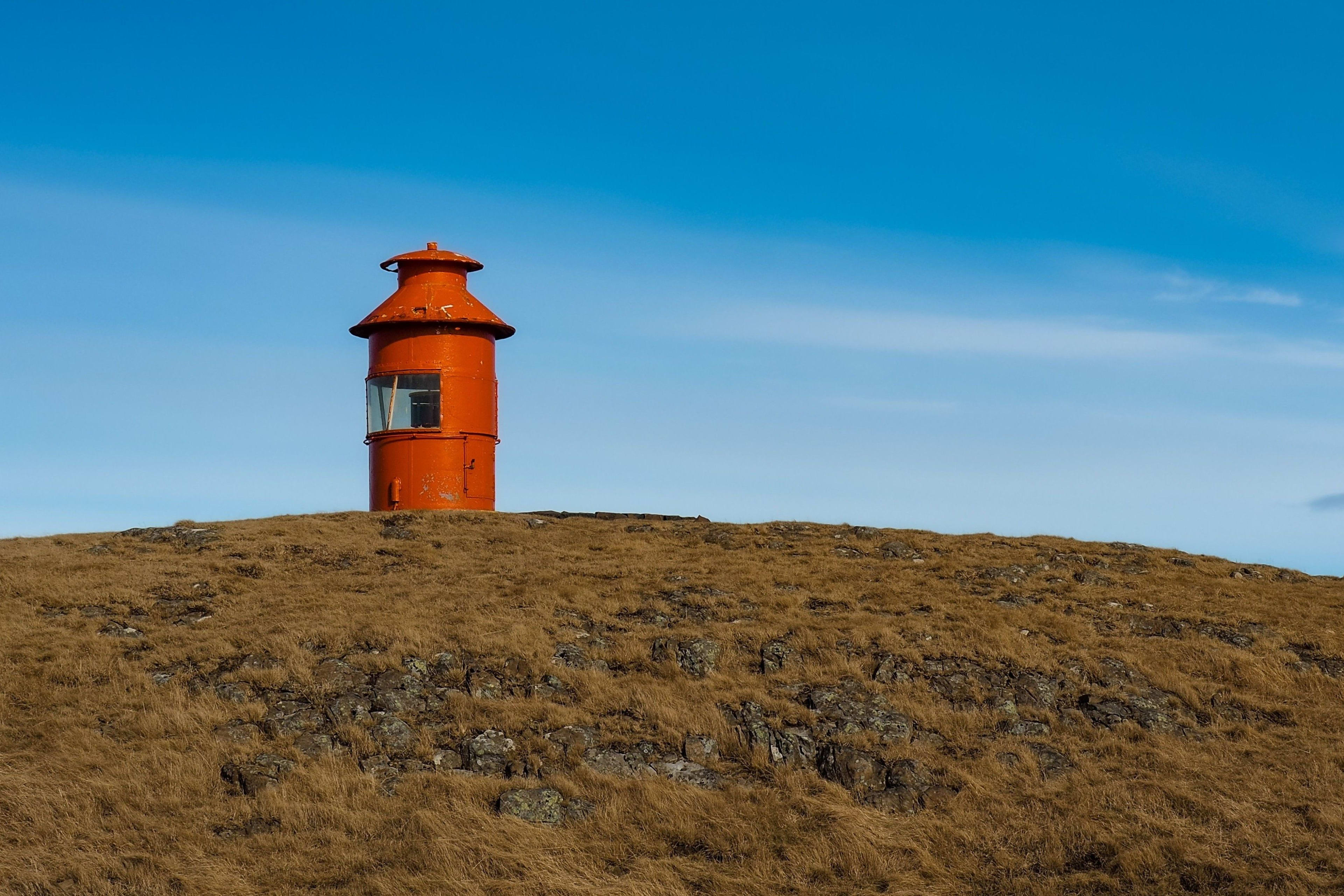
Svörtuloft Lighthouse, one of the most striking landmarks at the western end of the Snæfellsnes Peninsula, is a bright orange tower and is also known as the "Carrot Lighthouse." Perched on a 4-kilometer-long black lava cliff, the vibrant color contrasts sharply with the blue sky, white clouds, and black rock backdrop, creating a striking visual impact.

Svortuloft Lighthouse of Iceland
<font dir="auto" style="vertical-align: inherit;"><font dir="auto" style="vertical-align: inherit;">Svörtuloft Lighthouse</font></font>

Built in 1913, Svörtuloft Lighthouse stands approximately 5.7 meters tall. Despite its relatively short stature, it is strikingly prominent. Svörtuloft means "black ceiling" in Icelandic, aptly describing the cliffside landscape at its base—formed from black lava, rugged in shape, like a black curtain. Summer is the best time to view Svörtuloft Lighthouse. Under the sunlight, the lighthouse stands majestically on the black lava cliffs covered in green moss, with undulating mountains behind it and a rugged rocky coastline and rushing currents below.

The area around this lighthouse is also ideal for seabird watching. Every summer, various seabirds come to nest, roost, and breed. Here, you can see seabirds such as the Brünnich's guillemot and the European shag. There is also a dedicated viewing platform next to the lighthouse, where you can stand and enjoy panoramic views of the lighthouse and the surrounding scenery.

The drive from Reykjavik to Svortuloft Lighthouse takes about 3 hours, covering approximately 214 kilometers. The route is scenic, passing the white sand beaches of Skartdsvík on the Snæfellsnes Peninsula. You can stop here to rest and enjoy the tranquility of the white sand. Svörtuloft Lighthouse is not far from the town of Hellissandur, about a 20-minute drive, but some sections of the road are gravel, so drive carefully.

Precautions for viewing Icelandic lighthouses

To ensure a smooth travel experience, we recommend paying attention to the following:

Weather changes: Iceland's weather is unpredictable, so remember to check the weather forecast before you go and prepare appropriate clothing.

Lighthouse opening hours: Opening hours for some lighthouses, especially those in remote areas, may vary depending on the season. Check the latest information before you visit.

Protect the environment: Many lighthouses are surrounded by bird habitats, such as the lighthouse on Grimsey Island. When visiting, avoid disturbing the birds and be careful not to leave any litter that could pollute the environment.

Safety First: There may be steep cliffs or rough seas around the lighthouse. Pay attention to warning signs and view the lighthouse only in designated areas.

Lighthouse is the top choice for taking wedding photos or portraits in Iceland.

Dyrhólaey Lighthouse: Combined with the stunning scenery of black sand beaches and sea arches, it produces photos with a high-end feel.

Grótta Lighthouse: Perfect for romantic nighttime wedding photos against the backdrop of the aurora borealis.

Reykjanesviti Lighthouse: The volcanic rock formations and the waves of the Atlantic Ocean create a poetic shooting scene.

Þrídrangaviti Lighthouse: Perfect for capturing the vast and isolated beauty of the landscape through aerial photography.

关于作者

身为游者,我被冰岛深深召引,去追逐宇宙的节律,在黑夜的亘古不变中,遥望极光的跃动和变换,在海水与岩壁相拥蜿蜒的峡湾中,静观轻巧的小鸟、从海底猛然跃起的鲸鱼,深入晶莹的冰洞,追寻世外的纯净和梦幻,走近炽热的火山,用双脚抚触冰岛的滚烫脉搏。 我爱这个冰火交融的国度,我想用笔头镌刻这里的峡湾与冰川,云霞与火山,记录下她的光影、晴雨与律动。

查看绿汀更多的文章

相关文章

从森林猫旅行的冰岛攻略中了解更多信息
必读旅行攻略

如何在冰岛办一场婚礼

冰岛有哪些举办婚礼或拍婚纱照的地方?冰岛结婚需要哪些材料?冰岛结婚需要注意哪些事项?

查看更多
必读旅行攻略

冰岛旅拍十佳打卡元素

冰岛拥有极光、冰川、瀑布、黑沙滩等无限适合冰岛旅拍的元素,你可以在镜头下捕捉到冰岛最美的风景和瞬间。

查看更多
必读旅行攻略

冰岛最美避世小渔村

探索兼具闲适气质和秀美景色的冰岛避世小渔村,远离城市喧嚣,守得一方自在。

查看更多
必读旅行攻略

冰岛最具特色的十大教堂

在冰岛这片神秘的土地上,教堂也是人们寻求宁静和灵感的圣地。准备好迎接一段独特的冰岛教堂探索之旅了吗?

查看更多